

cross-posted from: https://slrpnk.net/post/38188482
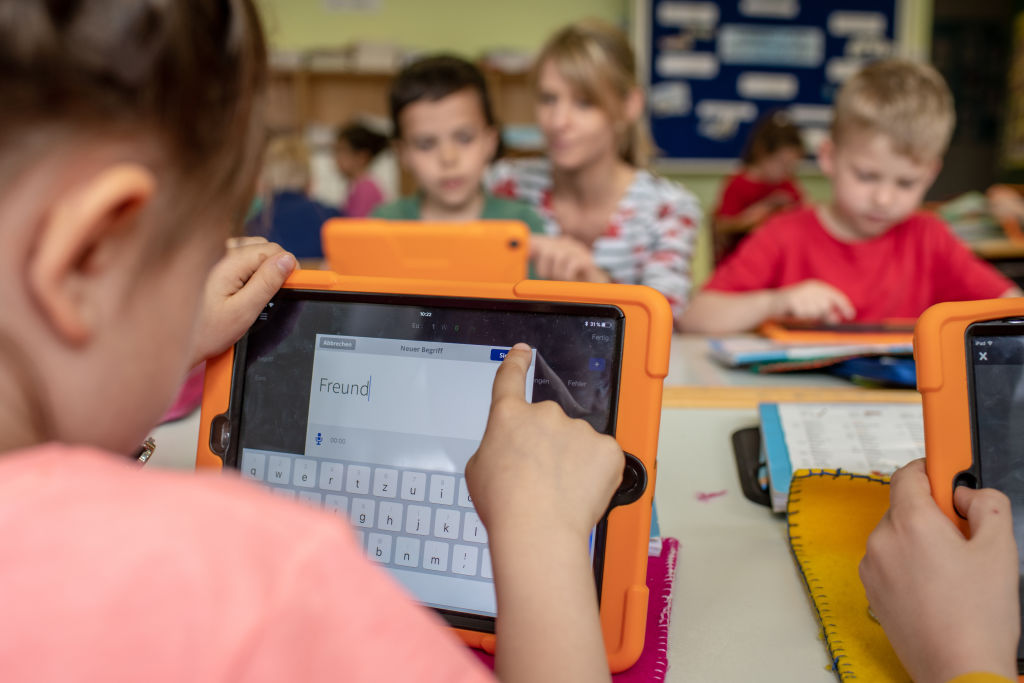
Tech vendors promised personalized, frictionless learning. What American schools got instead was mind-numbing, data-hungry junk software that devalues teachers and shortchanges students. A growing movement, led by alarmed parents, is saying enough.
Technology’s allure is always future oriented: Personal computing was going to supercharge productivity; social media and smartphones would strengthen interpersonal connections; and now AI will streamline the world of work. And for three-quarters of a century, education technology vendors have promised to optimize student learning and eliminate the busywork of teaching. But as Charles Logan, T. Philip Nichols, and Antero Garcia recently argued in Kappan, “the future they’re selling has not arrived — and perhaps it never will. But de-skilling, surveillance, and extraction — all of that is happening now, in our classrooms, today.”
Like healthcare, education and tech should be a good pairing but money is always driving the tech, which leverages the learner for profit. - Money should not be in healthcare, education and of course other sectors. There are some good uses, assistive tech, Moocs etc but anything commercial is predatory. Khan sold out years ago with the app and gamification.
Like healthcare, education and open source tech is a good pairing, as long as the tech adds, not replaces
That’s the key: look at where we were, look at where we’re going, is this the kind of progress we want?
Answer, of course, depends on who “we” includes.
Business has been shown to not care about long term implications, as such they should be treated as the fox outside the henhouse - a natural occurrence, but not one to be trusted - with anything.
Gamification per se is not a bad thing. Gamification is anvalid way to get better engagement and retention.
According to recent research, yes.
But research is lacking in the retention of skills and knowledge once the gamification is removed.
Does Duolingo create life long learners, or is it just something to pass the time and feel good about getting a score streak.
My theory is almost all Duolingo users would quit learning if Duolingo went away tomorrow and everyone has to restart at 0 on a new app/service.
I know some avid Duolingo users. After multiple year-long streaks they have learned and retained quite a bit… also quite a bit less than they would have learned and retained after spending a season in an immersion setting where they used the language all day every day. Both routes to learning have their pros and cons… neither one suits everybody.
I was talking about gamification in general. Are you talking specifically about Duolingo?
When gamification is used to persuade or hold a user into a subscribed service. Its predatory. It can be used to influence or motivate learners, classroom or online. But when used to further you being on the app, its not good.
Exactly what I said, gamification is not bad in itself.
Gamification is not the problem. The problem is predatory behaviour.