

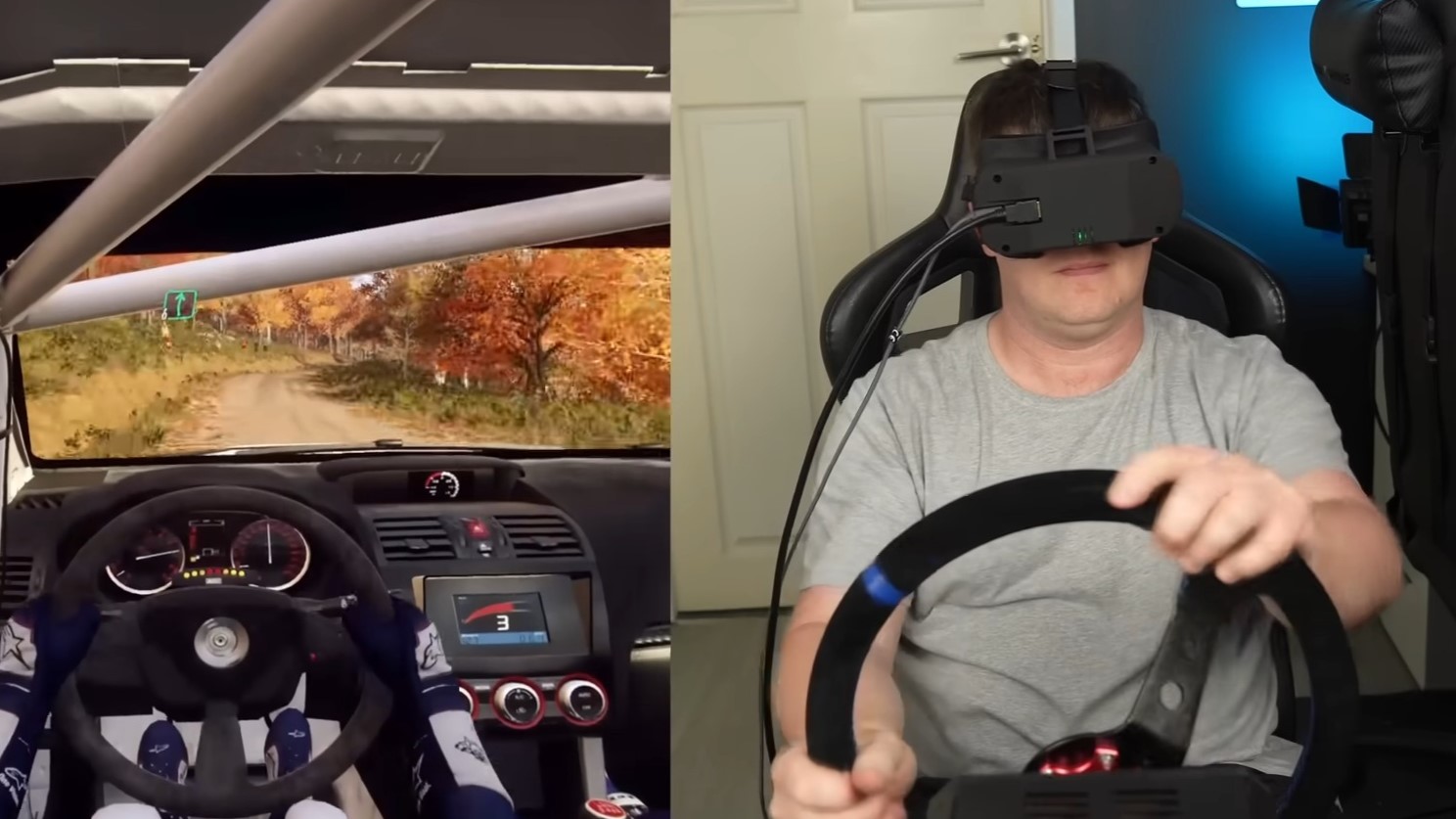
It’s always cool to see such projects, and I was discussing about the topic just yesterday.
… but please, don’t spend $150 on that. This is limited has it has :
- no controllers (and gamepads aren’t spatial),
- no hand tracking (which would be spatial),
- no 6DoF, so you can’t move your head or body around, just turn your head around
- a very limited software stack, e.g. no OpenXR (AFAICT),
- a cable to be plugged to a computer, i.e. it’s not standalone
so it’s basically a more open but not standalone version of the Oculus Go. For context the Go is from 2018 and back then was $200 while being standalone. Note also that the Go is rootable, cf https://developers.meta.com/horizon/blog/unlocking-oculus-go/
There are also other DIY VR HMDs, e.g. https://github.com/relativty/Relativty from 2020 which similar limitations. In fact this made so much buzz back then the founder managed to ride the hype and make (sadly) a VC funded startup. I say sadly because the initial project was all open VR and openness but once the money was locked-in… well I let you check.
So… again this is VERY cool to build but please do not consider this anything but a way to learn. If you do want to play with VR with a limited budget consider instead an accountless (meaning no Meta involved) second hand Meta 2 then Alvr or WiVRn (cf https://lvra.gitlab.io/ for more).
While this is awesome and the tinkerer in me appreciates and respects the effort, a Quest Go/1/2/3 is significantly better than this with far more functionality and would be able to be purchased for the same price, or less, and with zero work or skill required to put together.
Because you pay with data. Quest is the first device, where meta has full control over the Operation System, and even beyond.
You are forced to have a meta account to use it, IRCC
You did but not anymore :
- Go can be rooted officially
- Quest 1/2/3/3s can be used without account thanks to PrivateQuest
- Quest 3 v78 (not newer OS version) can be rooted via a hack
So yes, by default you are paying with data. In fact IMHO if possible one should not rely on Meta hardware. That being said if you get e.g. a 2nd hand Quest 2 or 3 and use it without an account then you might be providing little to no money to Meta and no data. It’s not trivial but it’s feasible. Arguably it’s even easy for somebody who seriously consider such an endeavor of assembling their own HMD.
PS: Meta has access to the whole device but… they are not owning the OS itself, it’s still an Android device. The OS is very much driven by Google. In fact it’s quite interesting to consider that Meta failed to develop their own OS and that Google is shipping soon AndroidXR.
Ah, so you make up the difference with your labor
I am wondering about the software side. Is it just a glorified monitor for your face, or does it have some kind of internal control/OS like a Quest or other commercial headset?
It seems to only have an Arduino as processor, so presumably the former i.e. you need a PC to plug this into. It seems to have highly simplified tracking compared to something like a Quest - a single Inertial Measurement Unit. All enough for sim racing which is this guy’s jam, but I wonder how well the tracking stays calibrated.
I’m wondering if I wanted to fly a jet, would I need another sensor for 3 dimensional tracking
The critical thing with these is response time. If it’s even slightly too high (I think 20-30ms is easily too high), some/many people get very motion sick. Getting that time down as low as needed is also not trivial.
With it only being 60 Hz on the controller itself, that’s basically impossible to hit. That’s 16.6 ms already. Then the processing, sending to the PC, and the PC reacting has a budget of just a few ms? Yea, not happening.
I’m assuming he’s really not sensitive to this. As it’s open source now the people who are sensitive can improve it. That’s the beauty of open source after all.
I bet I could use it. I can play the VirtualBoy in a moving car. If there’s any kind of way to tie it into MechWarrior, I want to build one.


