
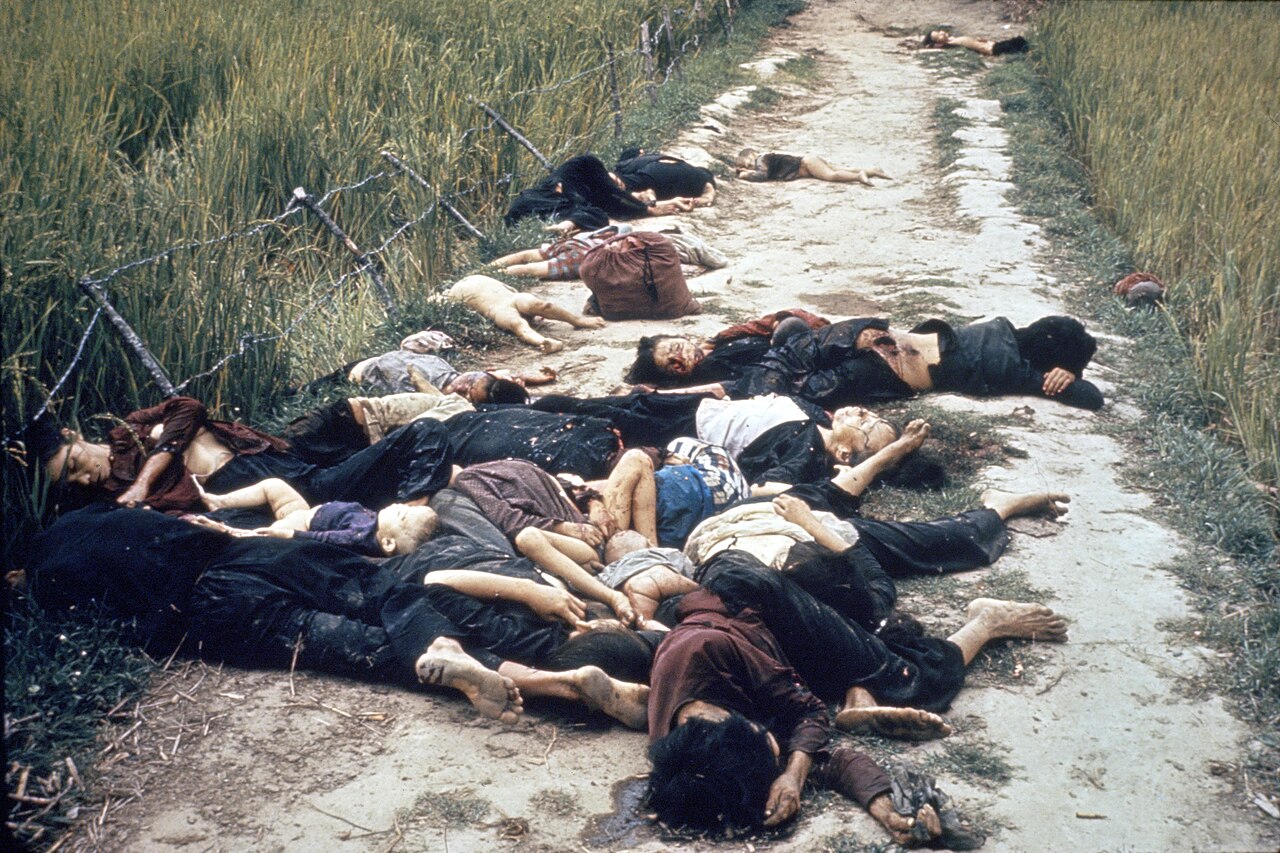
At least 347 and up to 504 civilians, almost all women, children and elderly men, were murdered by U.S. Army soldiers. Some of the women were gang-raped and their bodies mutilated, and some soldiers mutilated and raped children as young as 12.
only Lieutenant William Calley Jr., the leader of 1st Platoon in C Company, was convicted. He was found guilty of murdering 22 villagers and originally given a life sentence, but served three-and-a-half years under house arrest after his sentence was commuted.
Research has highlighted that the My Lai Massacre was not an isolated war crime. Nick Turse places it within a larger pattern of American atrocities enabled by deliberate policies from commanders, such as “free-fire zones” and “body counts”, as well as widespread racism amongst American military personnel. Many other atrocities were also covered up by commanders.
Why you should know about this: It is important to know about history so that we can learn from it, avoid the mistakes and atrocities of the past, and know which institutions have a history of performing atrocities, trying to cover them up, etc. and what that looks like.
And that is the very few we know of, the more you learn about these, the more clear it becomes they cover them up unless they definitively can’t. What we know barely scratches the surface of American terrorism and atrocities.