Due to some lucky circumstances, I recently had the chance to appear in one of the biggest German gaming podcasts, Stay Forever, to talk about the technology of RollerCoaster Tycoon (1999). It was …
Running OpenRCT2 on a Raspberry Pi is probably one of my favorite pastimes. It’s such an incredibly well-crafted game that it will run on nearly anything.
I’ve been playing it on my potato tablet that I revived with Linux recently. It’s basically the only game that runs on it. Well, only thing better than Solitaire or Mahjongg. It’s really impressive, takes me back to my Compaq LTE 5300 and playing RCT when it was new.
I’ve been playing the Android port of OpenTTD, on an old and slow tablet. Input is a bit clunky, but tolerable.
Although, strictly speaking, the performance of OpenTTD and OpenRCT2 doesn’t follow from the original being so streamlined — seeing as they’re both reimplementations in C/C++.


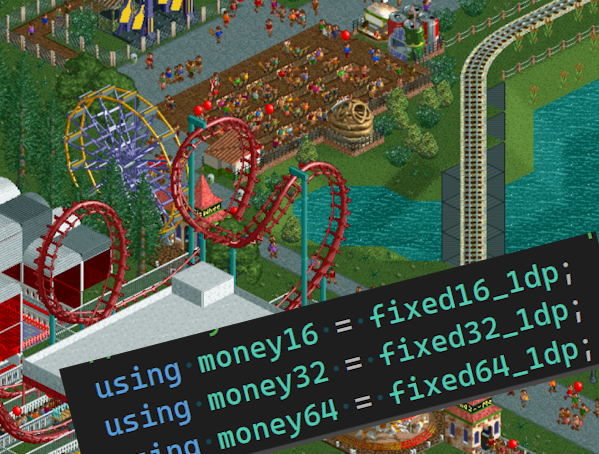
Running OpenRCT2 on a Raspberry Pi is probably one of my favorite pastimes. It’s such an incredibly well-crafted game that it will run on nearly anything.
I’ve been playing it on my potato tablet that I revived with Linux recently. It’s basically the only game that runs on it. Well, only thing better than Solitaire or Mahjongg. It’s really impressive, takes me back to my Compaq LTE 5300 and playing RCT when it was new.
I’ve been playing the Android port of OpenTTD, on an old and slow tablet. Input is a bit clunky, but tolerable.
Although, strictly speaking, the performance of OpenTTD and OpenRCT2 doesn’t follow from the original being so streamlined — seeing as they’re both reimplementations in C/C++.