They can’t have perfect quality control for every part that leaves the manufacturer, especially considering the massive temperature fluctuations they might experience, humidity changes, road salt, and the fact its attached to something hitting bumps and potholes at 100+ km/h.
Well every car has wheel bearings that experience all those same conditions and last hundreds of thousands of miles. Brake calipers can also stop functioning, rubber lines can plug up, people can never change their pads and rotors.
Wheel bearings are generally sealed and so last well. Brakes tend to be easier to access and so don’t last - but it doesn’t matter because they typically wear enough before salt/dirt gets them that they will be replaced as part of normal maintenance.
An electric motor is sealed too. The point is that these components aren’t anything new and individually won’t introduce and new types of unexpected failures.
I’ve had a wheel bearing last 20k miles. It depends on the abuse. My ultimate point was that an electronic motor still has several possible failure points.
Redundancy, warnings, and inspections. You should have two different brake systems, traditionally the “parking brake” is a cable. Your hydraulic brakes are two different systems, one for the front, one for the back - if one fails you should have the others (at least a few times until you lose all fluid - enough to stop once). Your brakes also are designed to make noise when the common wear parts get worn, and that is a good time for a tech to inspect the rest of the system.
When did seperate hydraulics start being common? Most of the vehicles ive worked on have one hydraulic system with a proportioning valve to control pressure, usually with more braking power going to the front.
I wouldn’t really consider that 2 seperate systems. If your front brakes leak you’re still gonna end up losing pressure to the rear. Its pretty much just enough to pull over if you clue in to whats happening


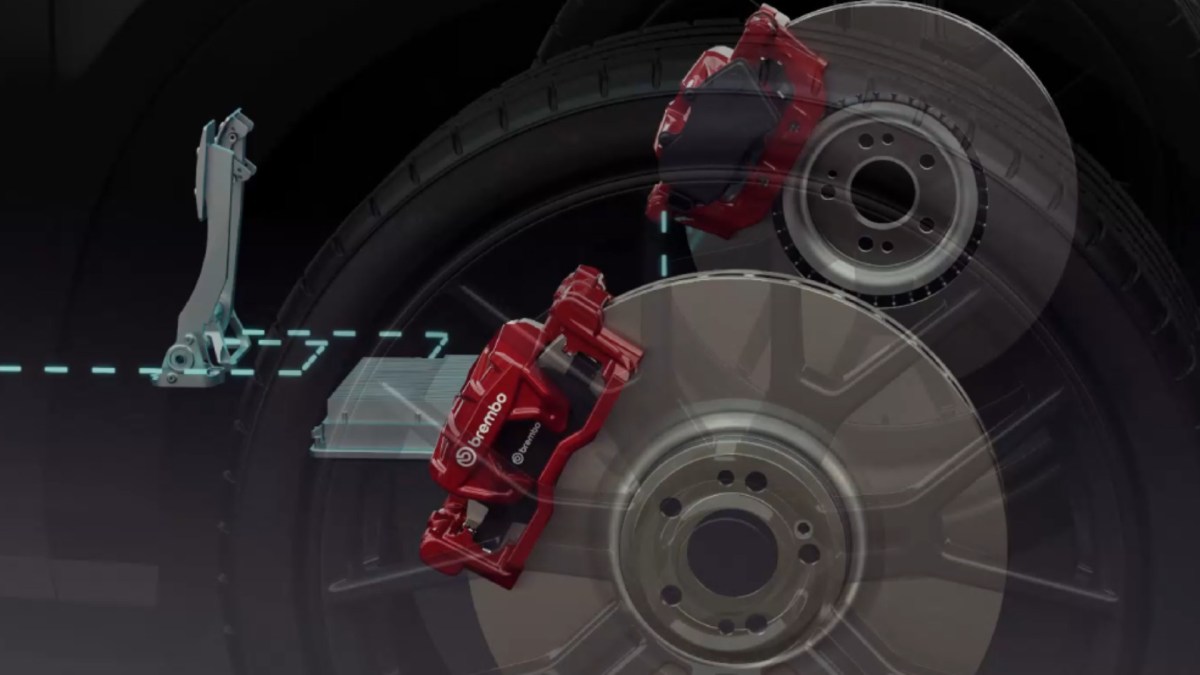
Yes, but those are things that can be designed to last decades, at very little cost.
They can’t have perfect quality control for every part that leaves the manufacturer, especially considering the massive temperature fluctuations they might experience, humidity changes, road salt, and the fact its attached to something hitting bumps and potholes at 100+ km/h.
Yeah, no way engineers of cars thought of that. Write Brembo an email and tell them they are stupid.
Well every car has wheel bearings that experience all those same conditions and last hundreds of thousands of miles. Brake calipers can also stop functioning, rubber lines can plug up, people can never change their pads and rotors.
Wheel bearings are generally sealed and so last well. Brakes tend to be easier to access and so don’t last - but it doesn’t matter because they typically wear enough before salt/dirt gets them that they will be replaced as part of normal maintenance.
An electric motor is sealed too. The point is that these components aren’t anything new and individually won’t introduce and new types of unexpected failures.
I’ve had a wheel bearing last 20k miles. It depends on the abuse. My ultimate point was that an electronic motor still has several possible failure points.
So… how do manufacturers of hydraulic brakes do this?? Or any other safety- critical part on a car?
They don’t. Parts like calipers failing and rotors warping is common.
Redundancy, warnings, and inspections. You should have two different brake systems, traditionally the “parking brake” is a cable. Your hydraulic brakes are two different systems, one for the front, one for the back - if one fails you should have the others (at least a few times until you lose all fluid - enough to stop once). Your brakes also are designed to make noise when the common wear parts get worn, and that is a good time for a tech to inspect the rest of the system.
When did seperate hydraulics start being common? Most of the vehicles ive worked on have one hydraulic system with a proportioning valve to control pressure, usually with more braking power going to the front.
1970s/early 80s. The master cylinder has two chambers, though they are connected.
I wouldn’t really consider that 2 seperate systems. If your front brakes leak you’re still gonna end up losing pressure to the rear. Its pretty much just enough to pull over if you clue in to whats happening
that is what I was trying to say, but perhaps I didn’t write well.