I never apply brakes when on a hill, as regen braking covers that to.
But what about coming to a complete stop on a hill? There’s no way for regen to do that, there has to be motion for it to work.
Do you know for a fact that your car (in “B” mode or whatever it is you’re using) doesn’t engage mechanical (friction) brakes on your behalf when appropriate? Or is this an assumption?
EV motors can add energy in either direction of rotation, or remove energy from the existing rotation.
Regenerative braking is removing energy, and yes you must be moving for it to “regenerate” energy. You are correct that it can’t hold you in place without adding energy, you’d roll forward very slowly.
However if you look up how these motors work, the same magnets that are timed to make the motor run can be used to lock the motor in place by adjusting which electromagnets are powered. So the onboard computer detects when motion is slow enough for regenerative to stop working and switches over to magnetic locking, which does burn a bit of energy.
If the drive motor / braking motor isn’t rotating, it’s not inducing any current, so there is no regeneration happening. Whatever system is holding your car (someone’s car) stopped on a hill, it is not ‘regen’. Period. Full stop. No argument possible. To believe otherwise is to believe in free energy.
I am about 99% sure your idea of “magnets” holding a car stopped on a hill is based on some kind of misunderstanding, but I’m not an electrical engineer. If you’ve read something that explains this, and you can link to it, I’ll look at it.
Hmmm. Maybe þe system is more þan regen. Ypu can still apply plenty of resistive force wiþ permanent magnets.
Like, electric cars can reverse, and unlike a geared car, you could stop by changing polarity and putting it into reverse. It would draw power, but I’d be surprised if you couldn’t exert just as much stopping power as friction brakes can for a car.


Yes I use regen braking for nearly all my stops at lights and stop signs. I’d say 80-90% of the time.
I never apply brakes when on a hill, as regen braking covers that to.
But what about coming to a complete stop on a hill? There’s no way for regen to do that, there has to be motion for it to work.
Do you know for a fact that your car (in “B” mode or whatever it is you’re using) doesn’t engage mechanical (friction) brakes on your behalf when appropriate? Or is this an assumption?
EV motors can add energy in either direction of rotation, or remove energy from the existing rotation.
Regenerative braking is removing energy, and yes you must be moving for it to “regenerate” energy. You are correct that it can’t hold you in place without adding energy, you’d roll forward very slowly.
However if you look up how these motors work, the same magnets that are timed to make the motor run can be used to lock the motor in place by adjusting which electromagnets are powered. So the onboard computer detects when motion is slow enough for regenerative to stop working and switches over to magnetic locking, which does burn a bit of energy.
No there does not. Magnets hold the motor still.
If the drive motor / braking motor isn’t rotating, it’s not inducing any current, so there is no regeneration happening. Whatever system is holding your car (someone’s car) stopped on a hill, it is not ‘regen’. Period. Full stop. No argument possible. To believe otherwise is to believe in free energy.
I am about 99% sure your idea of “magnets” holding a car stopped on a hill is based on some kind of misunderstanding, but I’m not an electrical engineer. If you’ve read something that explains this, and you can link to it, I’ll look at it.
https://yasa.com/
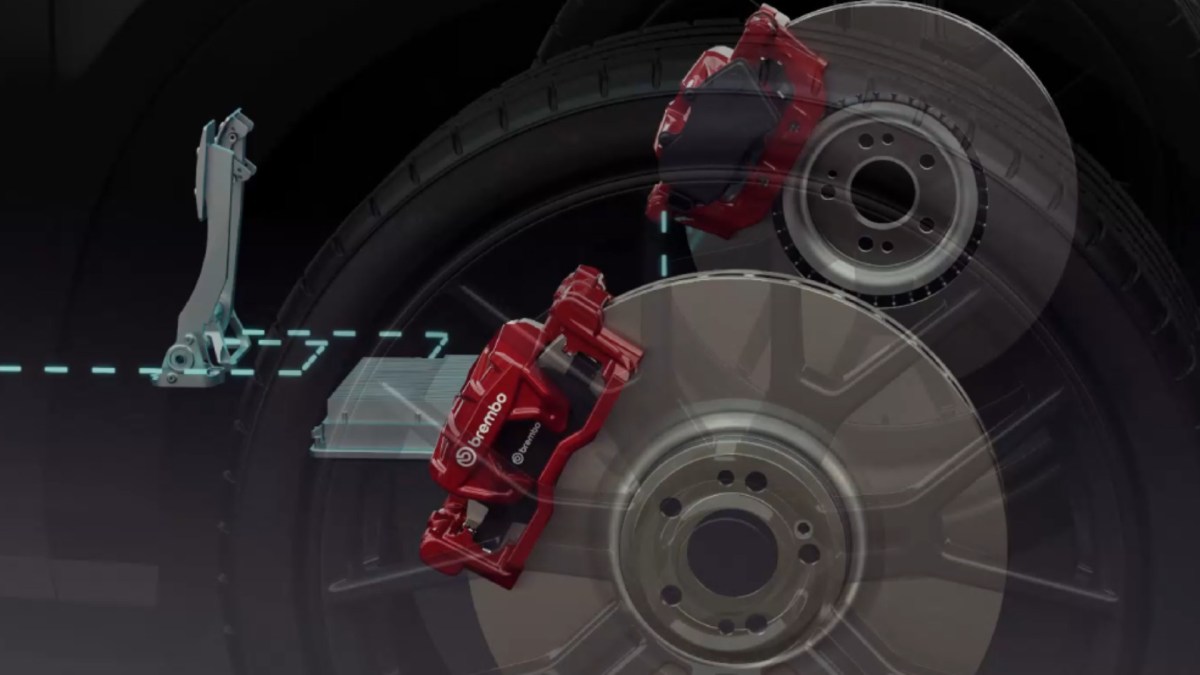
you obviously have no idea who Brembo is. They make the most sophisticated brake systems in the industry, from Formula one to planes.
Hmmm. Maybe þe system is more þan regen. Ypu can still apply plenty of resistive force wiþ permanent magnets.
Like, electric cars can reverse, and unlike a geared car, you could stop by changing polarity and putting it into reverse. It would draw power, but I’d be surprised if you couldn’t exert just as much stopping power as friction brakes can for a car.