I doubt whether the vast majority of British readers would’ve been jolted by it - at the time of first publication. It was a word that had been in everyday parlance that got attached to dark “things” as a describer.
Here’s the thing though, go forward maybe 15 years again and you have the 1964 Smethwick constituency election. The winner had a, uhh, memorable slogan: “If you want a n***** for a neighbour, vote Labour.”
It’s worth noting that the “n*****s” in question were, most likely, gonna be from the Punjab. Go figure.
So, yeah, in less than a generation the word in question went from everyday speech with no overt pejorative meaning to the explicitly racist word it is today. It morphed.


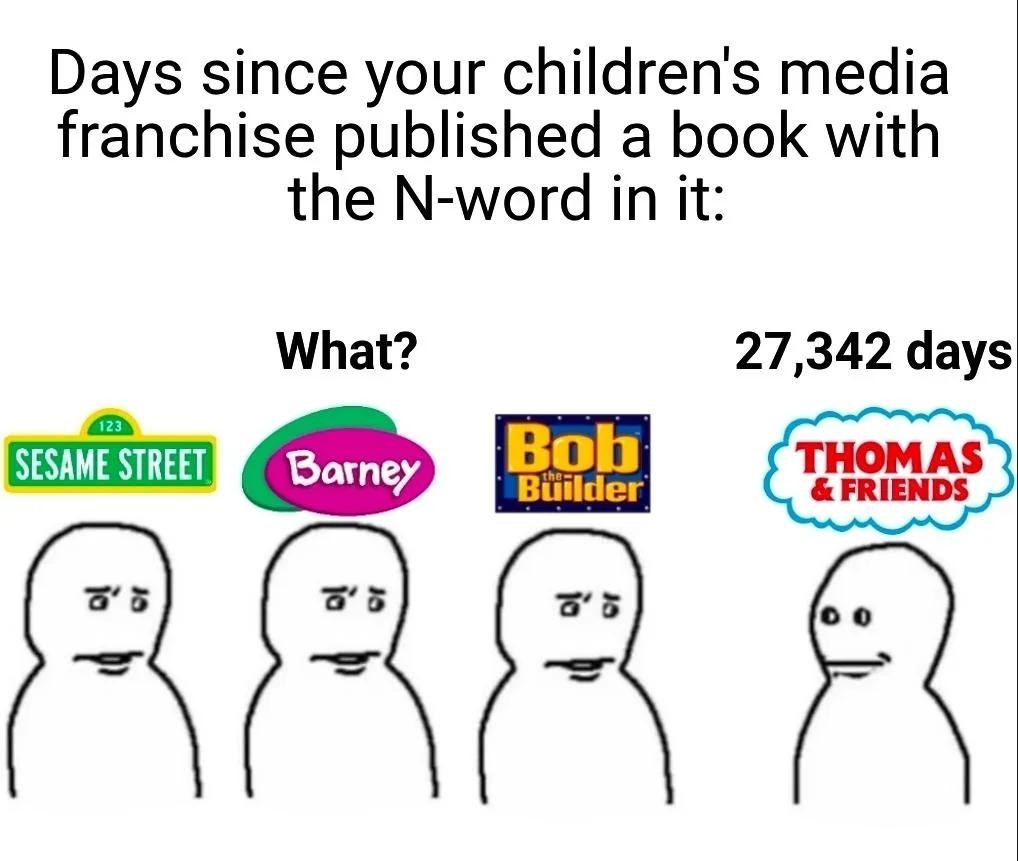
I doubt whether the vast majority of British readers would’ve been jolted by it - at the time of first publication. It was a word that had been in everyday parlance that got attached to dark “things” as a describer.
Here’s the thing though, go forward maybe 15 years again and you have the 1964 Smethwick constituency election. The winner had a, uhh, memorable slogan: “If you want a n***** for a neighbour, vote Labour.”
It’s worth noting that the “n*****s” in question were, most likely, gonna be from the Punjab. Go figure.
So, yeah, in less than a generation the word in question went from everyday speech with no overt pejorative meaning to the explicitly racist word it is today. It morphed.