
Oh no, they’ll have to ban gacha games, the horror.
Valve’s argument isn’t in defense of free speech, it’s in defense of Gabe’s next yacht.
I agree it’s gambling, but where is the line? Is killing a boss in World of Warcraft not gambling? You also have various chances of getting random rare items, which you can then sell for real money on third party sites.
Where is the line between random outcomes being part of the game, and it being gambling? CS:GO is really obvious, but what if they didn’t have the box opening thing, you just got the random skin directly after winning a match, without having to explicitly open the “loot box”? Would it still be gambling then? Feels like it should since the end result is the same, but then every game with loot has gambling. I genuinely don’t know.
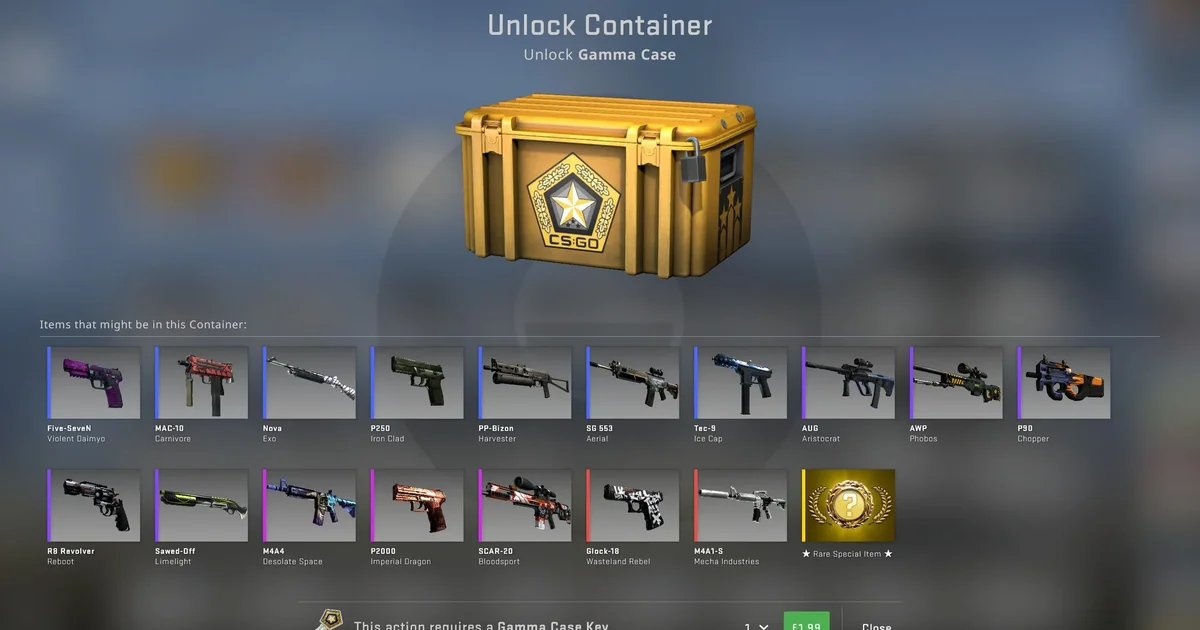
Killing a boss in WoW isn’t gambling because you don’t need to pay anything to do so. With CS, unless something has dramatically changed since I last played, when you get a box you need to typically buy a key to open it and get the item.
If you just got a random skin after a match, it would not be gambling. The value of the item received, or resellability of the item, doesn’t really matter here as much as whether or not there’s an entry fee.
I agree and this is why the solution is that steam should give players the funds to buy these loot boxes themselves; create a fictional currency (lots of these games do that anyway) and give players the power to just play the game for that currency, or better yet just give them that currency so they can buy them; you maintain the lootboxes and their random nature and players get to avoid spending real world money buying them. There’s a lot of games today that already incorporate that mechanic where you can earn in-game currency to buy lootboxes. As for players then turning around and selling their accounts or items for real world money, the buyer is not getting a CHANCE at that item, he’s buying something he knows he’s getting for certain.
To avoid turning killing bosses in WoW into gambling, the game can make it so you can fight those bosses for free, and instead incorporate costs into the game via (again) a fictional currency that allows you to buy consummables to make the fight more manageable. This way the player avoids spending real world money on this boss, and then whatever he gets, he can sell as a concrete item that the buyer knows for certain he will get.
The gambling line for me would be “Does it cost me financially” to do it or is an option. If I just have to play again, then it isn’t. It could be gambling-like, for example Balatro, but that isn’t actually gambling.
Not letting me advertise cigarettes to children is a violation of my free speech
No one is forcing you to charge for that type of mechanic. What a stupid defense. It’s gambling. It’s advertised to children.
It doesn’t matter how much you like valve for other reasons. They are in the wrong here.
If we lived in a just world, all loot boxes and other pay-for-random-things would be outlawed completely. It is gambling and it is directed at kids, yet there’s zero oversight or regulation the way gambling is regulated everywhere else.
In general, they hold that criminalising loot boxes as a form of gambling “will have an impermissible chilling effect on protected videogame design”, creating a risk of liability for people who stream about lootboxes together with people who sell analogous products, like the aforesaid packets of baseball cards.
I’m failing to see the problem here. Baseball cards, randomized “blind boxes” and packs are all gambling aimed at kids. If we “chill” that sort of speech (and commercial speech has long received less protection) that’s a good thing.
But but but… Money!
a reminder that no corporation is your friend, and even valve will do scummy things if that’s where the profit is.
never my wholesome chungus GabeN /s