Not exactly. You can use any filament (analogous to the ink) and they have said they won’t limit that. They have rfid tags in the filament but the printers without AMS don’t even have the ability to read it.
Until they go back on that I don’t really mind them. I don’t want to use other slicers etc. I didn’t buy this printer as a tinkering project but to print stuff and at that it really is very good.
I mean I really wish they were more open but I didn’t buy this printer because I thought it was open. I bought it knowing it was not. I’ve had many printers over the years and I’ve always hated having to mod them to make them usable. I just want it to work out of the box and Bambu is the first one I’ve had that really delivered on that.
I’m not a fan and I’ll move to other brands when I can (my latest printer is a snapmaker) but I think they do still offer good value for money.
I didn’t buy this printer as a tinkering project but to print stuff and at that it really is very good.
There are plenty of other printers that do this. Prusa, Creality, Flashforge, Anycubic. Plenty of slicers available. I don’t know why you’re pretending Bambu is necessary, or like it’s the only option.
Any time I find print files online that are in .bgcode format, I’m like “seriously…”.
I usually slice projects myself anyway because I don’t use PLA, but it’s just kinda lame to post a project online using the only closed source format that only works with one kind of printer.
Plus, there’s the whole spontaneous combustion issue…
I’m not saying it’s the only option but it’s a good option for the price if you just care about printing stuff.
And the options you mention aren’t real alternatives. For €180 my A1 mini is really great value, and so was my P1S. I haven’t seen anything that comes close to the print quality and printer design for a similar price. An ender would be of similar price but it looks like a science project and it’s not nearly as capable without a lot of manual tuning and upgrades.
Prusa is way too expensive for me. Anycubic and Creality are cheap Prusa knockoffs that need a lot of tuning to perform well. We have a lot of CR-10s and Enders in the makerspace but they’re always out of order for maintenance or some upgrade.
And regarding the slicer I really don’t care which slicer I use. It just has to do its job.
If you “just care about printing stuff” then why would you go with the walled garden that relies on userlocks, proprietary formats, and forced network connectivity to function? Not to mention the fire risk and rug pulling…
Anycubic and Creality are cheap Prusa knockoffs that need a lot of tuning to perform well.
My kobra prints fine. .16mm layer height by default (in OrcaSlicer), but it can go down to .08mm just with the default .4mm nozzle. I haven’t experimented with anything smaller, but so far I’ve had no issues. The precision and speed is remarkable, and I can calibrate, print, and do everything I need to do entirely offline.
There was no manual tuning or upgrades required, it showed up, assembled easily, and has been plug-and-play since. Yes, there’s an option to upgrade because of it’s modular design but that by no means means that it’s required. I can retrofit it to print with 16 different filaments, but I’m fine with the default of 4.
And regarding the slicer I really don’t care which slicer I use. It just has to do its job.
If you don’t care which slicer you use, then why would you go with the only one with a proprietary format that locks you into a walled garden? That’s some really weird logic…
If you “just care about printing stuff” then why would you go with the walled garden that relies on userlocks, proprietary formats, and forced network connectivity to function? Not to mention the fire risk and rug pulling…
Because I don’t care about the walled garden. The only thing I would mind is locking down filament but they don’t do that. So these things aren’t a negative to me. Not a positive either, just a neutral.
That Kobra looks nice, all the Anycubics I’ve seen in our makerspace are all the old ones that are basically Prusa Mk3 knockoffs. And it’s affordable, it looks basically like an A1 but with 4 colour printing without the ams. Nice! I’d consider that for my next printer.
I have basically no complaints about the Kobra. The printer itself at least (the website is way too dynamic and can be a bother when placing an order).
Although it is my first printer, so I don’t have much of a baseline to compare it to. I’m pretty impressed with it though.
The only issues I’ve had can be fixed by slicing differently (adding brim, supports, etc.) or washing the print plate when it starts to get dirty. Just failed adhesions mostly. I might try using adhesive for some trickier prints. It does overhangs really well though.


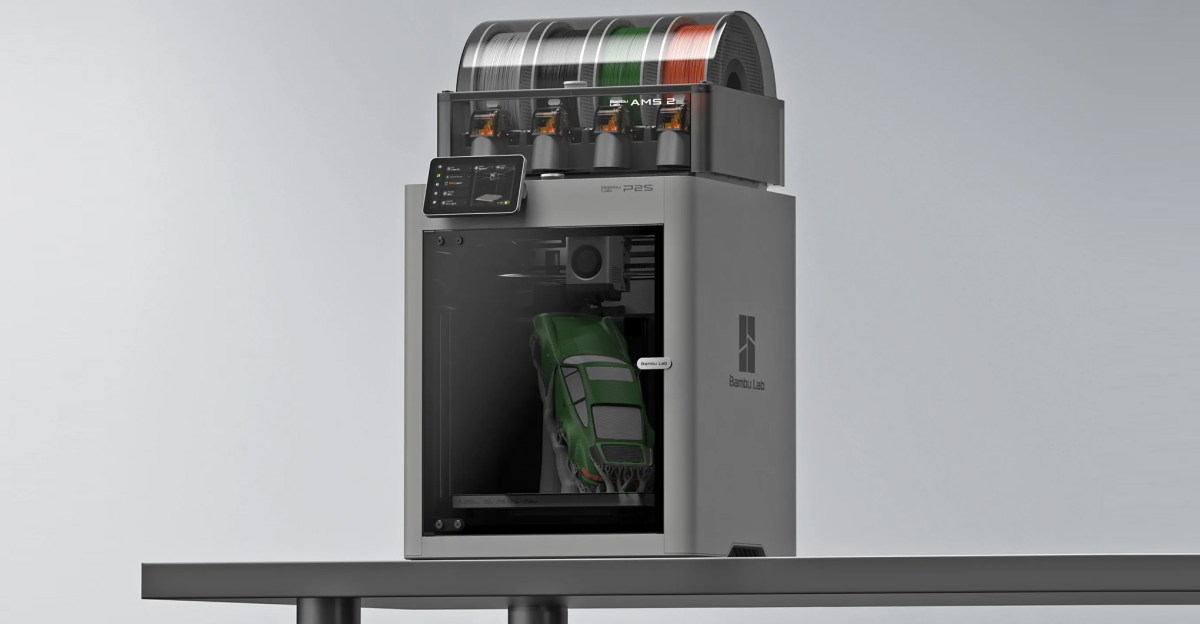
Not exactly. You can use any filament (analogous to the ink) and they have said they won’t limit that. They have rfid tags in the filament but the printers without AMS don’t even have the ability to read it.
Until they go back on that I don’t really mind them. I don’t want to use other slicers etc. I didn’t buy this printer as a tinkering project but to print stuff and at that it really is very good.
I mean I really wish they were more open but I didn’t buy this printer because I thought it was open. I bought it knowing it was not. I’ve had many printers over the years and I’ve always hated having to mod them to make them usable. I just want it to work out of the box and Bambu is the first one I’ve had that really delivered on that.
I’m not a fan and I’ll move to other brands when I can (my latest printer is a snapmaker) but I think they do still offer good value for money.
There are plenty of other printers that do this. Prusa, Creality, Flashforge, Anycubic. Plenty of slicers available. I don’t know why you’re pretending Bambu is necessary, or like it’s the only option.
Any time I find print files online that are in .bgcode format, I’m like “seriously…”.
I usually slice projects myself anyway because I don’t use PLA, but it’s just kinda lame to post a project online using the only closed source format that only works with one kind of printer.
Plus, there’s the whole spontaneous combustion issue…
I’m not saying it’s the only option but it’s a good option for the price if you just care about printing stuff.
And the options you mention aren’t real alternatives. For €180 my A1 mini is really great value, and so was my P1S. I haven’t seen anything that comes close to the print quality and printer design for a similar price. An ender would be of similar price but it looks like a science project and it’s not nearly as capable without a lot of manual tuning and upgrades.
Prusa is way too expensive for me. Anycubic and Creality are cheap Prusa knockoffs that need a lot of tuning to perform well. We have a lot of CR-10s and Enders in the makerspace but they’re always out of order for maintenance or some upgrade.
And regarding the slicer I really don’t care which slicer I use. It just has to do its job.
If you “just care about printing stuff” then why would you go with the walled garden that relies on userlocks, proprietary formats, and forced network connectivity to function? Not to mention the fire risk and rug pulling…
My kobra prints fine. .16mm layer height by default (in OrcaSlicer), but it can go down to .08mm just with the default .4mm nozzle. I haven’t experimented with anything smaller, but so far I’ve had no issues. The precision and speed is remarkable, and I can calibrate, print, and do everything I need to do entirely offline.
There was no manual tuning or upgrades required, it showed up, assembled easily, and has been plug-and-play since. Yes, there’s an option to upgrade because of it’s modular design but that by no means means that it’s required. I can retrofit it to print with 16 different filaments, but I’m fine with the default of 4.
If you don’t care which slicer you use, then why would you go with the only one with a proprietary format that locks you into a walled garden? That’s some really weird logic…
Because I don’t care about the walled garden. The only thing I would mind is locking down filament but they don’t do that. So these things aren’t a negative to me. Not a positive either, just a neutral.
That Kobra looks nice, all the Anycubics I’ve seen in our makerspace are all the old ones that are basically Prusa Mk3 knockoffs. And it’s affordable, it looks basically like an A1 but with 4 colour printing without the ams. Nice! I’d consider that for my next printer.
I have basically no complaints about the Kobra. The printer itself at least (the website is way too dynamic and can be a bother when placing an order).
Although it is my first printer, so I don’t have much of a baseline to compare it to. I’m pretty impressed with it though.
The only issues I’ve had can be fixed by slicing differently (adding brim, supports, etc.) or washing the print plate when it starts to get dirty. Just failed adhesions mostly. I might try using adhesive for some trickier prints. It does overhangs really well though.