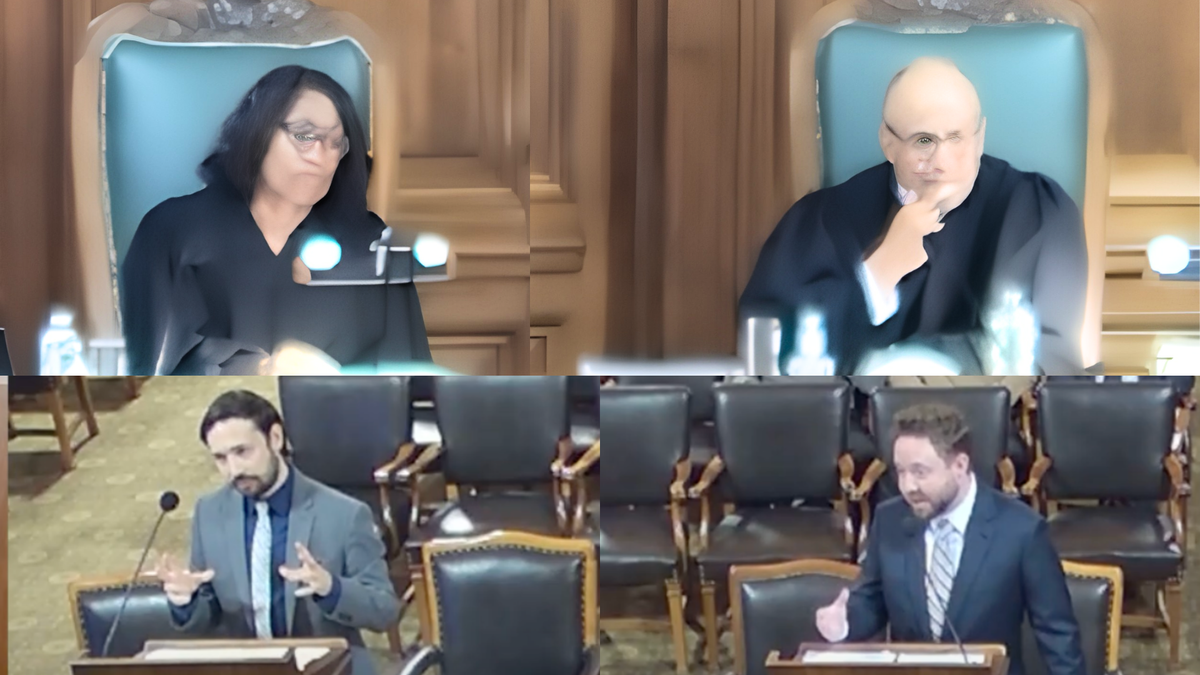
“It's striking, concerning, disappointing, and saddening to think that members of the bar would forward cases to a court that don't exist, and to think that the lawyers on the other side of that didn’t read it for whatever reason, didn’t check it.”
Socrates was famously called the ‘gadfly’ because he would pester elites by challenging their supposed wisdom. People that would be highly knowledgeable craftsman, financiers, politicians, etc. would then over estimate their knowledge outside of their realm of expertise and claim to be wise in all things. They would know just enough to sound knowledgeable, but really know very little about what they were talking about (related to the Dunning-Kreuger effect). The takeaway of Socrates’ gadfly work is that sometimes wisdom is acknowledging when you do not know something.
AI can have a lot of “knowledge” (it doesn’t actually know anything itself, but rather has pattern training and access to data references). But what it doesn’t have… like at all… is wisdom. It doesn’t understand, literally, anything at all. It might have some guard rails up to limit is hallucinations. It might even say, sometimes, that it doesn’t know. But it is just as happy to ramble on with pure and complete nonsense that is all just a stream of patterns training and probabilistic guesswork. If it has a nugget of data or even an entire library related to your prompt, it will present it to you. But it can 100% just fill any gaps or take the response into tangents that are nothing but guess-the-next-word, probability, looks-good-to-me word salad that can contain several “facts” that are nothing but random word associations from its training with no reference for its basis.
It is a glorified autocorrect. You cannot trust its information blindly, and using it as a tool in this way, especially while staking your fucking law career on it, is goddamned moronic.


Socrates was famously called the ‘gadfly’ because he would pester elites by challenging their supposed wisdom. People that would be highly knowledgeable craftsman, financiers, politicians, etc. would then over estimate their knowledge outside of their realm of expertise and claim to be wise in all things. They would know just enough to sound knowledgeable, but really know very little about what they were talking about (related to the Dunning-Kreuger effect). The takeaway of Socrates’ gadfly work is that sometimes wisdom is acknowledging when you do not know something.
AI can have a lot of “knowledge” (it doesn’t actually know anything itself, but rather has pattern training and access to data references). But what it doesn’t have… like at all… is wisdom. It doesn’t understand, literally, anything at all. It might have some guard rails up to limit is hallucinations. It might even say, sometimes, that it doesn’t know. But it is just as happy to ramble on with pure and complete nonsense that is all just a stream of patterns training and probabilistic guesswork. If it has a nugget of data or even an entire library related to your prompt, it will present it to you. But it can 100% just fill any gaps or take the response into tangents that are nothing but guess-the-next-word, probability, looks-good-to-me word salad that can contain several “facts” that are nothing but random word associations from its training with no reference for its basis.
It is a glorified autocorrect. You cannot trust its information blindly, and using it as a tool in this way, especially while staking your fucking law career on it, is goddamned moronic.