

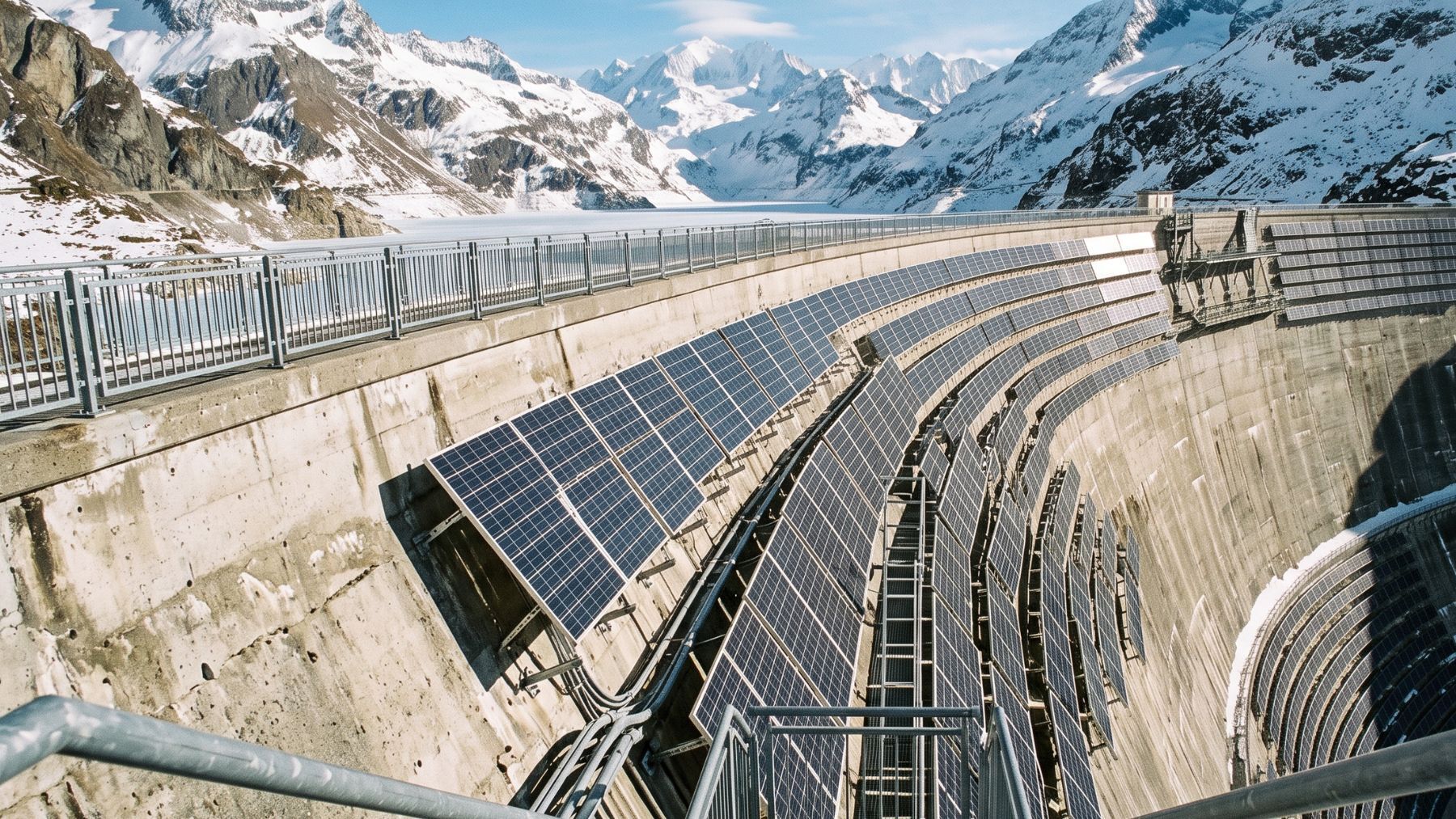
Up on the dam, almost everything that looks like a problem becomes an advantage.
The plant sits above the fog line, in thin, clear air that lets far more sunlight through.
The higher you go, the stronger and cleaner the sunlight becomes.
Cold actually helps, because solar panels work more efficiently when they are not baking in heat.
And then there is the snow, which acts like a giant mirror, bouncing extra light up onto the panels from below.
Scientists call it the albedo effect, and it can lift a mountain plant’s output well beyond anything possible in the valley.
A test site at a similar height recorded yearly output far above a typical Swiss plant.
If you’re referring to convection, probably not. Convective motion of air is so slight that even the tiniest breeze would do more to cool the panels. I’m not sure there’s any outdoor location in the entire world with stagnant enough air that it would matter. It’s better to just angle them to catch the most sunlight.