

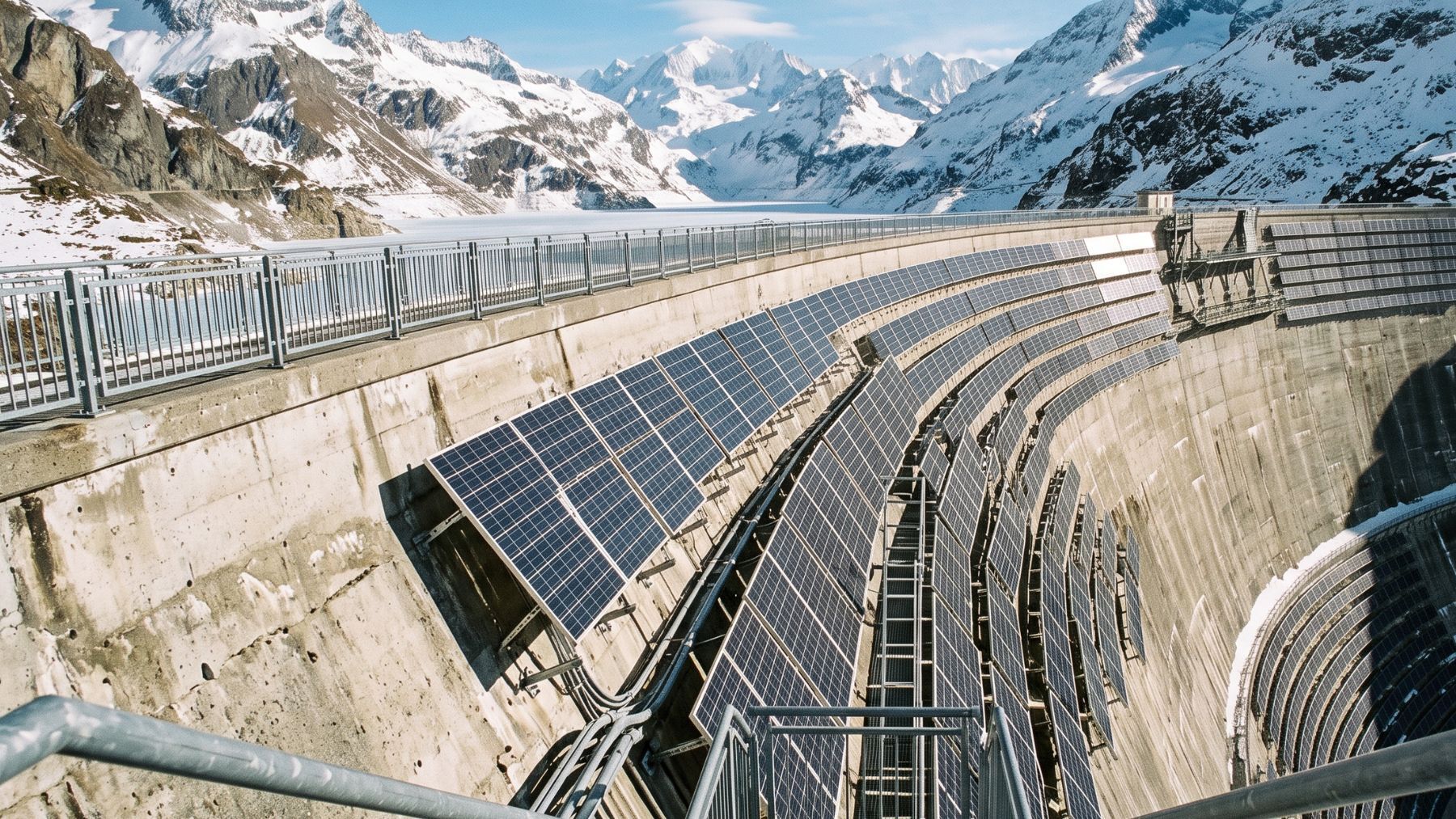
Up on the dam, almost everything that looks like a problem becomes an advantage.
The plant sits above the fog line, in thin, clear air that lets far more sunlight through.
The higher you go, the stronger and cleaner the sunlight becomes.
Cold actually helps, because solar panels work more efficiently when they are not baking in heat.
And then there is the snow, which acts like a giant mirror, bouncing extra light up onto the panels from below.
Scientists call it the albedo effect, and it can lift a mountain plant’s output well beyond anything possible in the valley.
A test site at a similar height recorded yearly output far above a typical Swiss plant.
Definitely likely. But what’s the $/kwh? And is it worth the price for the added year-round contribution to the grid relative to, say, natural gas imports or coal plant construction/maintenance?
One thing they note is the difficulty of building and maintaining wind farms in the region, which I found surprising. And wind has undercut fossil fuel power for almost a decade. The appeal of solar energy is that these panels are incredibly cheap and light weight, making this kind of installation possible at all. Virtually no moving parts. Comparatively little to maintain. Modular such that if one component fails, it doesn’t shut down the whole installation.
I think you might be surprised how appealing this setup is, even in remote locations.