

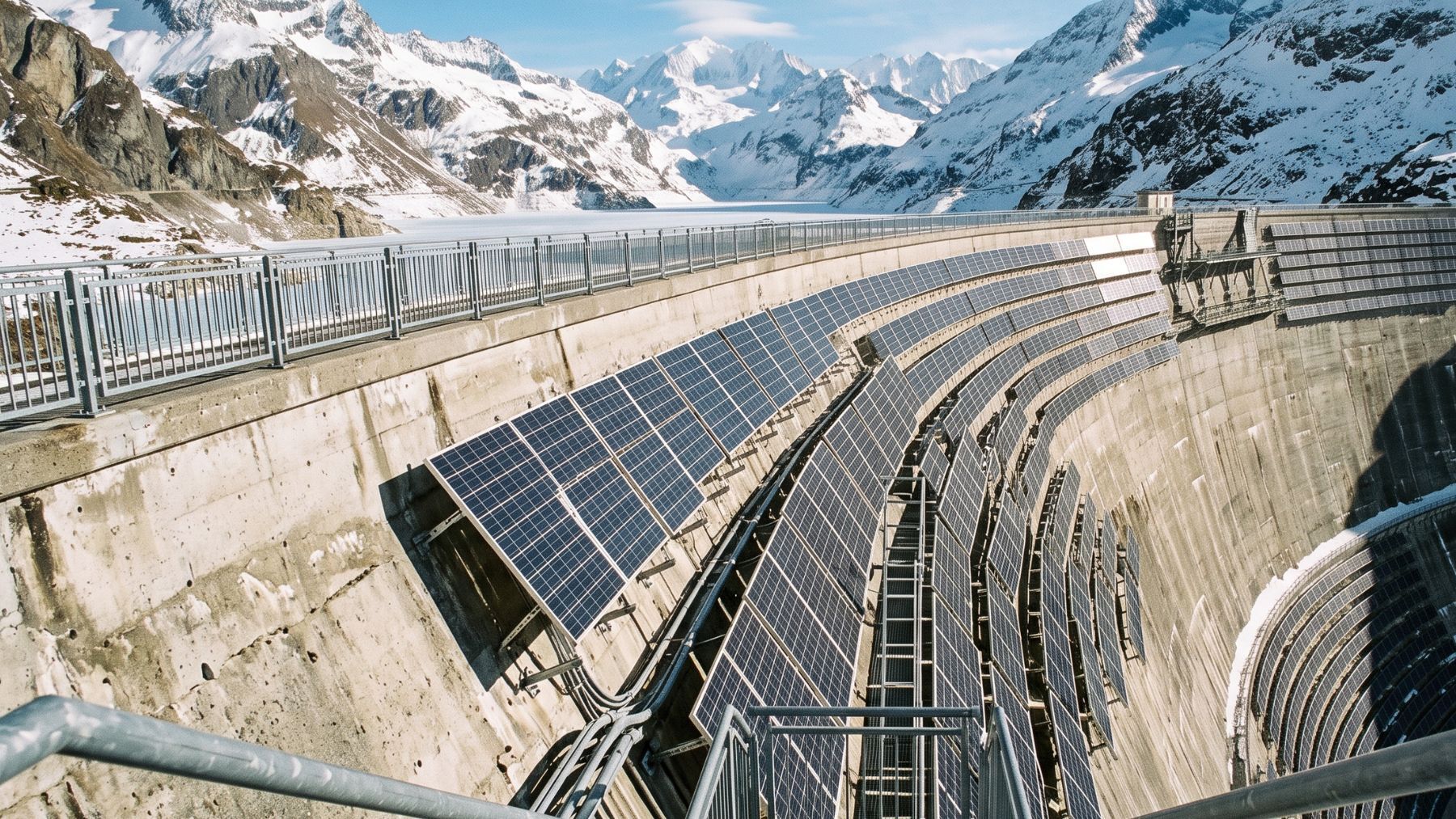
Up on the dam, almost everything that looks like a problem becomes an advantage.
The plant sits above the fog line, in thin, clear air that lets far more sunlight through.
The higher you go, the stronger and cleaner the sunlight becomes.
Cold actually helps, because solar panels work more efficiently when they are not baking in heat.
And then there is the snow, which acts like a giant mirror, bouncing extra light up onto the panels from below.
Scientists call it the albedo effect, and it can lift a mountain plant’s output well beyond anything possible in the valley.
A test site at a similar height recorded yearly output far above a typical Swiss plant.
Any ideas on an potential increase in ambient temperature from those dark surfaces of the panels?
Offsetting or replacing climate warming electricity generation, especially through what seems to be an increased efficiency, is great, but we’re still doing the climate warming methods.
And, not a statement of “don’t do this”, just concerned about regions of cold and frozen environments given our present course and interested in the data.
Solar modules are often cooler than their surroundings when they’re operating, since they transform ~25% of incoming solar energy into electricity instead of heat.
Isn’t it just the same heat energy that would have been beating down on the environment otherwise (plus some sort of reduction since the panels are converting some of it to power)