The forces that would normally just affect the washing machine and the floor it’s on will now affect the bracketed surface. Depending on the type of construction the violent vibrations will start to decay that section of the building. Brick will eventually crack and crumble, wood may not break but it’ll be louder. The problem is mainly that with this setup there’s no extra dampener, so the best solution is to buy a washing machine with better dampening system. FWIW my machine suspends its drum with two shock absorbers on the bottom and two suspension springs at the top, and has a central motor instead of an offset one with a belt. It also has concrete counterweights and a digital load-balancing system. If you’re having problems with your machine you should find one with similar features
Simply isolate the washing machine completely from the building. Levitate it entirely off the ground, suspended in the air via a massive toroidal superconducting electromagnet, 3 meters in diameter, cooled by liquid helium. (Which will need to be regularly topped off. It tends to slowly leak through solid walls.)
The noise would be greatly reduced. As the machine thrashes about, it will do little but disturb the air around it. Little noise will be generated, except from the sound of the machine’s own parts acting against each other.
Though, if you really wanted to optimize this for this setup, a different design is in order? Perhaps a non-standard design would better handle internal vibrational damping? Have you considered calling local stores and asking if they have any spherical washing machines in stock?


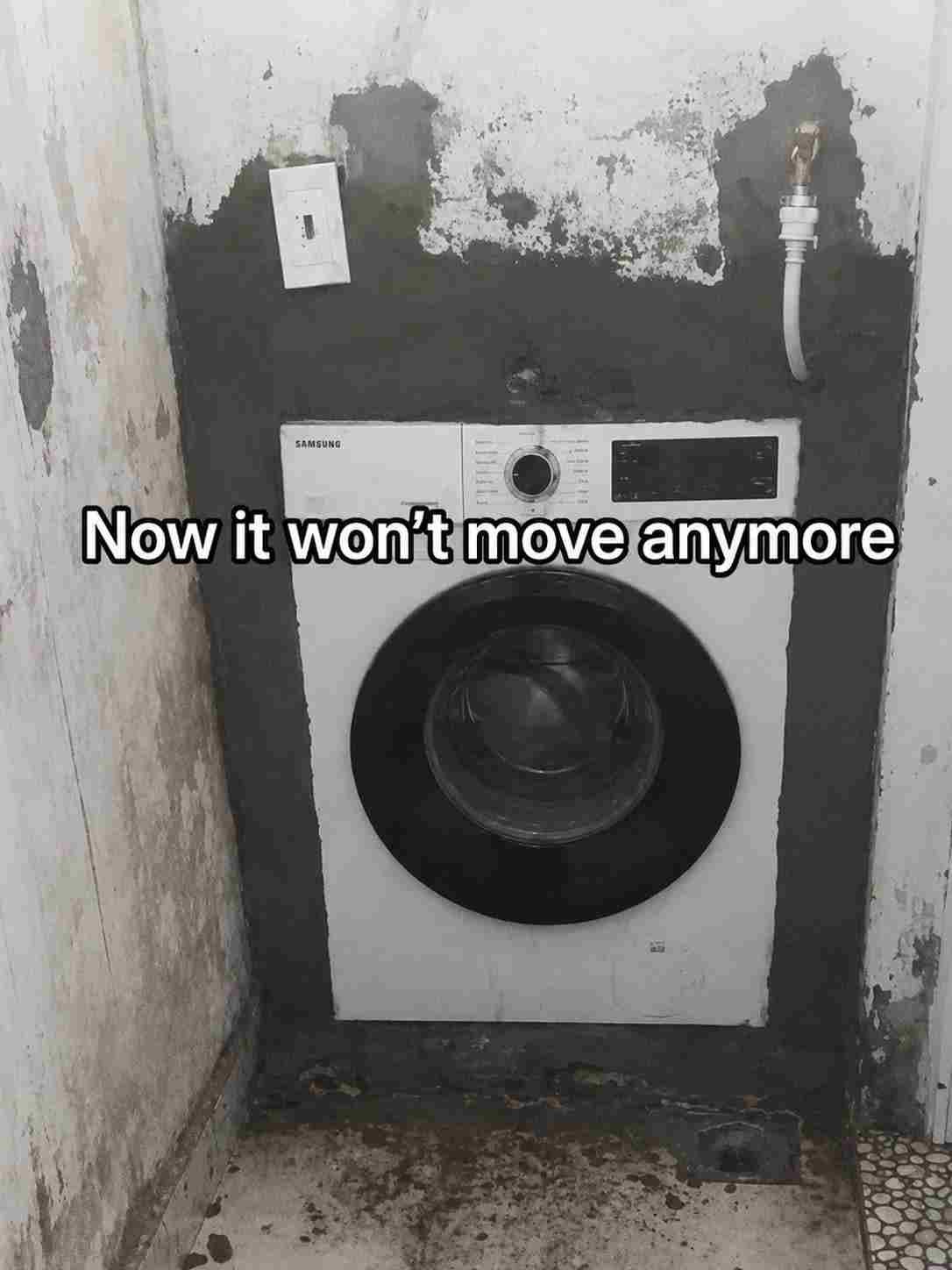
The forces that would normally just affect the washing machine and the floor it’s on will now affect the bracketed surface. Depending on the type of construction the violent vibrations will start to decay that section of the building. Brick will eventually crack and crumble, wood may not break but it’ll be louder. The problem is mainly that with this setup there’s no extra dampener, so the best solution is to buy a washing machine with better dampening system. FWIW my machine suspends its drum with two shock absorbers on the bottom and two suspension springs at the top, and has a central motor instead of an offset one with a belt. It also has concrete counterweights and a digital load-balancing system. If you’re having problems with your machine you should find one with similar features
I propose the most practical option possible:
Simply isolate the washing machine completely from the building. Levitate it entirely off the ground, suspended in the air via a massive toroidal superconducting electromagnet, 3 meters in diameter, cooled by liquid helium. (Which will need to be regularly topped off. It tends to slowly leak through solid walls.)
The noise would be greatly reduced. As the machine thrashes about, it will do little but disturb the air around it. Little noise will be generated, except from the sound of the machine’s own parts acting against each other.
Though, if you really wanted to optimize this for this setup, a different design is in order? Perhaps a non-standard design would better handle internal vibrational damping? Have you considered calling local stores and asking if they have any spherical washing machines in stock?