cross-posted from: https://mander.xyz/post/54786351
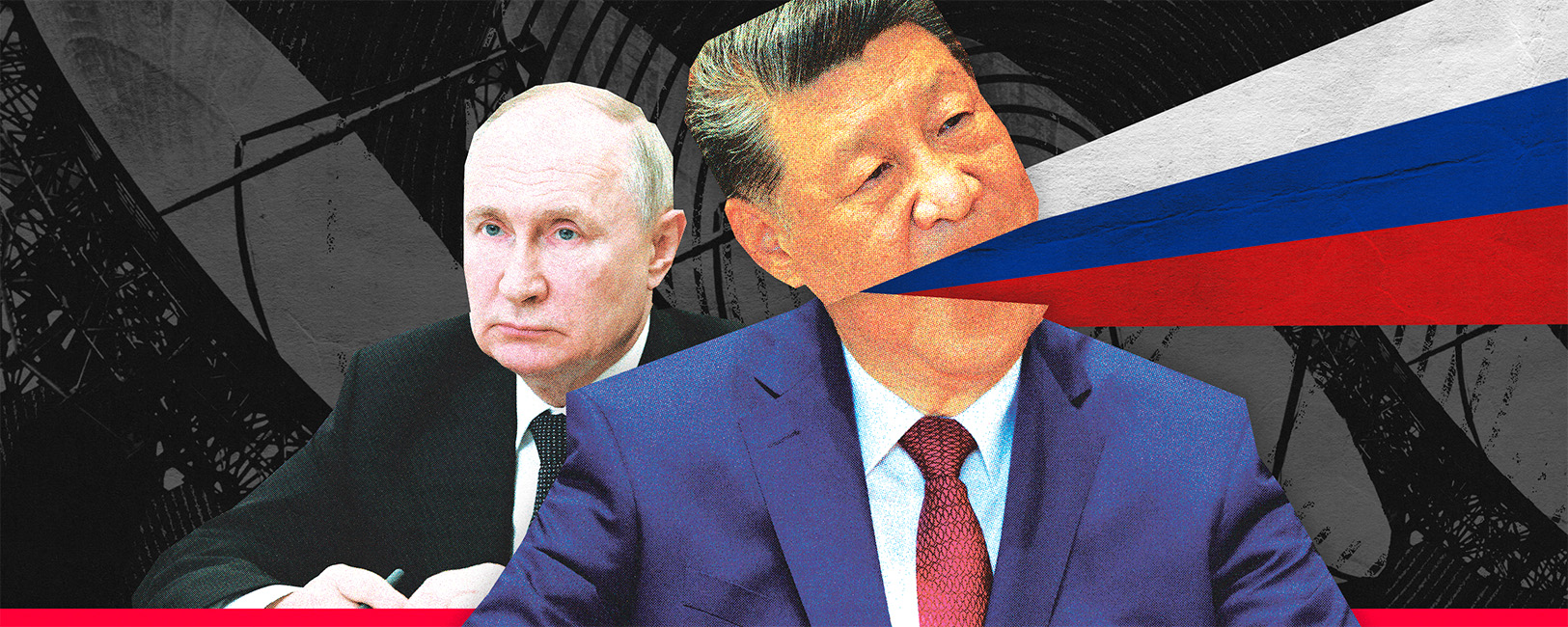
China presents itself as a neutral partner in Russia’s war against Ukraine, but Chinese state media serve to reproduce and reinforce exclusively Russian narratives, both among local populations in occupied Ukrainian territories as well as in China.
…
At first glance, Lu Yuguang presents himself with modesty. “I’m just a correspondent,” he claimed in a profile published in late May by RT, the Kremlin’s propaganda outlet. The Russia bureau chief of Phoenix TV - a Chinese television channel majority-owned by the Chinese state - … displays his war trophies in his office. They include fragments of Ukrainian drones, Russian military insignia and memorabilia from his reporting on the Chechen wars in North Caucasus. In one of the many photographs hanging on his wall, he stands alongside Maria Zakharova, the spokesperson for Russia’s Ministry of Foreign Affairs.
…
His alignment with the Kremlin’s narrative is undeniable. In a video released in April to mark Phoenix TV’s 30th anniversary, he refers to the invasion as a “special military operation,” Moscow’s euphemism for its war of aggression. Ukrainian prisoners of war are portrayed as preferring captivity to combat, omitting the systematic torture inflicted on Ukrainians in Russian detention facilities documented by international organisations such as Human Rights Watch. He also openly boasts of his “good relationship with the Russian military,” which grants him privileged access to the front lines.
…
China does not officially recognise Russia’s occupation of Ukrainian territory, but this has not prevented it from establishing a presence there. According to an investigation by the independent Ukrainian outlet Realna Gazeta, Chinese companies are investing in the occupied territories — primarily in reconstruction projects — alongside Russia. In parallel, Beijing’s influence is also gradually expanding in the media sphere.
“Publicly, China maintains a rhetoric of ‘neutrality,’ but within the information space of these territories, Chinese actors primarily serve to reproduce or reinforce the Russian narrative,” explains Vira Yastrebova, director of the Ukrainian organisation Eastern Human Rights Group, which specialises in the Donbas region and published a 2026 report on the economic dealings of China and Iran in the occupied territories.
…
China’s presence also takes the form of press trips organised and controlled by the Russian authorities. In April, a nearly ten-day tour organised by SOVINTERN, a pro-Kremlin “international socialist movement” publicly backed by Russian President Vladimir Putin, brought around ten participants — presented as international reporters — from countries including Japan, Turkey and the Democratic Republic of the Congo to the occupied territories. Among them were two Chinese bloggers.
…
Other members of the Chinese media have enjoyed similar privileged access. In 2022, Dmitry Maslak, Russian correspondent for China’s state broadcaster CGTN at the time, accompanied Russian forces during the siege of Mariupol. In 2023, a delegation led by Rao Jin, president of the nationalistic Chinese online outlet April Media, travelled to Donetsk and Crimea. He said he wanted to learn more about “life in Crimea,” claiming that Chinese audiences lacked “reliable information” because of the “ideological war waged by the West.”
…
More recently, the Institute of Mass Information (IMI), an RSF partner in Ukraine, profiled Zhu Haozheng, a freelance “war correspondent” who has travelled repeatedly to these regions since 2022. His reporting is clearly aligned with Kremlin messaging: he notably describes Ukrainians as “fascists,” echoing one of the Russian government’s favourite tropes. On the Chinese-language version of the Kremlin-controlled outlet Sputnik, he appears in a video filmed in Donetsk alongside Christelle Néant, co-founder of the pro-Russian disinformation site International Reporters.
…
“Even if limited in scale, the Chinese media presence in occupied Ukrainian territories represents a victory for Russian propaganda. Beijing provides the Kremlin with what it needs most: international legitimacy, the amplification of its media and help normalising the occupation. In return, Moscow opens the occupied territories to Chinese investment,"
says Pauline Maufrais from RSF Regional Officer for Ukraine.
…
Xi Jinping’s China is increasingly establishing itself as a preferred partner for media organisations operating in occupied Ukrainian territories.
Speaking to RSF, Andrii Dikhtiarenko, editor-in-chief of Realna Gazeta, who monitors China’s presence in these regions, has observed a clear shift since 2022. “Local propagandists are now travelling to China for exchanges of experience,” he said.
…
“Since the beginning of Russia’s full-scale invasion of Ukraine, the Chinese regime has sought to present itself as a neutral actor and potential mediator, yet allows Kremlin narratives to dominate China’s tightly censored information space, integrating them into state media content," says Aleksandra Bielakowska, Advocacy Manager at RSF Asia Pacific.
“Beijing has also reproduced and amplified Russian propaganda through outlets such as CGTN while allowing Russian state media to disseminate their messaging freely within a globally coordinated propaganda apparatus … The international community must show the same level of vigilance toward Chinese state media as it does toward Russian state media and prevent this propaganda from flooding the global information space.”
This is how I find out he’s actually Canadian??

relaaaaaaxx guy!
That explains the recent russia bots I’ve been seeing.