Maintainability debt gets expensive when work runs through it. Match code churn against the roadmap to decide what to refactor and what to leave alone.
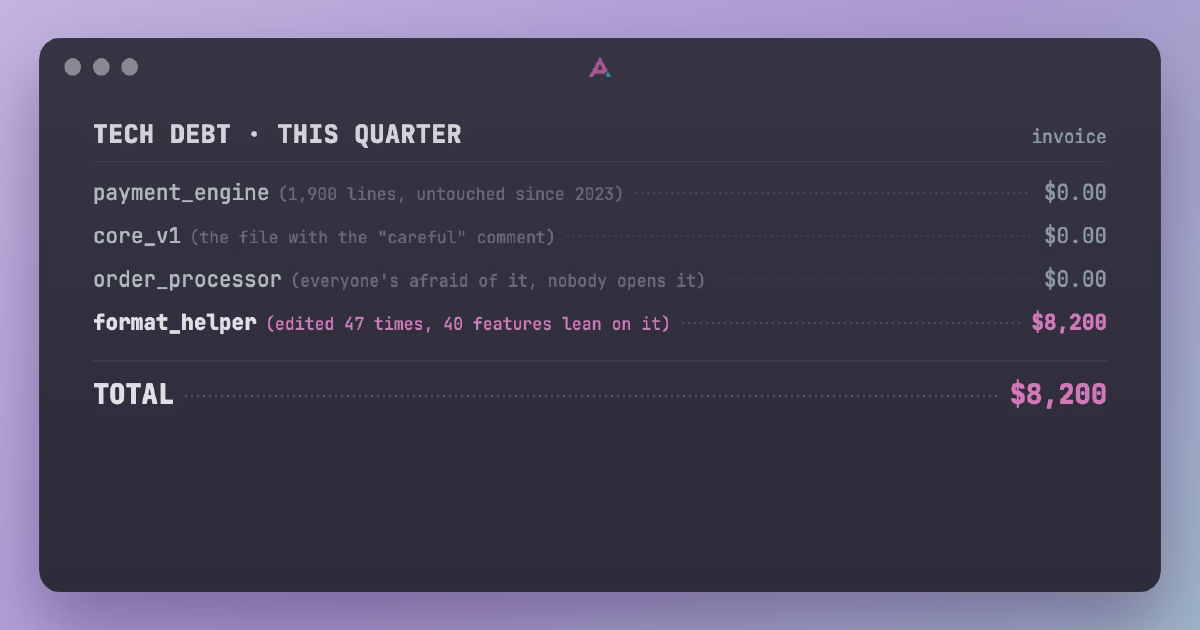
The cost of a piece of debt is its messiness multiplied by how often you go near it. A horrible module that hasn’t changed since 2023 costs almost nothing today. You’re not reading it or extending it. Refactoring it is paying down a loan that isn’t accruing interest. Meanwhile the mediocre little helper that 40 features lean on, the one edited every other week, is quietly the most expensive code you own. It’s usually not on anyone’s list because it doesn’t look scary.
I had not thought about tech debt in this way before. It makes perfect sense to focus on paying off the tech debt where you spend the majority of your time working, and hence accruing interest on.
Yeah I wish it was a more common understanding that your code files are just documents that describe the processes of your business.
If you have a process that nobody dares to touch anymore because it’s too messy, you have a document that holds part of your business hostage.
It forces you to stagnate in the areas described by the document, and you can work around that for quite a while, but that doesn’t mean it doesn’t do any harm.


I had not thought about tech debt in this way before. It makes perfect sense to focus on paying off the tech debt where you spend the majority of your time working, and hence accruing interest on.
deleted by creator
Yeah I wish it was a more common understanding that your code files are just documents that describe the processes of your business.
If you have a process that nobody dares to touch anymore because it’s too messy, you have a document that holds part of your business hostage.
It forces you to stagnate in the areas described by the document, and you can work around that for quite a while, but that doesn’t mean it doesn’t do any harm.