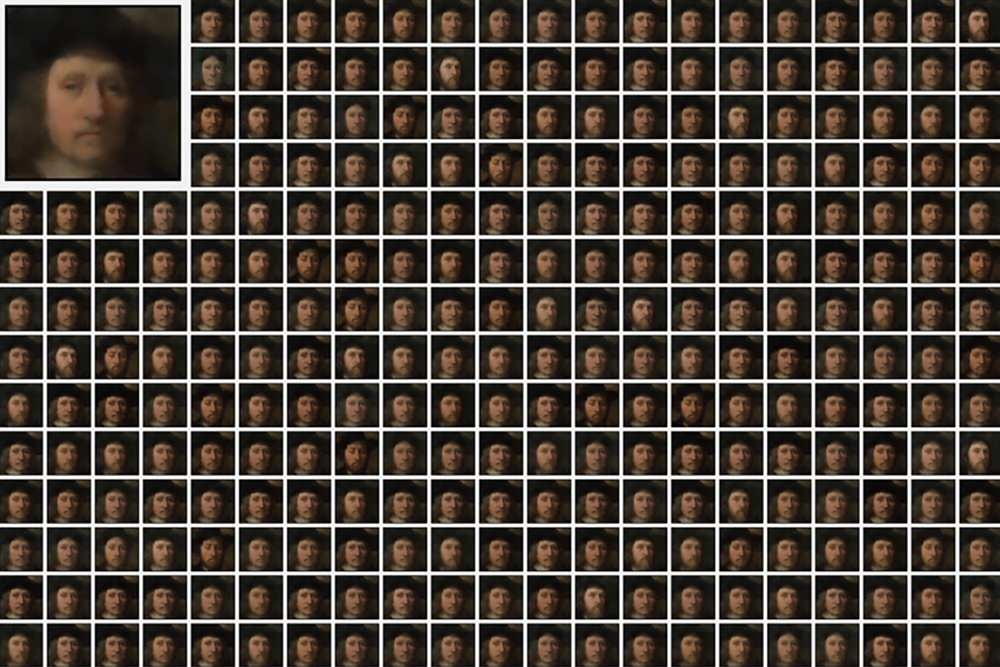
Images generated by AI models trained on massive datasets often can’t be traced to specific training images, MIT CSAIL researchers found. Removing individual images from the dataset didn’t change outputs, complicating copyright questions.
The entire term of “Artificial Intelligence” is basically a misnomer, false advertising, even fraud. It is merely an advanced “correlation engine”. It is the output of an algorithm, and has no concept of what anything is. It does not “know” anything. It is the result of the 1’s and 0’s humans input as training data or context, or give it access to query via the internet etc; including all the misinformation, disinformation, errors, and bias. There is no intelligence or critical thought. It does not get the difference between causation and correlation. It just responds based on some internal probability matrix or distribution; correlations compressed into weights/coefficients from all of the training data.
The only thing that makes its responses appear stochastic is the randomization seed and context, or other techniques harnesses use to dogfood its own responses into itself. Without those, you can have the exact same conversation, byte for byte, and the responses become evidently deterministic and “dumb”.
All of the “novel” solutions I’ve seen to date are not actually novel at all, having merely applied some technique documented in a far removed discipline, entirely explained by the properties of a gargantuan working memory and no off switch. We don’t call a computer “super intelligent” because it can process trillions of mathematical calculations a second. Those are merely properties we explicitly engineered into the machine.
…Perhaps. But I’m not sure what any of this has to do with the paper. It doesn’t claim anything like that, and the term “Artificial Intelligence” does not appear in anywhere in the work.
It does illustrate that a toy diffusion model can approximate an image outside its dataset. In fact, the target image being present in the dataset has a remarkably small effect as training scale goes up.
I don’t think this is really all that surprising if you understand how diffusers actually work. They don’t just draw contours and shit. They apply sequential transformations across a matrix of pixels in an iterative fashion, the transformation varies each iteration based on prompt embeddings and the surrounding pixels of each respective transformation, typically starting from a seed of arbitrary static. A lot of images share overwhelmingly identical techniques, with a tiny sliver being responsible for the truly creative deltas. Diffusers effectively learn techniques so it tracks that dropping singular training data here and there doesn’t change much.

The entire term of “Artificial Intelligence” is basically a misnomer, false advertising, even fraud. It is merely an advanced “correlation engine”. It is the output of an algorithm, and has no concept of what anything is. It does not “know” anything. It is the result of the 1’s and 0’s humans input as training data or context, or give it access to query via the internet etc; including all the misinformation, disinformation, errors, and bias. There is no intelligence or critical thought. It does not get the difference between causation and correlation. It just responds based on some internal probability matrix or distribution; correlations compressed into weights/coefficients from all of the training data.
The only thing that makes its responses appear stochastic is the randomization seed and context, or other techniques harnesses use to dogfood its own responses into itself. Without those, you can have the exact same conversation, byte for byte, and the responses become evidently deterministic and “dumb”.
All of the “novel” solutions I’ve seen to date are not actually novel at all, having merely applied some technique documented in a far removed discipline, entirely explained by the properties of a gargantuan working memory and no off switch. We don’t call a computer “super intelligent” because it can process trillions of mathematical calculations a second. Those are merely properties we explicitly engineered into the machine.
People forget that a checkers algorithm is also AI.
…Perhaps. But I’m not sure what any of this has to do with the paper. It doesn’t claim anything like that, and the term “Artificial Intelligence” does not appear in anywhere in the work.
It does illustrate that a toy diffusion model can approximate an image outside its dataset. In fact, the target image being present in the dataset has a remarkably small effect as training scale goes up.
I don’t think this is really all that surprising if you understand how diffusers actually work. They don’t just draw contours and shit. They apply sequential transformations across a matrix of pixels in an iterative fashion, the transformation varies each iteration based on prompt embeddings and the surrounding pixels of each respective transformation, typically starting from a seed of arbitrary static. A lot of images share overwhelmingly identical techniques, with a tiny sliver being responsible for the truly creative deltas. Diffusers effectively learn techniques so it tracks that dropping singular training data here and there doesn’t change much.