

cross-posted from: https://mander.xyz/post/57996219
…
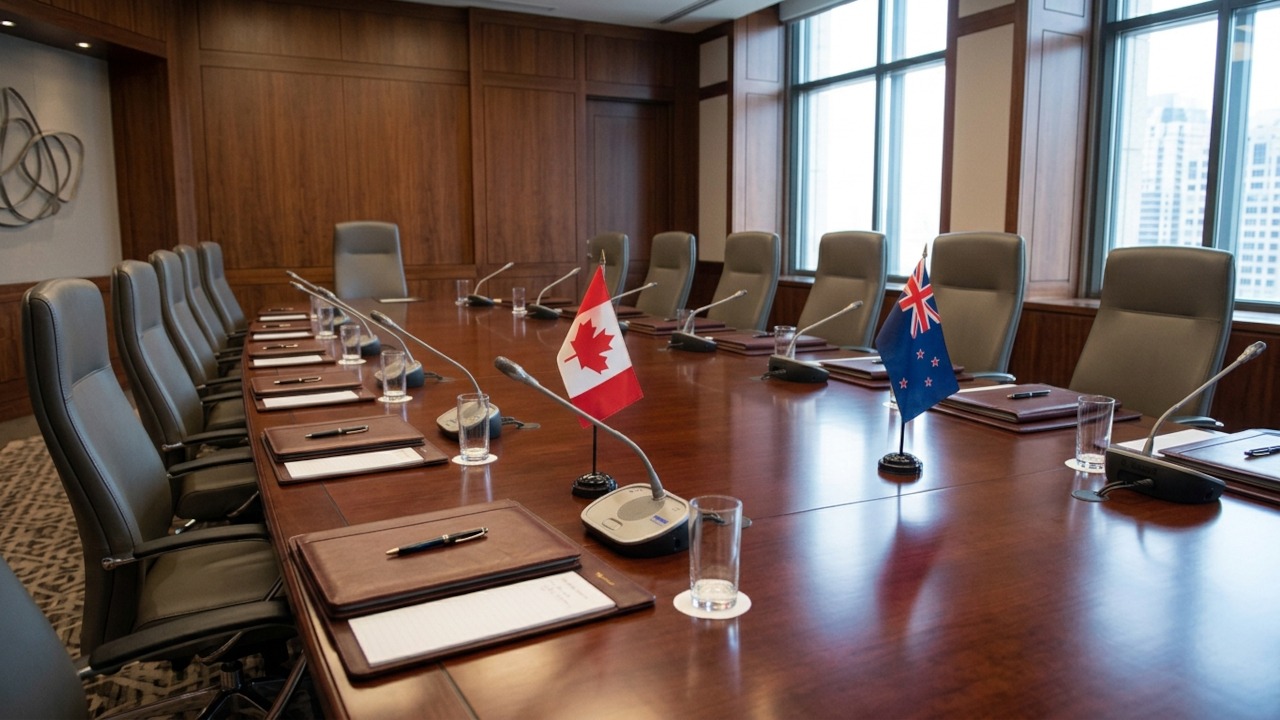
New Zealand Trade Minister Todd McClay made the comments at a press conference in New Zealand with visiting Australian Trade Minister Don Farrell. He said he had been discussing trade with his Canadian counterpart, Dominic LeBlanc, with a particular focus on how the two countries can make more of the opportunities already available under the Comprehensive and Progressive Agreement for Trans-Pacific Partnership (CPTPP).
“I think Canada is in the space of free and fair trade, at least as it relates to Australia and New Zealand, and I think we can do a whole lot more,” Mr Farrell said. “We’ve had a great friendship with Canada.”
…
Mr Farrell pointed to growing commercial openings, including greater access to the Canadian liquor market for Australian and New Zealand wine producers. He also noted Canada’s expanding presence in Southeast Asia, citing Singapore’s use of Canadian oil to replace supplies that had previously come from the Middle East.
The remarks come as both governments look to diversify trade amid rising global protectionism. Mr McClay said the tit-for-tat escalation of the tariff dispute between the United States and Canada had not been helpful for the wider trading system.
“It creates uncertainty. It drives up prices for consumers. It makes it very, very hard for businesses to plan and to invest,” he said. “We, as a government, and I, as trade minister, publicly have stated that we think the parties should work together and find a way through.”
…
What are we going to trade eachother, food stuff and raw minerals? All our economies are mostly still colonial resource extraction.
There is more to trade in the future than food and raw materials. But even if it were that simple, the move would reduce export dependencies for all three countries. More than a third of Australia’s exports - and a quarter of New Zealand’s - go to China, while the U.S. holds also a substantial export shares of both countries. Canada supplies three quarters of its exports to the U.S.
So this agreement of like-minded democratic countries would make them more resilient against future coercion. Even if that would be the only advantage (which is not imo), it is already enough.
as a person who eats food, I will happily eat their food stuff
But we already make our own food stuff locally?