
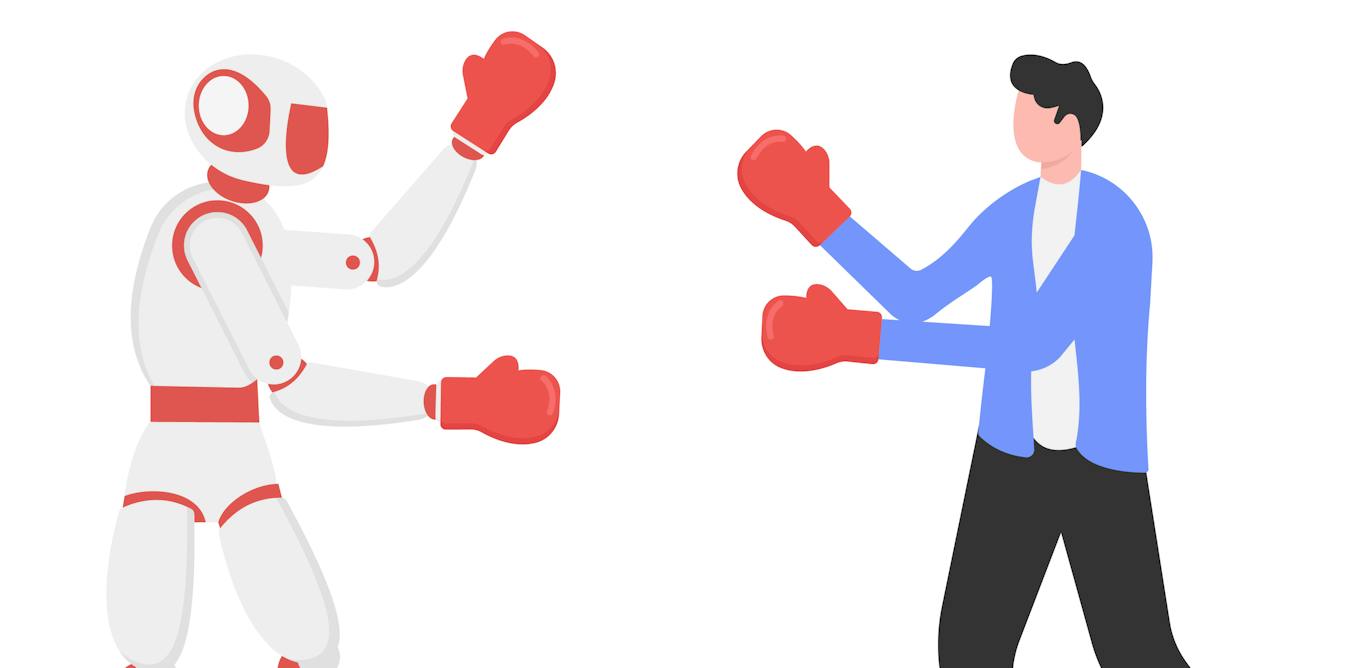
We’re seeing a lot of students, teachers, and scientists produce more, and worse, outputs because of improper AI use. It’s possible to use it better: Have it imitate a critic. Learning and creativity come from getting criticism and experiencing friction.
We found that when knowledge workers intentionally use AI to challenge their ideas – to generate friction – they can significantly improve their performance. Previous research on human-AI collaboration for loan evaluations had similar results.
A study I was not involved with found that creative writers produce better copy when they use AI as a sounding board rather than to ghostwrite.
Dunno, does that help other people? Every time I use it for programming and don’t specifically tell it what to do, it’ll just come up with assumptions. Might go the right direction. Or some random other direction and miss what’d be important factors.
Telling it for example to find issues with the following algorithm / implementation (and then copy-pasting my initial idea) has indeed helped me to find edge cases and stuff like that.
I also think there’s an issue with XY-Problems. Either AI suggested X to me. Or it was my fault because I asked for X. But I’ve ended up in several wild goose chases before, and it’s rare AI stops and points out I’m on the wrong path because I need Y.
Extraneous drivel is very annoying, though. Seems to me especially ChatGPT likes to spam multiple solutions to any question and you can often disregard the first two pages of “ideas” it came up how to NOT do it.