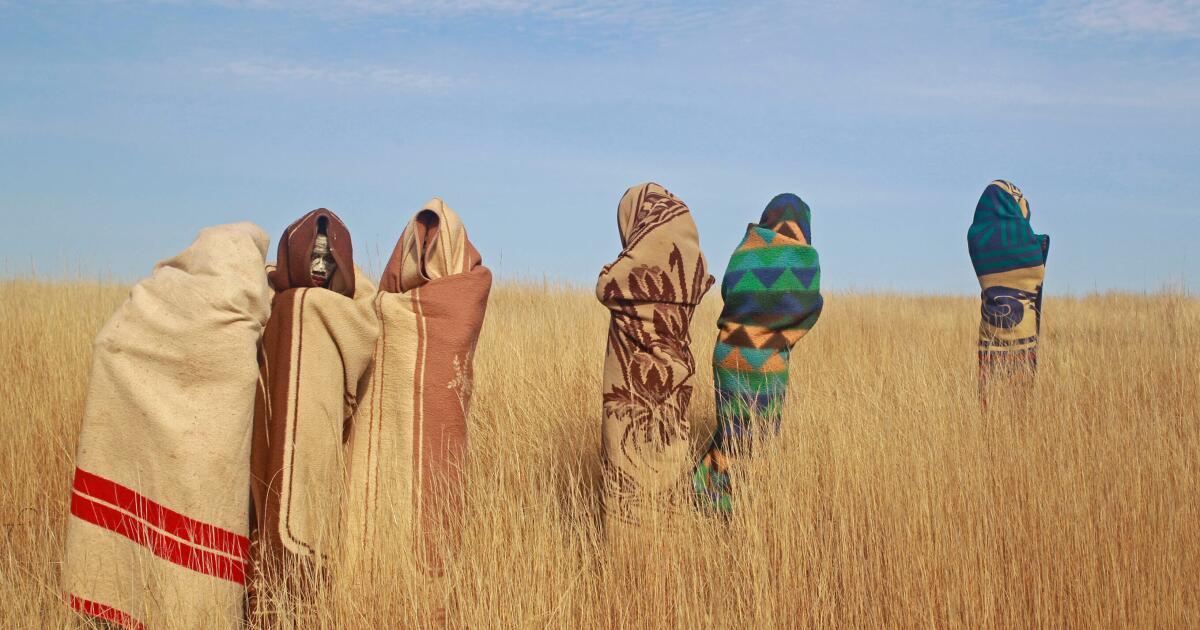
Traditional initiation is a rite of passage into manhood for young males that is practiced by various ethnic groups in Africa, including parts of South Africa. Among them are the Xhosa, Ndebele, Sotho and Venda communities.
“The human body exhibits several evolutionary “mistakes” that can lead to serious health issues or death. For example, the design of the human throat, where the trachea and esophagus are closely positioned, increases the risk of choking, which causes about 5,000 deaths annually in the United States alone.
Similarly, the human spine, adapted to upright walking, has an S-shape that creates high pressure on the lower back, making lower-back pain extremely common, affecting 60% to 70% of people worldwide.
The human eye also has a blind spot due to the optic nerve passing through the retina, a design flaw absent in octopuses, whose optic nerves are behind the retina.
In some animal species, mating behaviors are inherently fatal. Male antechinus, a small Australian marsupial, undergo a massive hormonal surge during the breeding season that leads to immune suppression, internal bleeding, and death within weeks of mating.
In praying mantises, males are often cannibalized by females during or after mating, a behavior that provides nutritional benefits to the female and enhances offspring survival.
Similarly, in certain octopus species, males die shortly after mating due to programmed biological decline, and females stop feeding while guarding their eggs until they die, driven by hormonal changes that prioritize reproduction over survival.
Some evolutionary adaptations that were once beneficial can become maladaptive in changing environments. For instance, parthenogenesis—reproduction without fertilization—can be advantageous in isolated or sparse populations by allowing rapid reproduction without a mate, but it leads to a lack of genetic diversity, making species vulnerable to pathogens and environmental change, and thus a dead end in evolutionary terms.
Similarly, the honeybee’s barbed stinger causes fatal abdominal rupture upon stinging, making it the only bee species that cannot survive after stinging, a trait that is evolutionarily costly but may be maintained due to the defensive benefit it provides to the hive.
Evolution does not produce perfect designs; it works with existing structures, often resulting in compromises. The human testes, located outside the body to maintain cooler temperatures for sperm viability, are vulnerable to injury and can lead to painful conditions like inguinal hernias due to gravity and lack of protection.
The human foot, with 26 bones adapted for grasping in arboreal ancestors, is too flexible for efficient bipedal walking, leading to sprains, stress fractures, and tendinitis.
These examples illustrate that evolution is not a process of intelligent design but a series of incremental changes shaped by natural selection, which can result in traits that are harmful or fatal under certain conditions.”
Notice I mentioned reproductive mistakes? We’re talking about dicks here. I’m aware of the flaws of our inherited genetics and bodies.
The fact is that foreskin likely provides more protection than it provides determent, at least long enough to reproduce. After reproduction, evolution doesn’t give a shit.
Cutting off foreskin is barbaric and almost wholely rooted in religious dogma with a few exceptions where it may be medically required.
Cut off a body part because sometimes it’s a problem later which usually can be treated in a less-destructive manner? No, that’s not a rational response.


I don’t believe this is true.
Kidney issues, prone to UTI, etc.
Dick cheese
Avoidable with the most basic hygiene.
Have you met teenage boys?
I was one? I just washed my dick in the shower.
Which as everybody knows has been available and abundant in every and all parts of the world for all of history.
Correct, which is why we have foreskin. Evolution doesn’t typically select for fatal reproductive mistakes.
“The human body exhibits several evolutionary “mistakes” that can lead to serious health issues or death. For example, the design of the human throat, where the trachea and esophagus are closely positioned, increases the risk of choking, which causes about 5,000 deaths annually in the United States alone. Similarly, the human spine, adapted to upright walking, has an S-shape that creates high pressure on the lower back, making lower-back pain extremely common, affecting 60% to 70% of people worldwide. The human eye also has a blind spot due to the optic nerve passing through the retina, a design flaw absent in octopuses, whose optic nerves are behind the retina. In some animal species, mating behaviors are inherently fatal. Male antechinus, a small Australian marsupial, undergo a massive hormonal surge during the breeding season that leads to immune suppression, internal bleeding, and death within weeks of mating. In praying mantises, males are often cannibalized by females during or after mating, a behavior that provides nutritional benefits to the female and enhances offspring survival. Similarly, in certain octopus species, males die shortly after mating due to programmed biological decline, and females stop feeding while guarding their eggs until they die, driven by hormonal changes that prioritize reproduction over survival. Some evolutionary adaptations that were once beneficial can become maladaptive in changing environments. For instance, parthenogenesis—reproduction without fertilization—can be advantageous in isolated or sparse populations by allowing rapid reproduction without a mate, but it leads to a lack of genetic diversity, making species vulnerable to pathogens and environmental change, and thus a dead end in evolutionary terms. Similarly, the honeybee’s barbed stinger causes fatal abdominal rupture upon stinging, making it the only bee species that cannot survive after stinging, a trait that is evolutionarily costly but may be maintained due to the defensive benefit it provides to the hive. Evolution does not produce perfect designs; it works with existing structures, often resulting in compromises. The human testes, located outside the body to maintain cooler temperatures for sperm viability, are vulnerable to injury and can lead to painful conditions like inguinal hernias due to gravity and lack of protection. The human foot, with 26 bones adapted for grasping in arboreal ancestors, is too flexible for efficient bipedal walking, leading to sprains, stress fractures, and tendinitis. These examples illustrate that evolution is not a process of intelligent design but a series of incremental changes shaped by natural selection, which can result in traits that are harmful or fatal under certain conditions.”
Notice I mentioned reproductive mistakes? We’re talking about dicks here. I’m aware of the flaws of our inherited genetics and bodies.
The fact is that foreskin likely provides more protection than it provides determent, at least long enough to reproduce. After reproduction, evolution doesn’t give a shit.
Cutting off foreskin is barbaric and almost wholely rooted in religious dogma with a few exceptions where it may be medically required.
Happens to girls, too.
Got data to back that up? Like, actual empirical data.
https://en.wikipedia.org/wiki/Phimosis
Cut off a body part because sometimes it’s a problem later which usually can be treated in a less-destructive manner? No, that’s not a rational response.
A rare, treatable condition? Yeah, I don’t think so.