Certain death? Of course not, that’s absurd. I think you’ve got a very warped “pop-history” view of what the world was like long ago. Of course it depends entirely on when and where we’re talking about (some periods in some places common folk practically never traveled, other times and places people were traveling all the time) but if we assume a time and place where traveling was common, a traveler could expect:
Paved roads
Plenty of places to stop and rest (even if there are no inns available, plenty of people are willing to take in travelers for a night, especially holy men on a pilgrimage)
Few animals left who are willing to try preying on humans (they learned their lesson looooong ago)
Infrequent disease (you’re spending most of your time out in the open air with a small group of the same people, the only place for disease to come from is unclean water, which you know better than to drink outside of emergencies)
What part of these conditions reminds you of the tightly-packed, underfed, sedentary life of a slave being transported as cargo on a boat?
You’re being absurd. Cleanliness was not what it is today. Even in war marches more died from water born disease as recent as 1800s just trudging rather than war itself.
This is our history and how some of our lineages may have been entirely terminated.
Bring oblivious to this is actually really insulting for some who know very well what it took for our own lineage just to travel to safety.
It absolutely was not a walk in the park like you’re selling it. Some people were hunted for years before getting safe.
People like to be clean—that’s part of our nature and wasn’t invented in the year 1900. Ash can be used as soap and is extremely abundant.
Even in war marches
You say that like war matches are less likely to be deadly. Medieval military logistics were extremely difficult to manage. The needs of an entire army are massively different to the needs of a small band of pilgrims or other travelers. It is more difficult to maintain food supplies, clean drinks, and safe lodging when you’re traveling in an enormous group of (sometimes unwelcome) armed men.
It absolutely was not a walk in the park like you’re selling it
For a lot of people in a lot of places in a lot of time periods, it really was. Towns were close together, people were generous with travelers, and the roads were safe.


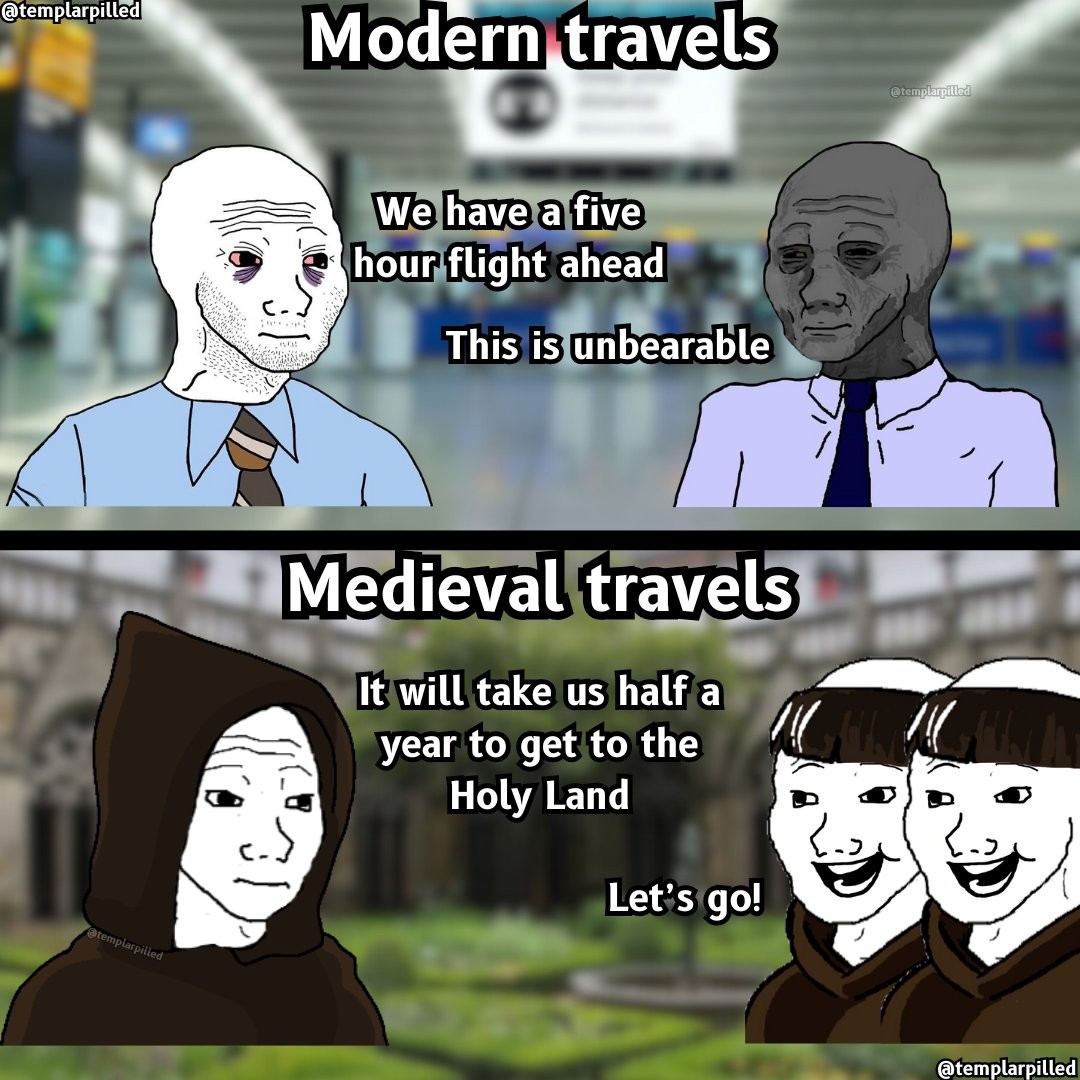
Certain death? Of course not, that’s absurd. I think you’ve got a very warped “pop-history” view of what the world was like long ago. Of course it depends entirely on when and where we’re talking about (some periods in some places common folk practically never traveled, other times and places people were traveling all the time) but if we assume a time and place where traveling was common, a traveler could expect:
What part of these conditions reminds you of the tightly-packed, underfed, sedentary life of a slave being transported as cargo on a boat?
You’re being absurd. Cleanliness was not what it is today. Even in war marches more died from water born disease as recent as 1800s just trudging rather than war itself. This is our history and how some of our lineages may have been entirely terminated.
Bring oblivious to this is actually really insulting for some who know very well what it took for our own lineage just to travel to safety.
It absolutely was not a walk in the park like you’re selling it. Some people were hunted for years before getting safe.
People like to be clean—that’s part of our nature and wasn’t invented in the year 1900. Ash can be used as soap and is extremely abundant.
You say that like war matches are less likely to be deadly. Medieval military logistics were extremely difficult to manage. The needs of an entire army are massively different to the needs of a small band of pilgrims or other travelers. It is more difficult to maintain food supplies, clean drinks, and safe lodging when you’re traveling in an enormous group of (sometimes unwelcome) armed men.
For a lot of people in a lot of places in a lot of time periods, it really was. Towns were close together, people were generous with travelers, and the roads were safe.