

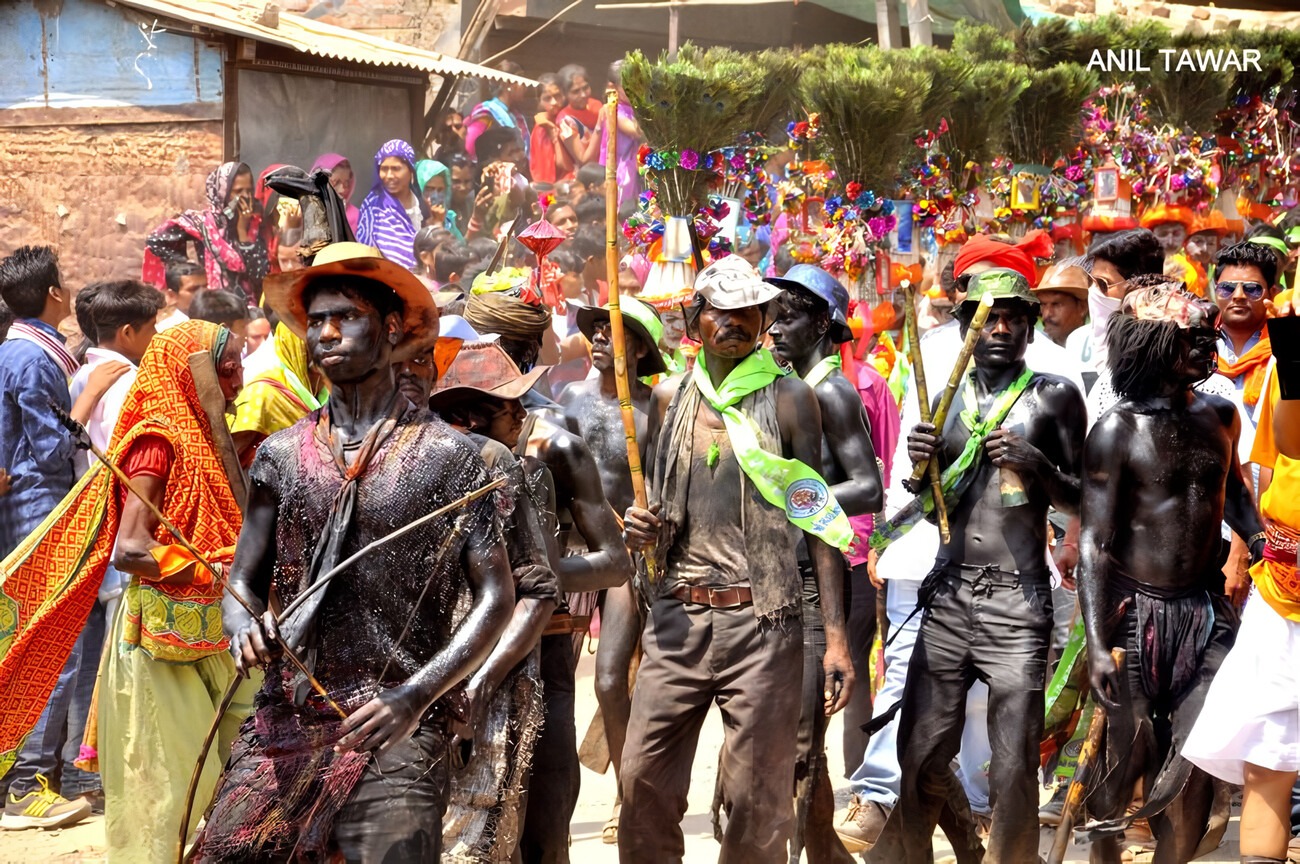
Last Updated on January 21, 2026 In July 2025, thousands of Bhils gathered in Banswara for the Bhil Tribal Conference. The crowd’s mood was unusually charged. Master Bhanwarlal Parmar, founder of the Adivasi Family Organization, declared that “even after 70 years, the demands of Tribal communities remain unfulfilled,” adding “Tribals are the original inhabitants of India"
The time had come to intensify Bhil’s long-standing demand for an autonomous state: Bhil Pradesh.
The prospective state of Bhil Pradesh would merge 45–49 districts across the four existing Indian states of Rajasthan, Gujarat, Maharashtra, and Madhya Pradesh. Beyond its geographical significance, this movement raises a deeper challenge: it asks whether a modern nation built on democratic ideals can meaningfully recognize the political and territorial aspirations of its Indigenous peoples, rather than merely incorporating them into existing systems of governance.
Over a century after the movement began, Bhil Pradesh has re-emerged as one of India’s most significant geopolitical issues. The Bharat Adivasi Party (BAP), a political party founded in 2023 that advocates for Tribal communities, has put the Indian government against a wall and has the potential to permanently redesign the contours of the world’s largest democracy.