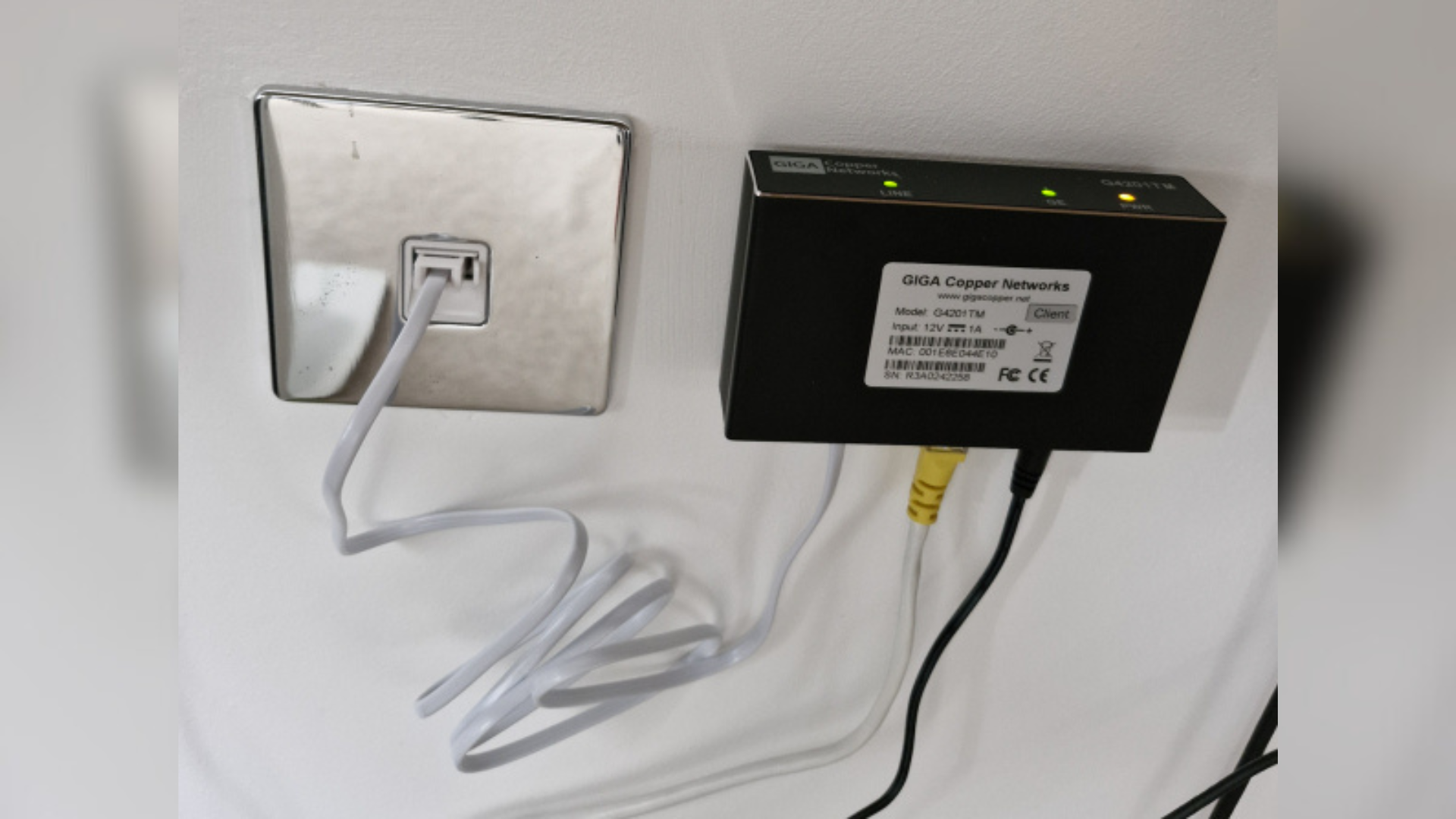
But he’s using the existing telephone lines. He plugs a special modem into the rj11 jacks in the wall, on each side of the connection.
“Our guy chose the GIGA Copper G4201TM which uses G.hn modulation to break the signal into lots of tiny sub-carriers spread across a wide frequency band. Then, it basically plays a game of tug of war, balancing bit-loading in real time with robust error correction.”
Which is a capability that shouldn’t be ignored, even if the guy in question did nothing interesting and used an off-the-shelf product.
Utilizing existing wiring without needing to make changes is extremely useful. It’s the basis of technologies like HomePlug (Ethernet over power line) and MoCA (Ethernet over coax). Adding an option to use old phone lines (note: this is HIGHLY dependent on what wiring was used) would be a welcome alternative.

But he’s using the existing telephone lines. He plugs a special modem into the rj11 jacks in the wall, on each side of the connection.
“Our guy chose the GIGA Copper G4201TM which uses G.hn modulation to break the signal into lots of tiny sub-carriers spread across a wide frequency band. Then, it basically plays a game of tug of war, balancing bit-loading in real time with robust error correction.”
I misread that entirely. So really he did nothing but install an adaptor at each port.
Which is a capability that shouldn’t be ignored, even if the guy in question did nothing interesting and used an off-the-shelf product.
Utilizing existing wiring without needing to make changes is extremely useful. It’s the basis of technologies like HomePlug (Ethernet over power line) and MoCA (Ethernet over coax). Adding an option to use old phone lines (note: this is HIGHLY dependent on what wiring was used) would be a welcome alternative.