cross-posted from: https://hexbear.net/post/7678790
cross-posted from: https://news.abolish.capital/post/28787
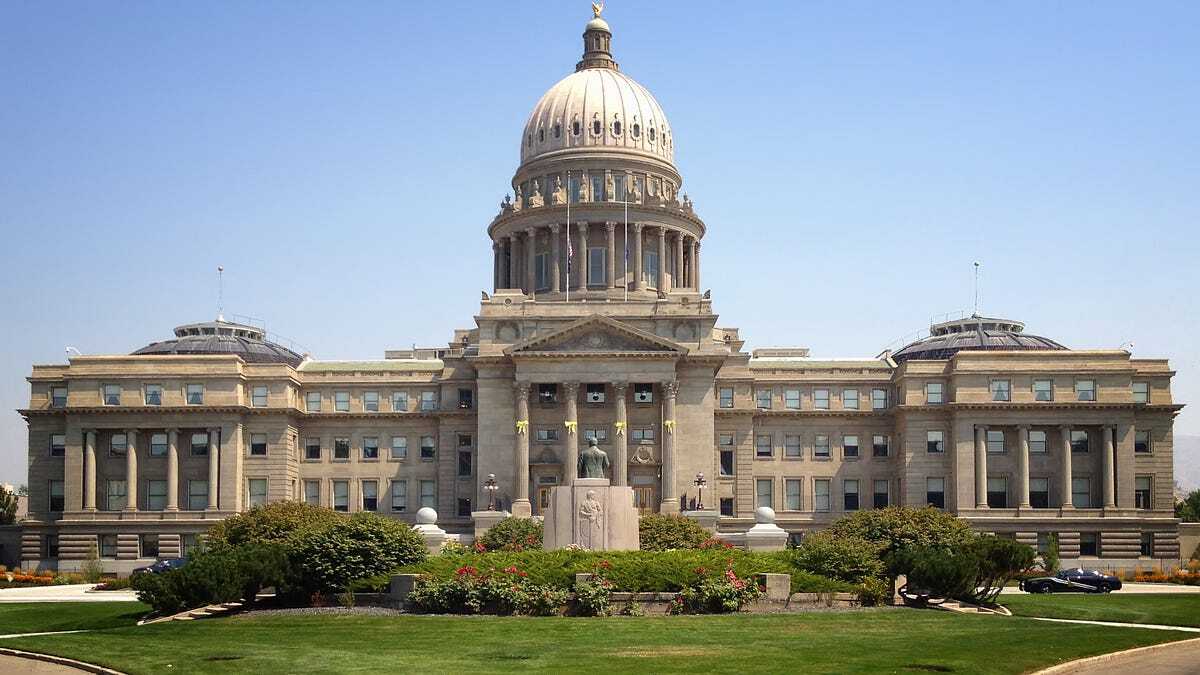
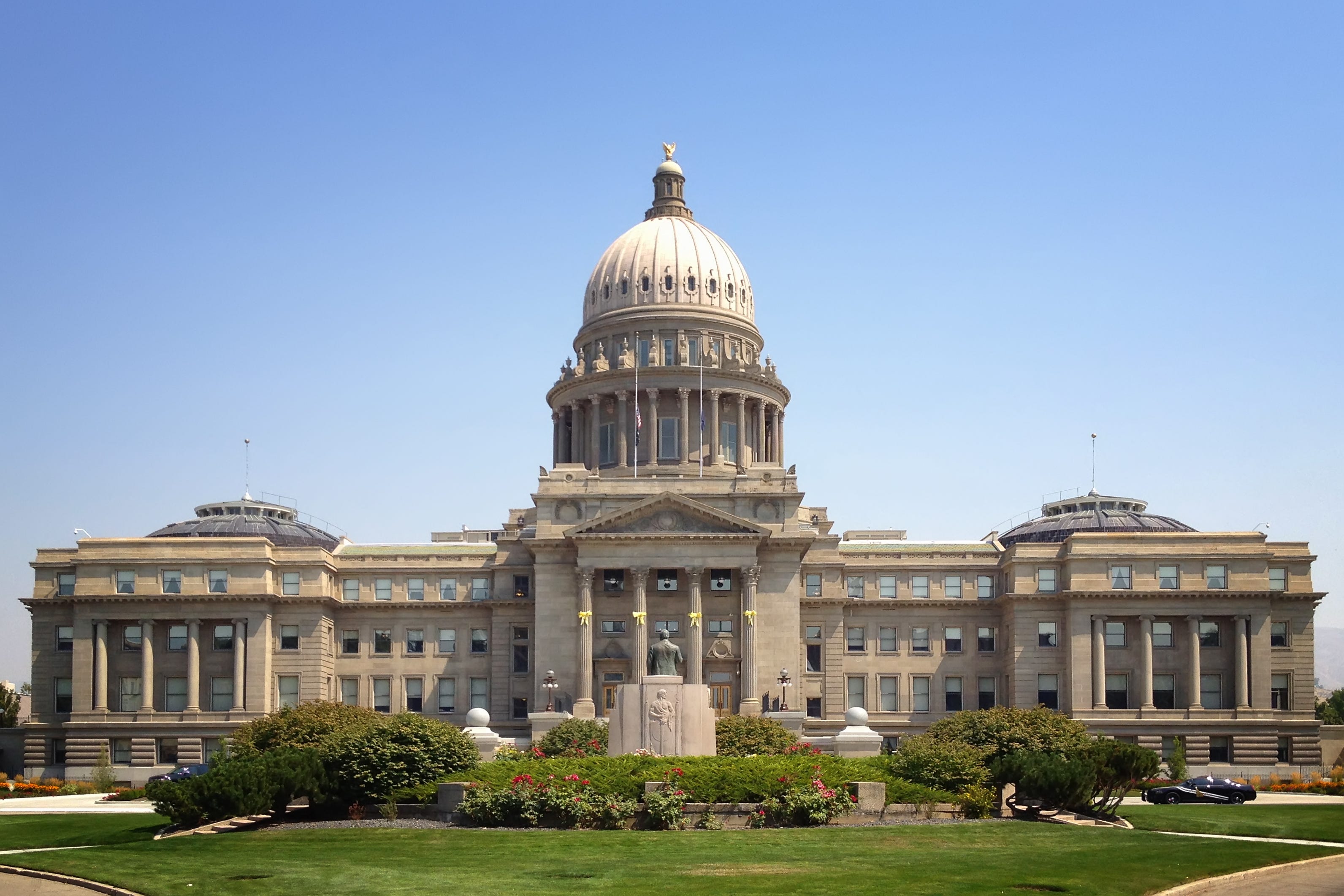
Idaho Capitol // Wikimedia Commons
Erin In The Morning is a reader-supported publication. To receive new posts and support my work, consider becoming a subscriber.
In the modern anti-transgender panic, several states have passed laws banning transgender people from restrooms consistent with their gender identity. Early bills focused primarily on K-12 schools, but the scope quickly expanded. Some states extended bans to even private colleges and universities. Others adopted sweeping “government building” prohibitions, barring transgender people from restrooms in all publicly owned facilities—a far broader category than it sounds, encompassing airports, rest stops, and other everyday spaces. A few states went further still, adding punitive enforcement mechanisms; Florida, for example, attached criminal penalties to its ban. Yet one category remained largely untouched: private business bathrooms. That exception is now collapsing. Multiple states are advancing a new generation of bathroom bills that would extend these bans into private businesses for the first time.
The first clear sign that private business bathrooms could be targeted came this year in Kansas. At the end of January, the state passed SB 244 and HB2426 through a rushed “gut-and-go” process designed to bypass portions of public hearings. The legislation drew attention for several reasons, including provisions revoking the driver’s licenses of transgender people and forcing them to obtain new ones reflecting their assigned sex at birth. But another provision—first identified by Erin In The Morning and later confirmed by legal and advocacy organizations in Kansas and nationally—was even more alarming. The bill appeared to create a mechanism allowing so-called bathroom bounty hunters to sue transgender people encountered in any restroom, whether in a government-owned building or a private business. With little warning, Kansas had advanced what looked to be the first measure directly threatening transgender people’s access to private business bathrooms.
Although the bill was vetoed, Republicans hold enough seats in the Kansas Legislature to potentially override that veto. If they do, the measure would take effect quickly. Transgender Kansans would not only be forced to scramble for updated identification documents reflecting their assigned sex at birth, but would also have to navigate daily life by mapping trips around the availability of gender-neutral bathrooms. Any transgender person who simply continues using the restroom they have always used could face lawsuits seeking substantial damages from individuals eager to weaponize the law for harassment—or profit.
Now, it appears these kinds of bills are spreading. In Idaho, a separate measure—House Bill 607—is scheduled to be heard in committee today and similarly targets transgender people’s access to private business bathrooms. The bill would allow lawsuits against any “place of public accommodation” that permits transgender people to use restrooms consistent with their gender identity. While it does not include the criminal penalties or explicit bounty-style provisions seen elsewhere, its practical effect would be sweeping: private businesses across the state could face legal risk simply for allowing transgender people to use the restroom. The scope of bathroom bans is no longer confined to schools or government buildings. It is expanding.
Erin In The Morning has identified additional bills in state legislatures across the country. In Indiana, HB 1198 would apply to any public restroom—whether privately owned or government-run—and would establish criminal penalties for anyone who “knowingly or intentionally enters a restroom that is designated to be used” by someone of a different assigned sex at birth. In Missouri, HB 2314 would weaponize the state’s Human Rights Act against private businesses that allow transgender people to use restrooms consistent with their gender identity, effectively turning a civil rights law into a tool for restricting transgender rights. And in Idaho, yet another proposal would not only bar private businesses from permitting transgender people to use certain restrooms but would also impose criminal penalties on violators.
It is worth noting that, so far, anti-transgender bathroom bans have had uneven real-world enforcement. In K-12 schools—where administrators wield significant authority—they have been highly effective at policing transgender students. In colleges and public buildings, however, enforcement has been far more sporadic, with only a handful of documented expulsions from restrooms in states like Texas and Florida. But this next wave of legislation could fundamentally alter that balance. By targeting private businesses and imposing civil or criminal liability directly on transgender individuals, these bills move enforcement out of institutional hands and into the realm of lawsuits and vigilantism. And history offers a warning: once a new anti-trans legal strategy gains traction in one state, it rarely stays there.
Erin In The Morning is a reader-supported publication. To receive new posts and support my work, consider becoming a subscriber.
From Erin In The Morning via This RSS Feed.
The solution has always been single-use/private bathrooms.
Communal bathrooms start in school and I guess they try to get kids of the same (assigned at birth) gender to become comfortable around each other. But, the whole premise of that is flawed. Why not put all the kids in the same bathroom? Because then the straight boys and the straight girls would look at each other, and you can’t have that. But if you segregate them, gay boys and gay girls can still look at the people they’re attracted to in the bathroom, and you’re back to the original problem. The stated problem of transgendered people in the bathroom is that they “don’t want boys in the girls’ bathroom.” We can debate the wording or whatever, but the problem already existed before transgendered people were added into the equation. And so did the solution.
Even with transgendered people in the equation, the solution is right there. If you’re a man and you want your daughter safe in the bathroom, and it’s legal for anyone to go into either bathroom (because transgender does not equate to presentation or passing 100% of the time), then you accompany her into the bathroom. No one cares if you mind your own business.
The real problem is that people want legal justification to be cruel. That’s the real issue. They see the rich and powerful get away with it, and they vote for these guys because they abuse people like they wish they could, and they want in on the action. It’s never been about safety, it’s always been about cruelty. 100%.
The solution has always been single-use/private bathrooms.
These bills are designed to eliminate trans and gender nonconforming people from public life, not to address any actual problems. The solution is just not doing that. Trans people using the bathroom that matches their gender isn’t new and nobody cared before this manufactured outrage. Ultimately this is just about enforcing traditional gender roles.
I still support these types of bathrooms of course, they’re great for privacy and also benefit people who don’t feel comfortable in gendered bathrooms.
Also a single-use solution:

See? One for everybody!
You can’t solve civil rights injustice with drywall and doors. The fundamental issue is that the category “women” includes transgender women and “men” includes transgender men. Those are the bathrooms they belong in.
Pivoting the issue to “let’s build single-use bathrooms” is arguing that segregation is fine if we all get to poop alone.
Setting aside all the rudeness, can you actually say what’s wrong with everyone just using a normal bathroom? I mean like how your bathroom is at home, but minus a shower. So each stall has a sink and a toilet in it.
Or are you saying you want communal bathrooms, you just want them on your terms?
Because I’m all for trans women using women’s bathrooms if that’s what they want and everyone is in agreement. That’s not a problem. I just don’t wanna share a bathroom with anybody and I think it’s weird that we do this at all. I don’t want you in my bathroom if you’re male, female, cis, trans, young, old, Black, white, or whatever. I just wanna poop in peace.
Only real problems need solutions.