

3·
6 months agoMaybe that low torque is desirable for patient stability?
Maybe that low torque is desirable for patient stability?
Fair, but that’s the same problem human thinkers face. Faulty inputs == faulty outputs. You should always be validating your sources.
Sure, but “being dumb” isn’t an exclusive club for people with low intelligence. There plenty of very smart people that are also dumb. Hell, most AIs could be classified as smart but dumb.
Wouldn’t the knock-on effects of a reduced attention span pretty much look like ‘dumber’?

I’m gonna guess 17:25:20
It’s not an “if” detector, it’s a “how much” detector. It looks like it’s using the LED chamber to light the film in a consistent way, and then the phone camera measures the color change to quantify how much radiation it was exposed to.

Aren’t we?
Even $1,000,000,001 is too much. I’d probably cap it somewhere closer to $10m, if we have to use money.
One aspect to consider is exactly what data these devices are exfiltrating from your network. You usually can’t see the contents of the telemetry sent, but given that a LOT of smart devices have cameras and/or microphones, do you really trust that your IoT devices are not sending back audio and or video recordings of the inside of your house?
That’s an interesting point, and leads to a reasonable argument that if an AI is trained on a given open source codebase, developers should have free access to use that AI to improve said codebase. I wonder whether future license models might include such clauses.
I’m an ls -alh guy, myself.
There’s always the Jewel Cooler:

They build this picture from many other sources besides ad clicks, so the point is to obscure that. Problem is, if you’re only obscuring your ad click behavior, it should be relatively easy to filter out of the model.
For those wondering, this played out well! OP found someone to take the job. His wife bit on the prank gleefully, was actually thrilled by the idea that OP had a son he didn’t know about. When the prank was revealed, she thought it was hilarious. Ultimately pretty wholesome, OP married a keeper.



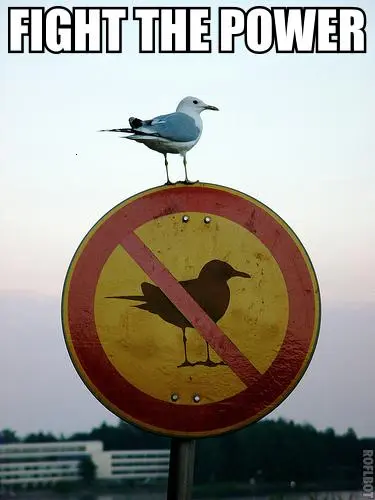
It was actually closer to needing to restore the power of friendship