Normally I find what I search for



Black belt in Mikado, Photo model, for the photos where they put under ‘BEFORE’
Normally I find what I search for
The alternative is FairPhone and e/OS (OpenSource)

It’s modular
Faster, cheaper, OpenSource tech, 100% private

I know CherryTree, hirarquical rich text notes and also programming editor (FOSS, GNU GPL), existed long before AI https://github.com/giuspen/cherrytree


BS. It’s a claim from last year and not only in Spain, that criminals often use encrypted phomes (logical), among others, Graphene OS, but also iOS and Android. Not that all who use encrypted devices (or message apps) are criminals, which due the amount of these devices result absurd to say. As often, periodists write and share half understood news. In Spain as also in the rest of the EU, phones and messages of individuals can only be intercepted by the police with a court order in a criminal investigation, not globaly like in the US. There may be cases when an individual under criminal investigation deletes incriminating messages, which can be punished for concealment of evidences.

Same with any other Optimizer. See issues with the very often promoted CCleaner. If someone want to use such an app, it’s preferable to show an FOSS alternative that does it better, without filling his PC with spam and pop-ups like in this commercial app or deleting sensitive files, like IObit or Auslogics, also commercial apps. They all can cause desaster if you use these without caution, clicking on fix it, without checking the result.
Well, any new app in a first release has bugs which are normally get fixed in next versions ifit has a good maintance, at least it’s always good when a soft list the discovered bugs and issues, which in commercial apps isn’t often the case.
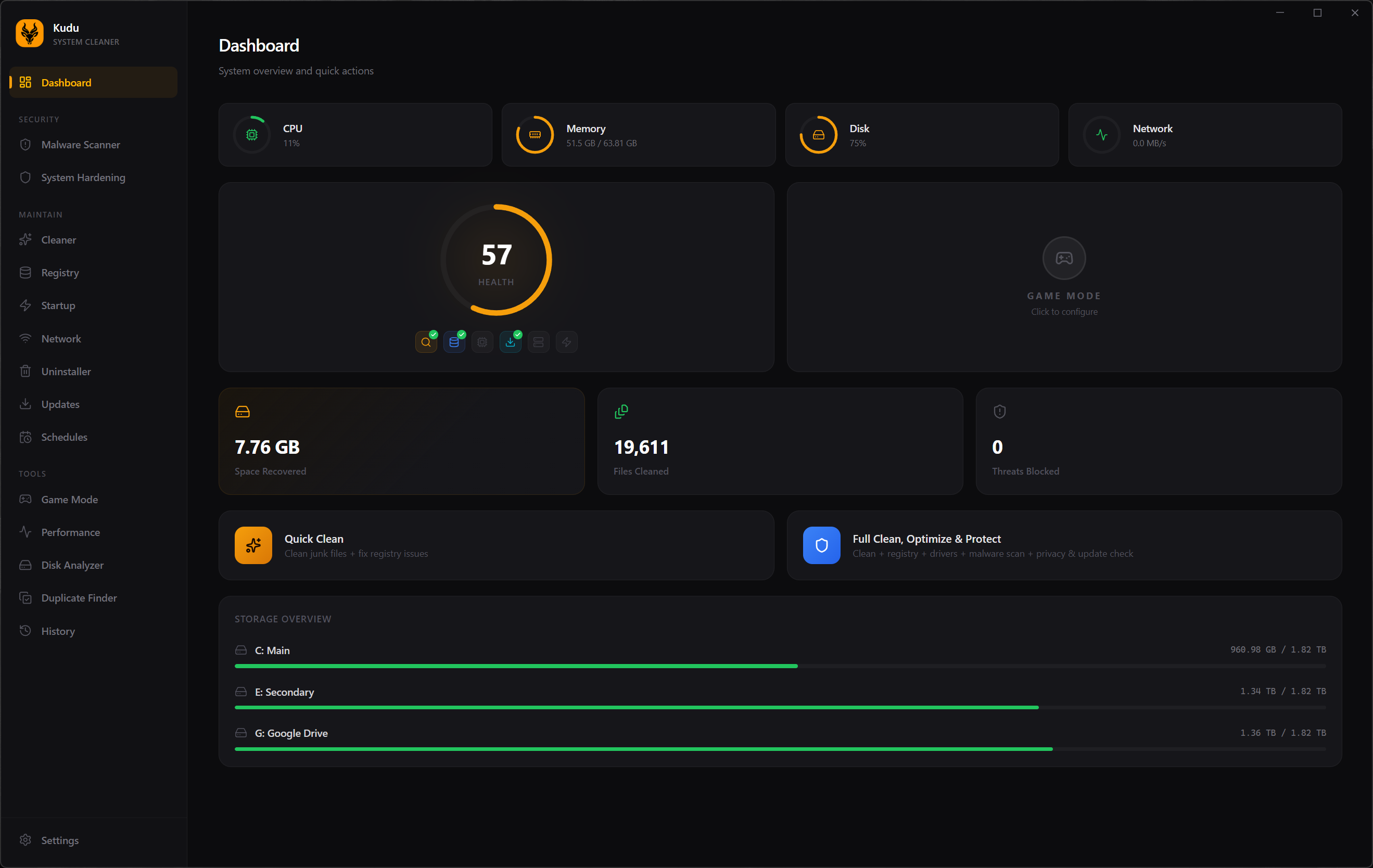
I sayd that I tested it, until now no issues. Anyway I always very carefull with this type of optimizers. The worst optimizer some years ago was from IObit, which deleted important system files. Kudu don’t delete nothing after the scan, only listed the results and explain the possible problem. Then it is on you to select and fix it or not, if not, nothing has happend. Also make beckups before the changes. Until now it seems pretty safe to me.
In my case it found nothing wrong, apart of an false positive in the heuristic malware scan because the scanned app (The Dark Mod game, if you like it’s free and OpenSource) use a net connection, justified to scan and download new missions when released, marked as clean and all ok.
Anyway, it’s a test as always before I share something. At least in Windows it’s not really needed, it has all settings and inbuild tools (GodMode, PowerShell, etc,) to do almost the same without extern apps, if you are not an complete noob, even cleaning al temp and crap files automaticly every x time (Storage sensor settings)
And better and more complete as CCleaner and others, I tested it, very safe to use, always make backups and last decisions are always yours, it only list the possible problems found in the scans, it’s on you to let it fix it or not.

Oh yes, Google and also MS are the biggest distributers and developers of OpenSource, it’s true, but also for own advantages with inbuild tracking and profiling APIs, best example Chromium or Android as is, full FOSS, but a lot of work for companies and devs which want to use it, to kick out all the Google tracking crap it has by default.
To be clear, OpenSource is great for develope and distribute software, but it’s a big mistake to think that FOSS is synonym of privacy and security, this depends only on the author and what he pretend with it, very debatable in case of big corps like Google, MS, Amazon and Facebook. That they sponser other OpenSource projects means nothing, when they can use it by themselfs (apart of the sign in with Google option which some show) or maybe obtain the pemission to include their APIs, apart of tax advantages.
For sure are tecnically high quality products, but there are alternatives with equal quality by start-ups and some devs, without all the spyware from big brothers, they always preferable. FOSS also has a lot of different licenses, which is mandatory to read to know what is allowed to do with it and what not, not always so open. The only real free license is this one.
In software it’s always mandatory to read TOS and PP, if it has a good support and community, if it has a good maintance with regular updates, if it don’t track you or sell your data to third party as business model. Irrelevant if it is FOSS or not.
Same as currently in the United States of Trump, apart of its almost worst foodquality world wide.

Even with own Gulag for children

Capitalism - Yes to Human Rights… for those which can pay for it

Yes, like my chess computer in the 90th. I don’t have any lenguage modell in Windows, nor any other MS crap and services, the first I deleted from Windows. The lenguage pack and fonts are another thing, nothing to do with LLM or AI
I use the inbuild OCR in ShareX, which works pretty well, without AI. FOSS
Alles gültig solange es nicht WhatsCrap oder ähnlicher Müll ist, da ziehe ich sogar noch die althergebrachte SMS vor oder das vorsintflutige Finger Protokoll (funktioniert komischerweise immer noch)
Ich glaub schon, gibts schon seit 10 Jahren.










How I see it, ocurres when the laws are made by ancients which confuse an remote control with an smartphone.