vim is for nerds.
downhomechunk
42 / m / chicago / bass
- 4 Posts
- 70 Comments
Joined 3 years ago
Cake day: June 4th, 2023
You are not logged in. If you use a Fediverse account that is able to follow users, you can follow this user.
 3·1 month ago
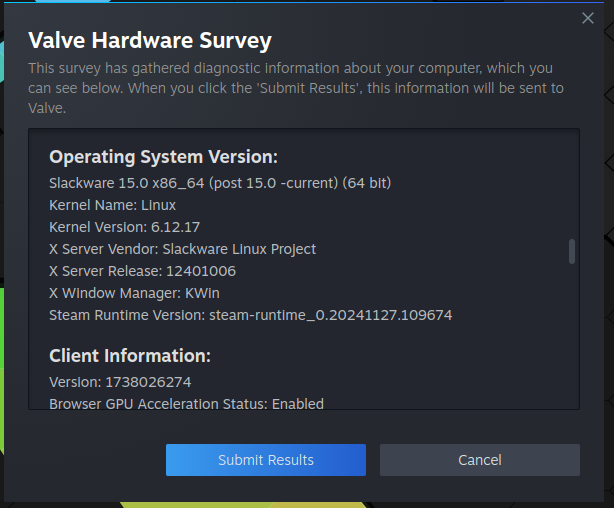
I’ve been daily driving Slackware since the late 90s or early 00s (don’t remember). There’s no systemd, and no drama. I run KDE plasma 6, steam with proton, flatpak, rocm for AI shenanigans and whatever else I want. Even the rolling release is solid as a rock. There are dozens of us! And we’re not all greybeards. I started going grey in high school, but I ate cookies for breakfast today because I’m both a grown ass man and a child.
Just wait until all the money gets hoovered up by corporate owned farms!
I didn’t know we were doing QE again. That’s neat.
 2·4 months ago
I’ve been on a retro kick. Recently I’ve been messing with a Pentium 233 MMX. I burned a tinycore Linux CD a couple days ago so I could make this:

Make sure your laptop bios allows iommu to be enabled. This is the only way I know to pass your GPU directly to a VM. And even this is still pretty fiddly.
Don’t dismiss the steam/proton rec. Or dual boot.
Preach!
Glad I’m not the only one.
 41·7 months ago
I build from ewaste and keep things deliciously trashy looking.

I’ve been wanting to get matrix up for my family and friends to chat with my 6 year old on her tablet. I found nextcloud talk to do all the things I wanted with none of the hassle. My daughter is a ridiculous texter.
https://www.hardkernel.com/shop/odroid-m1s-with-4gbyte-ram/
I’ve been using the original m1 running a lineage OS based android TV for a couple years. It’s perfect. I added a nvme drive for a “DVR” in tivimate, but we rarely use it. I use a cheapo 2.4ghz remote from Amazon.
Your approach works too. Something like CasaOS answers OP’s question directly. I was thinking about how I started on this journey. I wanted to play with enterprise level tools at home on repurposed e-waste. So I started with proxmox. But I also came to the table with a couple decades of Linux experience under my belt.
Those scripts make it so easy. You can paste a command, accept defaults, watch some text scroll by and finish with instructions on how to access the tool you just installed.
My homelab is low power as well. I’m currently running zero VMs. Everything is done with LXCs. You can run a pi hole on 512 MB RAM.

Step 1: Install proxmox
Step 2: run the post install script here, disable anything enterprise, test or related to high availability.
Step 3: check out the other scripts on the link. I suggest starting with a pi hole and experimenting from there.
I’ve been daily driving Linux since the early 00s and docker confounds me too, especially the networking. I’m not familiar with bottles. I just play all my games on steam and it’s seamless.
Is that you step brother?

I take RTFM more broadly to mean that I at least put in some effort to solve the problem myself. I googled, checked forum posts, read the man page, opened a config file or two and read some comments, etc. So I get offended when I get RTFM’d.
If you can’t reply without being a dick, then keep scrolling! Why participate in a forum where people with less experiece ask questions in the first place? That time could be better spent reading your shop vac manual or figuring out who you need to blow to save $700 on a dishwasher repair.
OP may be a master of RTFM, but they clearly didn’t read through that passage before posting. Blowing the technician is a good way to save money, but maybe not the best way to learn.
I’ve been a slackware user since the late 90s. I take for granted how easy it is to install today. I’ve been tinkering with a socket 7 build, and nothing is easy. Installing slackware 8 is a pain in the ass. I can’t even get half my hardware working on win95! It’s not like riding a bicycle.
Lemmy does a good enough job of bringing content to me. But I appreciate your perspective. It’s definitely something to keep in mind as we get closer to the AI apocalypse.



Anyone got an archive link?