

1·
3 hours agoThank you!!
Thank you!!
I mean, I kinda do- for public services on my website. but I don’t why I would do a dedicated one- when almost all need services authentication.
but I do use homarr for as an internal “homepage”/dashboard. Great idea though.
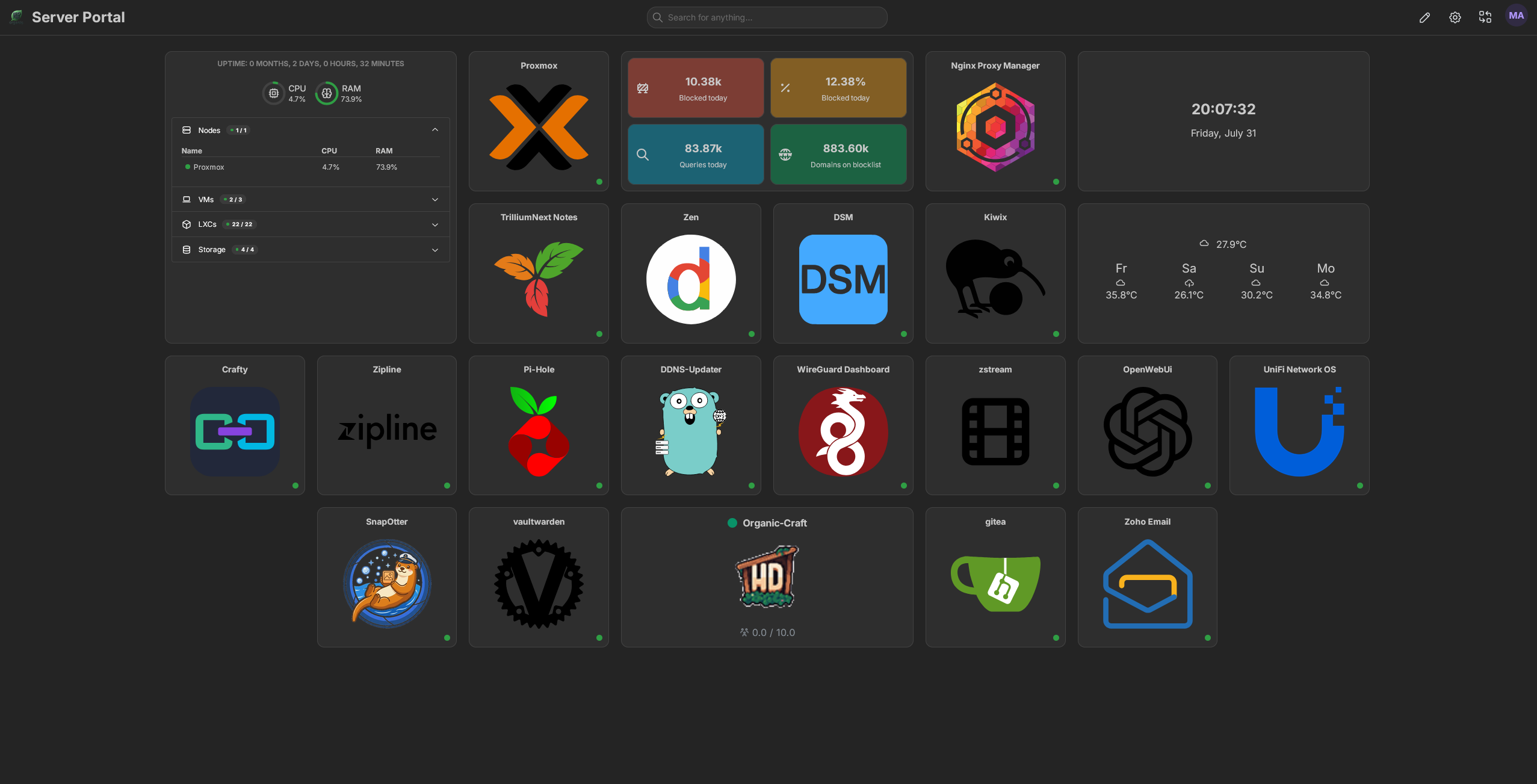
Yea! It really doesn’t break a sweat. Most of the time it sits around 5-20W (legit jumps between 5W and 20W) while hosting everything, with around 5-15% CPU utilization. Though I do share it with other people, so it may not be as “idle” as I think it is. With all services stopped and nothing running, it obviously uses way less power.
I also have a Windows VM for someone else, which basically acts as a terminal server for development. They run Linux and need Windows for developing something, but they said “I don’t want Windows anywhere on my physical system”, so I gave them a VM to use instead.
I also like using my server as a playground to test things. It saves me having to install VM software on my PCs and keeps experiments separate.
Originally, I used GPU passthrough to a VM, but I stopped doing that because I wanted multiple services to be able to use the GPU while still keeping everything isolated. Unfortunately, my GPU isn’t nice enough for NVIDIA vGPU support.
So passing it directly into containers was the next best option - although definitely the more tedious route to set up. The efficiency gains are pretty nice though.
It also only pulls around 300W at max load (CPU + GPU), but the load is very variable and heavy usage isn’t that dramatic. Normal “heavy” use is closer to around 120W (CPU + GPU).
In the future, I’d love to move to an ARM-based server for even better efficiency, once the hardware becomes more readily available and practical for server use. The efficiency gains are really interesting, but the ecosystem and availability still need some time to catch up.
Also, your setup sounds really nice. Those mini-PC “servers” are honestly impressive for what they can do nowadays. The power efficiency and silence are hard to beat, and having two separate machines gives you a nice balance of reliability and flexibility. It’s cool seeing how far you can push small hardware with the right services.
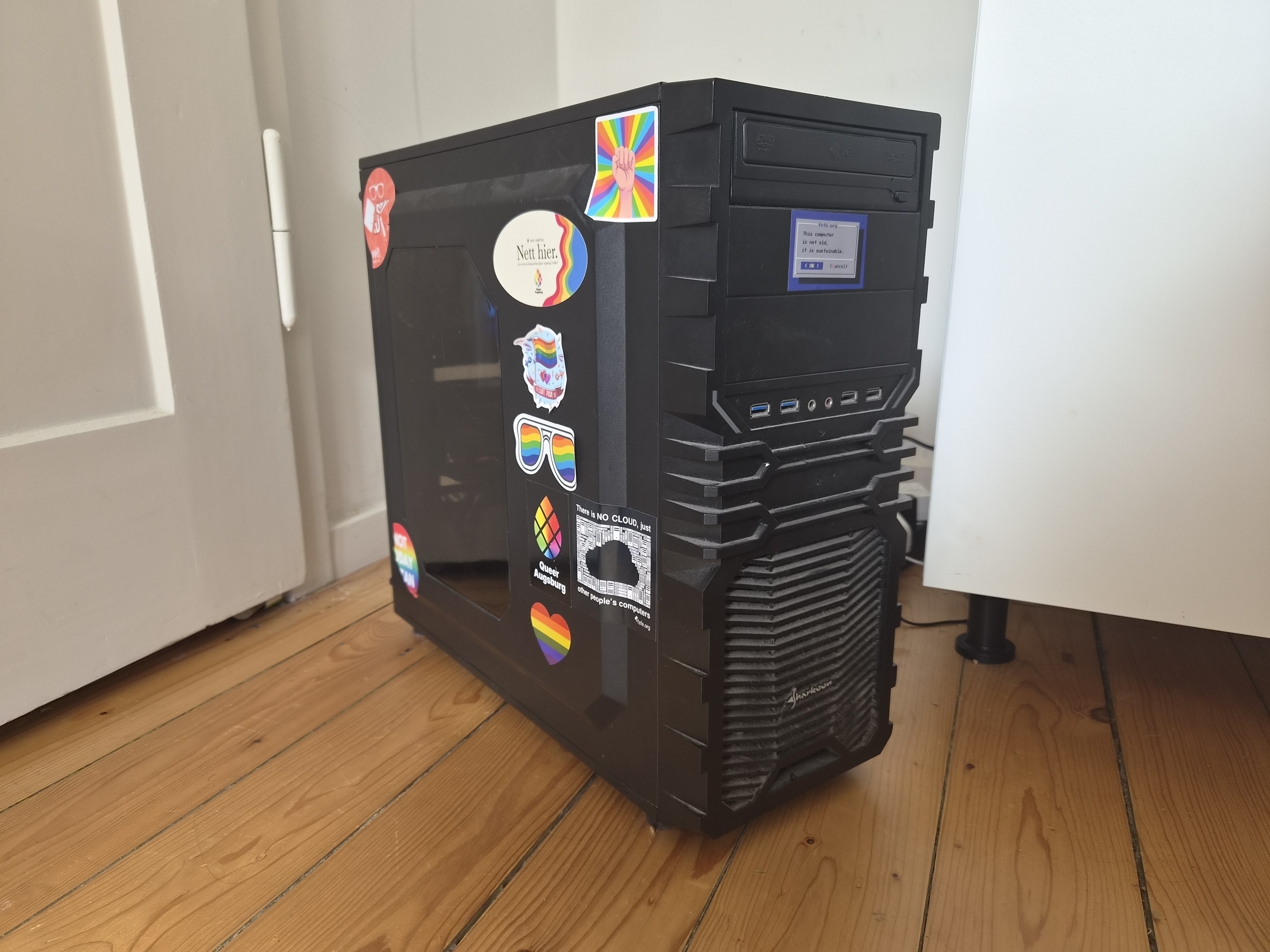
where are they in the case??? hahaha (edit: i am still getting used to lemmy comments, so i thought you said I had stickers in my case- I didn’t see you replied to someone haha)
I think the misunderstanding is that I’m running every single service as Docker inside its own LXC. That’s not actually what I’m doing.
I split things by service boundary. For example, Pi-hole + Unbound has its own LXC, Lemmy has its own LXC, Immich has its own LXC, etc. Most of those run natively in LXC without Docker at all.
Docker is only there where the application actually expects/benefits from it. I’m not adding a Docker layer everywhere just for the sake of it.
The reason I prefer this over one giant LXC with everything docker- inside. is the management side.
Yes, there is some overhead. But LXC containers are much lighter than VMs. They share the host kernel and use Linux namespaces/cgroups for isolation, so you’re not paying the cost of a full virtualized OS. The extra memory/CPU overhead is minimal compared to the management benefits I get from separating services.
The Docker overhead only exists on the services that actually need Docker. A lot of my services run directly in their own LXC without Docker at all.
Could I put everything into one LXC and run Docker Compose? Sure. It would probably work fine. But for my homelab, ease of maintenance and recovery is just as important as raw resource efficiency.
Ollama/Openwebui, Immich, Snapotter and cause degoog can use ollama.