I’'m a molecular biologist, so this is tangentially related to my field. I think there’s even odds life originated on mars then hopped to earth. NASA has been laying the ground work for a sample return mission for a while now to prove this one way or the other, but apparently the evidence has been mounting for decades.
It’ll be pretty easy to tell once they get some uncontaminated mars rocks. While a lot of life works the way it does because it has to or because it’s optimal for evolution, there’s no accounting for chirality in amino acids (though amino acids in general are arguably inevitable) and nucleic acids are also probably unique to our form of life – at least I haven’t heard or thought of a reason nucleic acids specifically (not some other folding semi-dimer molecule) would be inevitable. There’s also certain amino acid side chains that seem unlikely to be shared; though, unshared side chains would mean little.
It’d actually be a bit sad if life originated on mars as people would suddenly be a lot more interested in searching the stars for life, but the chances of finding it would dramatically drop as a single panspermia event would strongly suggest that complex life requires much more time to evolve than most planets have as a habitable lifespan. I suppose an optimist could argue that humanity is early and/or lucky.
I know very little about this field, but I was under the impression that panspermia was not particularly well-supported amongst scientists. There is a joint NASA-ESA mission to get samples from Mars back to Earth and study them for evidence of life, but they both talk about it as Martian life rather than a potential origin of Tellurian life. Could you talk a bit about what makes you say the odds are even?
I’m more in protein design than origin of life, so it may be that people in that field have more informed opinions. That said, I think most people agree that life on earth, regardless of where it started out, started with self-assembling self-replicating RNAs, so the logic is pretty simply that if we’re finding nucleic acids out in space it’s likely the same life. Unlike amino-acids which are the smallest polymer with a solvent byproduct, there’s nothing about nucleic acids that makes that molecule (those base pairs or closely related bases) special or optimal. I’m more protein than RNA, so maybe someone else has a different opinion, but to me it seems like it’d be almost trivial to come up with alternative bases or even modified backbones that meet the broad requirements of folding (for functions) and dimerizing (for genes).
Additionally, (and I know a lot less about this) apparently Mars had a lot of water for quite some time but loss most of it due to the lack of a magnetic field. So add in some asteroids flinging stuff off the planet and the timeline may add up.
Panspermia may not be the right term. I think panspermia is generally discussed among the public as life coming from outside the solar system, and I think most scientists would be extremely skeptical of that notion. Space is a really harsh environment and the odds of randomly getting between solar systems in bad before you start talking about survival parameters. I suspect you’d find more people who think an in-solar-system panspermia event occurred than life evolving twice in one solar system and both converged on the same base genetic molecules, and it’s increasingly obvious that the life on mars hypothesis is at least worth testing, so that’s the narrative. Perhaps I should’ve said Mars-spermia.
As I understand it we’ve identified nucleobases outside of Earth, but not nucleic acids. I don’t personally know how big a step it is between those components and then some actual assembled nucleic acids, but it’s definitely farther removed from what we generally consider to be life.
apparently Mars had a lot of water for quite some time
It did lose a lot, but it also still has quite a lot! It’s just mostly frozen and underground
Space is a really harsh environment and the odds of randomly getting between solar systems in bad before you start talking about survival parameters
While I agree, isn’t that still true for an in-solar-system event? It’s a lot less space, but we’re still going from “a ludicrous distance more than humans can really conceptualise” to “also a ludicrous distance more than humans can really conceptualise even though it’s orders of magnitude smaller”
I do agree that it’s absolutely worth testing, though, because whatever we find or disprove is interesting to know
Yeah, I’m not really a space guy, but let me spitball a few potentially relevant mechanisms.
I know less about the space part, but my understanding was that planets tended to sweep up asteroids near their orbit, but I don’t have a great grasp on how much space that is compared to the likely space an asteroid would end up in after some large collision. There’s also the collisions between asteroids that might scatter about the first life-containing asteroid. To me the largest issue with panspermia has always been the distance between stars and the chances of hitting somewhere that can sustain life once flung out of a solar system. Since that’s presumably much less of an issue for in an solar system event between direct neighbors, it seems a much more viable mechanism.
As for the biology part, I’d point out we’re not talking about fragile complex life. We’re talking microbes. I don’t think it’s too crazy for microbial life to survive in a dormient state for a moderate time. The cold isn’t really an issue since we freeze bacteria all the time in lab with relatively little issue. The dangers are heat and radiation. For heat, I’d point out that if you autoclave soil, apparently a lot of bacteria can hide inside and survive, so you could think of the nooks and crannies of the asteroid as refugia for microbial life. I suspect radiation is the larger issue, and I don’t really know what it takes to shield them or the extent to which it’s possible or necessary – dose and travel time calculations seem most concerning to me.
Anyway, take all that with a grain of salt though because I don’t know what types of asteroids these nucleic acids were found on or how well they do at each of these challenges. I don’t know if these mechanisms are forming a narrative consistent with the data. It could be that I’m missing something about nucleic acids that make them way more common than I’m expecting and that or even some other mechanism is more consistent with the data. I just know what we ought test from a molecular biology stand point (chirality, base similarity, etc).


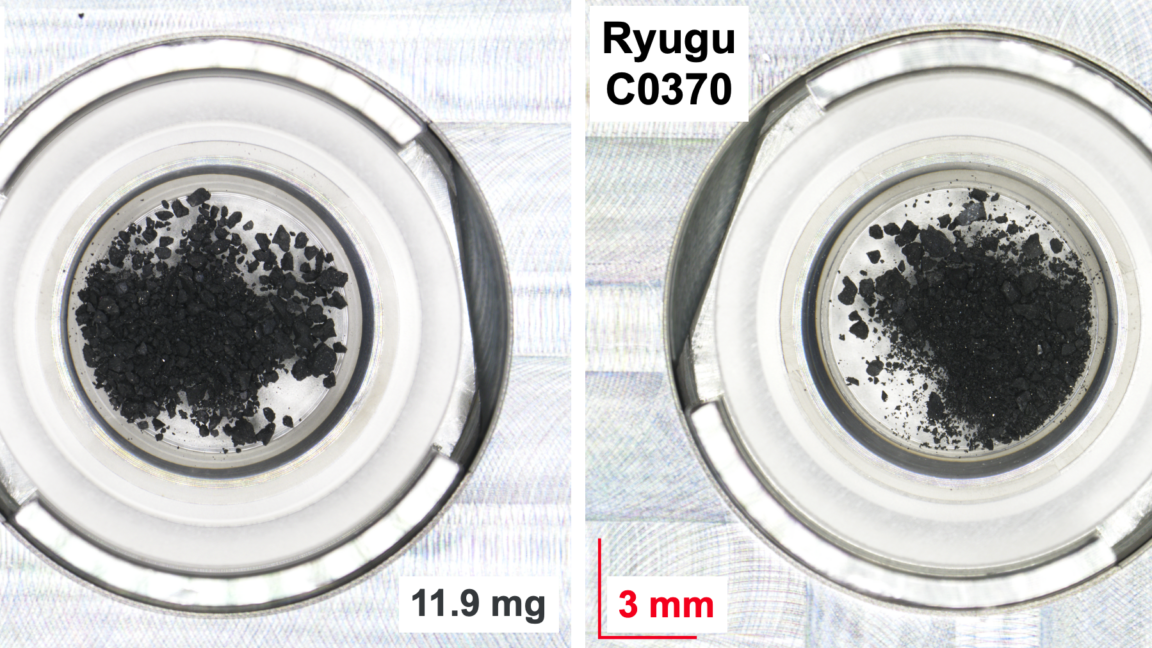
I’'m a molecular biologist, so this is tangentially related to my field. I think there’s even odds life originated on mars then hopped to earth. NASA has been laying the ground work for a sample return mission for a while now to prove this one way or the other, but apparently the evidence has been mounting for decades.
It’ll be pretty easy to tell once they get some uncontaminated mars rocks. While a lot of life works the way it does because it has to or because it’s optimal for evolution, there’s no accounting for chirality in amino acids (though amino acids in general are arguably inevitable) and nucleic acids are also probably unique to our form of life – at least I haven’t heard or thought of a reason nucleic acids specifically (not some other folding semi-dimer molecule) would be inevitable. There’s also certain amino acid side chains that seem unlikely to be shared; though, unshared side chains would mean little.
It’d actually be a bit sad if life originated on mars as people would suddenly be a lot more interested in searching the stars for life, but the chances of finding it would dramatically drop as a single panspermia event would strongly suggest that complex life requires much more time to evolve than most planets have as a habitable lifespan. I suppose an optimist could argue that humanity is early and/or lucky.
I know very little about this field, but I was under the impression that panspermia was not particularly well-supported amongst scientists. There is a joint NASA-ESA mission to get samples from Mars back to Earth and study them for evidence of life, but they both talk about it as Martian life rather than a potential origin of Tellurian life. Could you talk a bit about what makes you say the odds are even?
I’m more in protein design than origin of life, so it may be that people in that field have more informed opinions. That said, I think most people agree that life on earth, regardless of where it started out, started with self-assembling self-replicating RNAs, so the logic is pretty simply that if we’re finding nucleic acids out in space it’s likely the same life. Unlike amino-acids which are the smallest polymer with a solvent byproduct, there’s nothing about nucleic acids that makes that molecule (those base pairs or closely related bases) special or optimal. I’m more protein than RNA, so maybe someone else has a different opinion, but to me it seems like it’d be almost trivial to come up with alternative bases or even modified backbones that meet the broad requirements of folding (for functions) and dimerizing (for genes).
Additionally, (and I know a lot less about this) apparently Mars had a lot of water for quite some time but loss most of it due to the lack of a magnetic field. So add in some asteroids flinging stuff off the planet and the timeline may add up.
Panspermia may not be the right term. I think panspermia is generally discussed among the public as life coming from outside the solar system, and I think most scientists would be extremely skeptical of that notion. Space is a really harsh environment and the odds of randomly getting between solar systems in bad before you start talking about survival parameters. I suspect you’d find more people who think an in-solar-system panspermia event occurred than life evolving twice in one solar system and both converged on the same base genetic molecules, and it’s increasingly obvious that the life on mars hypothesis is at least worth testing, so that’s the narrative. Perhaps I should’ve said Mars-spermia.
As I understand it we’ve identified nucleobases outside of Earth, but not nucleic acids. I don’t personally know how big a step it is between those components and then some actual assembled nucleic acids, but it’s definitely farther removed from what we generally consider to be life.
It did lose a lot, but it also still has quite a lot! It’s just mostly frozen and underground
While I agree, isn’t that still true for an in-solar-system event? It’s a lot less space, but we’re still going from “a ludicrous distance more than humans can really conceptualise” to “also a ludicrous distance more than humans can really conceptualise even though it’s orders of magnitude smaller”
I do agree that it’s absolutely worth testing, though, because whatever we find or disprove is interesting to know
Yeah, I’m not really a space guy, but let me spitball a few potentially relevant mechanisms.
I know less about the space part, but my understanding was that planets tended to sweep up asteroids near their orbit, but I don’t have a great grasp on how much space that is compared to the likely space an asteroid would end up in after some large collision. There’s also the collisions between asteroids that might scatter about the first life-containing asteroid. To me the largest issue with panspermia has always been the distance between stars and the chances of hitting somewhere that can sustain life once flung out of a solar system. Since that’s presumably much less of an issue for in an solar system event between direct neighbors, it seems a much more viable mechanism.
As for the biology part, I’d point out we’re not talking about fragile complex life. We’re talking microbes. I don’t think it’s too crazy for microbial life to survive in a dormient state for a moderate time. The cold isn’t really an issue since we freeze bacteria all the time in lab with relatively little issue. The dangers are heat and radiation. For heat, I’d point out that if you autoclave soil, apparently a lot of bacteria can hide inside and survive, so you could think of the nooks and crannies of the asteroid as refugia for microbial life. I suspect radiation is the larger issue, and I don’t really know what it takes to shield them or the extent to which it’s possible or necessary – dose and travel time calculations seem most concerning to me.
Anyway, take all that with a grain of salt though because I don’t know what types of asteroids these nucleic acids were found on or how well they do at each of these challenges. I don’t know if these mechanisms are forming a narrative consistent with the data. It could be that I’m missing something about nucleic acids that make them way more common than I’m expecting and that or even some other mechanism is more consistent with the data. I just know what we ought test from a molecular biology stand point (chirality, base similarity, etc).