

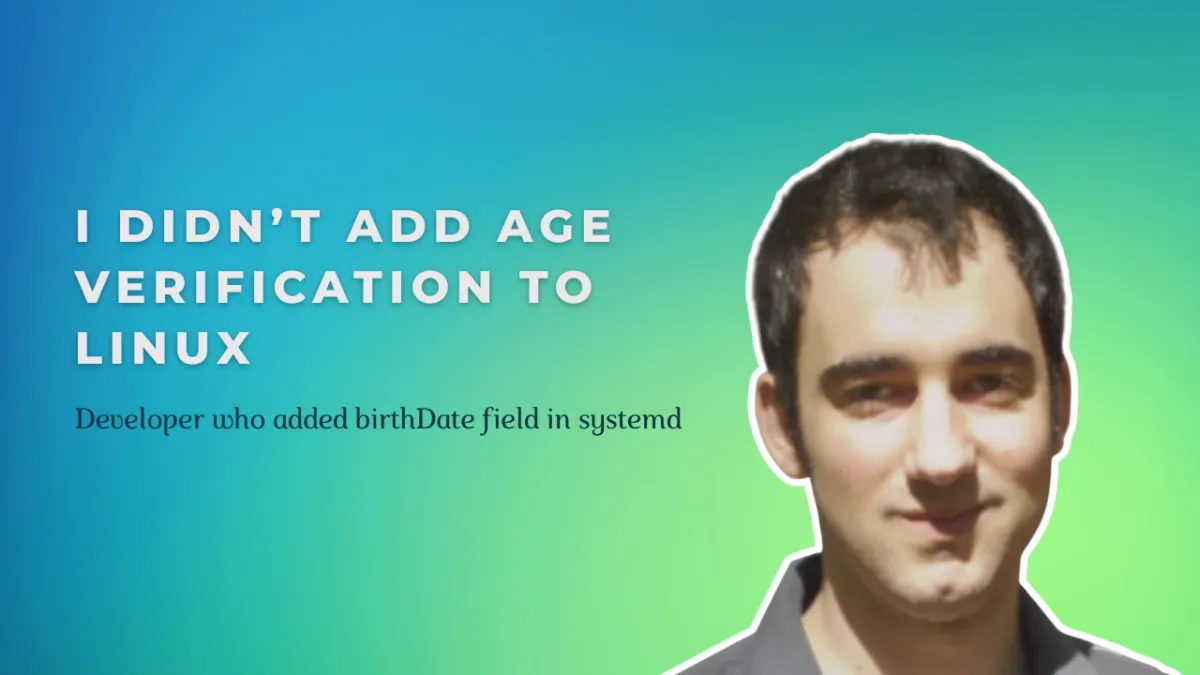
Dylan M. Taylor is not a household name in the Linux world. At least, he wasn’t until recently.
The software engineer and longtime open source contributor has quietly built a respectable track record over the years: writing Python code for the Arch Linux installer, maintaining packages for NixOS, and contributing CI/CD pipelines to various FOSS projects.
But a recent change he made to systemd has pushed him into the spotlight, along with a wave of intense debate.
At the center of the controversy is a seemingly simple addition Dylan made: an optional birthDate field in systemd’s user database.
He may have been hoping for that, but surely he didn’t truely expect it. The FOSS community can barely have a civil discussion about filesystems.
You definitely can’t have your cake and eat it too. Linux for many has been about freedom and privacy. He made a direct contribution toward a system that would help take that away
the intellectually diverse lemmings represented in this post and many others cannot understand this
won’t stop them expressing their feelings tho, bless their hearts
That’s a sound argument, mostly (in the quote, i mean)
If the technical implementation of how they would try and force age verification was the problem people were concerned about, this take would be very useful.
Physical locks on glass doors are easy to bypass, doesn’t mean you won’t get shafted if someone just so happens to catch you in the act.
If third party age verification is legally mandated the implementation being technically difficult (or easy to bypass) doesn’t stop it from being illegal.
Being a condescending prick works better if the position you take is unassailable, you do you though.
At the moment of most intense debates about mandatory age checks and government surveillance you (Dylan) hoped people to be calm about this? Then you my friend are simply delusional. They are angry and for a good reason. Why the rush to comply with a surveillance practice that hasn’t forced on you with some sanction or enforcement. You did not even wait for it to play out. You did not have a discourse about alternatives. You just went ahead and hastily applied a change as if as if doing some sort of coup.
He didn’t apply the change, he proposed it.
And there’s zero surveillance in the change he proposed.
If we are going to get stuck in semantics, then he also did not just propose it. Propose would be opening an issue, describing how he would plan to do it and letting people discuss. This is how proposals work. Pushing a very controversial change and getting someone to accept it is not “proposing” when the change is something the community will obviously be so divided over.
And it does not have to implement a full on surveillance mechanism to take a step towards better compliance with possible future surveillance laws. The guy literally said in his comments that this was the intent:
https://github.com/archlinux/archinstall/pull/4290
What the hell are we even discussing here?
A pull request is very much a proposal: It is a proposal to make specific changes to the code-base. The developers are not forced to accept it in any form, and discussions can take place in the pull request, should the developers (or third parties) not agree with (the exact form of) the proposed changes. Which is exactly what happened in the systemd pull request, to the extent that the actual developers had to lock the thread.
In the case of systemd, the “someone”, or rather the “someones”, who accepted the pull request also included the lead developer on the project, namely Lennart Poettering. Who else do you propose should decide what pull requests and other proposals to accept?
You’re approaching this with an everyday definition of “proposal”, but in the industry that term is overloaded with more specific meanings.
If you asked 100 random devs, I have no doubt that the majority would call a PR to be something much more concrete than a proposal.
HEY MY GUY you want a CIVIL discussion about CIVIL DISCUSSION?
/s
Ugh, I’m forking this thread. If you guys can’t agree with me I’ll make my own.
How nation states were formed
Oh wow, this guy ^ is the best at civil discussion!
Why’d you reply to yourself 😭😭
It’s my thread I can do what I want
That’s a rather negative view. There’s a big difference between people who actually contribute to FOSS (in any way, not just code) and random keyboard warriors in the contents. Sure, there’s always some drama somewhere, but that’s not exclusive to FOSS.
There’s also a massive difference when one proactively participates in destroying linux users’ freedom, one of the pillars of foss
we’re what happens when dumpster fighting punks need their laptops to work