Did Europe colonialise the rest of the world because of intergenerational trauma?
Yes. The current european powers de-indigenized and then marginalized groups across Europe, forcefully integrated those people into themselves, and then when they ran out of people to colonize on European land, they expanded outward. Russia expanded into Northern Asia, Spain and Portugal split the world in half. The Dutch initiated the rape of Africa, and Great Britain then conquered all of that. But it was still initialized by a sequence of colonial expansions in the region by the first autocrats. Some even bore the names of the first to do it in their region, such as the Russian monarch being “Czar” after Caesar or the German autocrat being Kaiser after Caesar. If you want to trace back as far as we can, it seems like this process all started in the bronze age with the authoritarian autocracies of the temple societies. This is around the same time, as well, that other authoritarian bronze age powers were being formed in other parts of the world like the Qin dynasty in China and the Mississippi Mound People of North America. Many of the precolonial cultures the Europeans wiped out like the Taino, Tanui, and Hawai’ians considered themselves to be post-colonial on first re-contact with the Europeans.
What about Russia invading Ukraine?
I encourage you to look into the history of the Kievan Rus’. They sound an awful lot like the origin story of Rome. Not the fun origin story about Romulus and Remus sucking on wolf mommy milkers. But instead the story of a group of men shunned from the other local tribes for being violent problem weirdos who then came back, conducted raids on their former neighbors, and then created a dynastic war culture where the working people experienced brutal, short, horrible lives. It is intergenerational trauma all the way down
Who traumatised the Nazis?
WWI mostly. But prior to WWI you also have the first wave of nationalism in which Nationalism was thought to be an organizing force for socialist good. But then if you divide Europe circa 1848 into borders based on national identity you run into a problem real fast. Let’s just focus on Russia and Ukraine from the prior question. Where do you draw the border between these two Ruthenian people? And is the dialect of Russian spoken in Rostov-on-Don more Ukrainian or more Russian? How do you deal with that in the late 1800s the Russian Empire moved self identifying russians into Donetsk to run mining operations? And how do you deal with that there’s a thriving community of Ukrainians north of the Korean penninsula? If you answer all of these questions with borders, you will constantly run into problems of drawing a line through a gradient where someone is unhappy to suddenly be Ukrainian living in Russia or Russian living in Ukraine.
But for Germany specifically you have to confront that the Rhineland is situated just right in the middle of everything in Europe. The two main super powers in Continental Europe are consistently Russia or Polish-Lithuania (depending on the century) in the east and Spain or France (depending on the century) in the west. And eventually because of the traumatizing legacy of Rome, someone’s going to get it into their heads that instead of building toward a Pan-European sense of solidarity and cooperation, it would be easier and more convenient for their own selfish needs to install a sense of Evronationalism as I’ve seen @alsaaas@lemmy.dbzer0.com call it (she’ll need to correct me if I’m using the term wrong, I’m never as well versed on -nationalist movements as I am on pan- movements) with their own national identity being the ideal form of that evronationalism. So they invade every country in between them and the other side of the continent. Germany, being situated right in the middle of that, spent a great many centuries getting good at combat (same with Poland) but without a state apparatus at its head (same with Lithuania). Then in 1848 a german noble with a dumb moustache (Bismarke) got it in his head that Prussia was perfectly positioned to be the master of Europe and that this Kaiser he groomed could stand atop all the other nations if instead of conquering everything fast slowly built up both soft and hard power. It didn’t work because autocracies never work because eventually all of the power is hoarded into the hands of someone really fucking stupid and they mess everything up by being really fucking stupid
Do the United States fund the genocide because of their own trauma?
“No one hates the Irish more than an Irishman with power”
Yes, quite frankly. Europe sent all of its most violent and unlikeable weirdos to another continent in hopes they’d go away and leave them alone. It’s the same thing that led to the foundation of Rome, it’s the same thing that led to the Kieven Rus’, and it’s the same thing that happened again. You can’t re-educated certain people by telling them you don’t like hanging out with them. You can’t just send them somewhere to be someone else’s problem. They’re too dangerous to be left alive. I’m sorry, but that’s just how it is sometimes. The challenge is how do you determine who determines this? I don’t have a good answer to that question. I’m just a big dumb idiot who likes watching baseball sometimes who thinks the world we live in is filled with injustice and bottomless greed. I know how to make things work in the group settings I find myself in but how to as a single group identify a problem person, and eject them from your group without them going and finding a new group to create problems with, I have no idea.
Tell me what’s so special about Israel.
Nothing. Absolutely nothing. You’re just witnessing what 16,000 of “civilization” has been. From the very moment sedentary lifestyle took hold it has been this. To put on my Marxist analysis hat for just a moment, the only thing that has ever changed in that time frame has been that every single time an economy shifts from one production technology to another (usually in a time frame of about every 80 years) the workers get a few more rights in the aftermath of the violent revolution that happens when everyone realizes that the rich man’s horded wealth is worthless if everyone decides they can beat him up. To take off my Marxist hat and put on my anarchist hat, there are some gaps in the historical periods when this pattern of 60 years of decay, followed by everything exploding, and then 20 years of creative fervor doesn’t happen for a while. You have the first “dark age” after the bronze age collapse, which lasted for about 300 years and you have the “dark ages” when the roman empire collapsed and Europe existed like some sort of Dark Souls setting in the monuments of a ruined empire. Most significantly though, you have the nomadic people who came from the Mississippi Mound Culture who maintained their post-colonial anti-hierarchical culture for nearly 800 years before Europeans showed up and broke everything. No I’m not saying they were perfect, they has skirmishes and squabbles. But nothing to the degree of the 7 years war that Europe unleashed upon them on first contact, or the world wars that would follow. I think we look at these dark ages all wrong. Within those time periods people found ways to thrive and survive until some asshole like Charlemagne or Qin the Conqueror showed up. We need to study these time periods not as being a time when humanity forgot how to live and how to be, but instead of windows that the oligarchic class doesn’t want us to see through. If we take that approach, we find that how we sustain a post-hierarchical society is through the arts, and by integrating science, technology, and combat training into the arts. There’s so much more to history than just what’s written down in text books. Time and again, we find that oral records map history as accurately, or sometimes more accurately than the written record does. Vernacular cultures are not lesser to civilizations. For more about this concept, see here: https://inv.nadeko.net/watch?v=k0_w87J9Dj0
Euronationalism (often styled Evronationalism to show it’s reactionary nature) is just a term I picked up in other leftist online communities.
It’s used to refer to e.g. liberals who are not necessarily nationalist for “their own” nation, but rather have developed a form of nationalism for the EU, thinking that supporting a (neo-)colonialist and imperialist fortress is somehow progressive…
okay. so it would denote like… a sense of patriotistic fervor directed toward EU with a sense of superiority that the EU should be the dominant top down force in the world rather than a belief that there should be sense of solidarity and cooperation amongst the workers on the European continent?
sounds roughly analagous to the difference between Americanism and Pan-Americanism if i’m understanding correctly?
IDK how to explain it. It’s not necessarily about domination. A majority of europe comms are Evornationalist, even the one on dbzer0. Most prominently on feddit.org tho. Volt is Evronationalist as well e.g.
huh. okay. sounds like the european-liberal position is less violent and expansionistic than i was thinking and more just… passively tolerant of paleoconservatism and fascism than what i was using as my mental model. goes to show the value of knowing your role and staying in your lane since all politics are ultimately local first.
i’ll think about if i should edit my comment since it sounds like i’ve used evronationalism not quite right since i was thinking more about nationalist/expansionist/imperialist movements that have sought to unify the continent through violent subjugation. as it stands i think the gist of what i’m saying about historic cycles of violence still holds, but i’ve unintentionally muddied the waters of something that isn’t quite what i was thinking of. and i ABSOLUTELY don’t want to muddy the waters between pan-europeanism and the form eurocentric nationalism i’m trying to describe, which is super common in pseudointellectual discourse, to the extent that the two are even conflated in some encyclopedias and political science dictionaries despite representing diametrically opposing viewpoints on what the region of Europe even is.
perhaps this is why i’m struggling to have a term on hand. it’s the desire of the definers we conflate them rather than see them as different
The gist of your comment is humans have always subjugates other humans. That’s a blanket statement that applies equally to everyone. So, there is no need to single out Israel. To come back to the point, that was my issue with the comment in the first place.
Israel is merely the genocidal nation state we were discussing. my understanding of the thread starter’s comment and my own is that we cannot hope to address these problems if we don’t acknowledge how they work. the ownership class has used effectively the same tricks since the domestication of grass ~16,000 years ago. we have to see and discuss those tricks to be able to break the cycles of torture enacted against the people
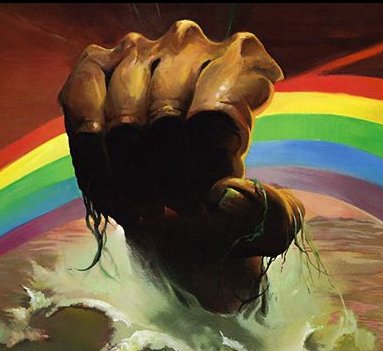


Yes. The current european powers de-indigenized and then marginalized groups across Europe, forcefully integrated those people into themselves, and then when they ran out of people to colonize on European land, they expanded outward. Russia expanded into Northern Asia, Spain and Portugal split the world in half. The Dutch initiated the rape of Africa, and Great Britain then conquered all of that. But it was still initialized by a sequence of colonial expansions in the region by the first autocrats. Some even bore the names of the first to do it in their region, such as the Russian monarch being “Czar” after Caesar or the German autocrat being Kaiser after Caesar. If you want to trace back as far as we can, it seems like this process all started in the bronze age with the authoritarian autocracies of the temple societies. This is around the same time, as well, that other authoritarian bronze age powers were being formed in other parts of the world like the Qin dynasty in China and the Mississippi Mound People of North America. Many of the precolonial cultures the Europeans wiped out like the Taino, Tanui, and Hawai’ians considered themselves to be post-colonial on first re-contact with the Europeans.
I encourage you to look into the history of the Kievan Rus’. They sound an awful lot like the origin story of Rome. Not the fun origin story about Romulus and Remus sucking on wolf mommy milkers. But instead the story of a group of men shunned from the other local tribes for being violent problem weirdos who then came back, conducted raids on their former neighbors, and then created a dynastic war culture where the working people experienced brutal, short, horrible lives. It is intergenerational trauma all the way down
WWI mostly. But prior to WWI you also have the first wave of nationalism in which Nationalism was thought to be an organizing force for socialist good. But then if you divide Europe circa 1848 into borders based on national identity you run into a problem real fast. Let’s just focus on Russia and Ukraine from the prior question. Where do you draw the border between these two Ruthenian people? And is the dialect of Russian spoken in Rostov-on-Don more Ukrainian or more Russian? How do you deal with that in the late 1800s the Russian Empire moved self identifying russians into Donetsk to run mining operations? And how do you deal with that there’s a thriving community of Ukrainians north of the Korean penninsula? If you answer all of these questions with borders, you will constantly run into problems of drawing a line through a gradient where someone is unhappy to suddenly be Ukrainian living in Russia or Russian living in Ukraine.
But for Germany specifically you have to confront that the Rhineland is situated just right in the middle of everything in Europe. The two main super powers in Continental Europe are consistently Russia or Polish-Lithuania (depending on the century) in the east and Spain or France (depending on the century) in the west. And eventually because of the traumatizing legacy of Rome, someone’s going to get it into their heads that instead of building toward a Pan-European sense of solidarity and cooperation, it would be easier and more convenient for their own selfish needs to install a sense of Evronationalism as I’ve seen @alsaaas@lemmy.dbzer0.com call it (she’ll need to correct me if I’m using the term wrong, I’m never as well versed on -nationalist movements as I am on pan- movements) with their own national identity being the ideal form of that evronationalism. So they invade every country in between them and the other side of the continent. Germany, being situated right in the middle of that, spent a great many centuries getting good at combat (same with Poland) but without a state apparatus at its head (same with Lithuania). Then in 1848 a german noble with a dumb moustache (Bismarke) got it in his head that Prussia was perfectly positioned to be the master of Europe and that this Kaiser he groomed could stand atop all the other nations if instead of conquering everything fast slowly built up both soft and hard power. It didn’t work because autocracies never work because eventually all of the power is hoarded into the hands of someone really fucking stupid and they mess everything up by being really fucking stupid
“No one hates the Irish more than an Irishman with power”
Yes, quite frankly. Europe sent all of its most violent and unlikeable weirdos to another continent in hopes they’d go away and leave them alone. It’s the same thing that led to the foundation of Rome, it’s the same thing that led to the Kieven Rus’, and it’s the same thing that happened again. You can’t re-educated certain people by telling them you don’t like hanging out with them. You can’t just send them somewhere to be someone else’s problem. They’re too dangerous to be left alive. I’m sorry, but that’s just how it is sometimes. The challenge is how do you determine who determines this? I don’t have a good answer to that question. I’m just a big dumb idiot who likes watching baseball sometimes who thinks the world we live in is filled with injustice and bottomless greed. I know how to make things work in the group settings I find myself in but how to as a single group identify a problem person, and eject them from your group without them going and finding a new group to create problems with, I have no idea.
Nothing. Absolutely nothing. You’re just witnessing what 16,000 of “civilization” has been. From the very moment sedentary lifestyle took hold it has been this. To put on my Marxist analysis hat for just a moment, the only thing that has ever changed in that time frame has been that every single time an economy shifts from one production technology to another (usually in a time frame of about every 80 years) the workers get a few more rights in the aftermath of the violent revolution that happens when everyone realizes that the rich man’s horded wealth is worthless if everyone decides they can beat him up. To take off my Marxist hat and put on my anarchist hat, there are some gaps in the historical periods when this pattern of 60 years of decay, followed by everything exploding, and then 20 years of creative fervor doesn’t happen for a while. You have the first “dark age” after the bronze age collapse, which lasted for about 300 years and you have the “dark ages” when the roman empire collapsed and Europe existed like some sort of Dark Souls setting in the monuments of a ruined empire. Most significantly though, you have the nomadic people who came from the Mississippi Mound Culture who maintained their post-colonial anti-hierarchical culture for nearly 800 years before Europeans showed up and broke everything. No I’m not saying they were perfect, they has skirmishes and squabbles. But nothing to the degree of the 7 years war that Europe unleashed upon them on first contact, or the world wars that would follow. I think we look at these dark ages all wrong. Within those time periods people found ways to thrive and survive until some asshole like Charlemagne or Qin the Conqueror showed up. We need to study these time periods not as being a time when humanity forgot how to live and how to be, but instead of windows that the oligarchic class doesn’t want us to see through. If we take that approach, we find that how we sustain a post-hierarchical society is through the arts, and by integrating science, technology, and combat training into the arts. There’s so much more to history than just what’s written down in text books. Time and again, we find that oral records map history as accurately, or sometimes more accurately than the written record does. Vernacular cultures are not lesser to civilizations. For more about this concept, see here: https://inv.nadeko.net/watch?v=k0_w87J9Dj0
Oh hey, an “@”, hii.
Euronationalism (often styled Evronationalism to show it’s reactionary nature) is just a term I picked up in other leftist online communities.
It’s used to refer to e.g. liberals who are not necessarily nationalist for “their own” nation, but rather have developed a form of nationalism for the EU, thinking that supporting a (neo-)colonialist and imperialist fortress is somehow progressive…
okay. so it would denote like… a sense of patriotistic fervor directed toward EU with a sense of superiority that the EU should be the dominant top down force in the world rather than a belief that there should be sense of solidarity and cooperation amongst the workers on the European continent?
sounds roughly analagous to the difference between Americanism and Pan-Americanism if i’m understanding correctly?
IDK how to explain it. It’s not necessarily about domination. A majority of europe comms are Evornationalist, even the one on dbzer0. Most prominently on feddit.org tho. Volt is Evronationalist as well e.g.
huh. okay. sounds like the european-liberal position is less violent and expansionistic than i was thinking and more just… passively tolerant of paleoconservatism and fascism than what i was using as my mental model. goes to show the value of knowing your role and staying in your lane since all politics are ultimately local first.
i’ll think about if i should edit my comment since it sounds like i’ve used evronationalism not quite right since i was thinking more about nationalist/expansionist/imperialist movements that have sought to unify the continent through violent subjugation. as it stands i think the gist of what i’m saying about historic cycles of violence still holds, but i’ve unintentionally muddied the waters of something that isn’t quite what i was thinking of. and i ABSOLUTELY don’t want to muddy the waters between pan-europeanism and the form eurocentric nationalism i’m trying to describe, which is super common in pseudointellectual discourse, to the extent that the two are even conflated in some encyclopedias and political science dictionaries despite representing diametrically opposing viewpoints on what the region of Europe even is.
perhaps this is why i’m struggling to have a term on hand. it’s the desire of the definers we conflate them rather than see them as different
I’m sorry I don’t have the capacity to respond in full. I would say both can be forms of Euronationalism tho
This just blew my mind :)
deleted by creator
The gist of your comment is humans have always subjugates other humans. That’s a blanket statement that applies equally to everyone. So, there is no need to single out Israel. To come back to the point, that was my issue with the comment in the first place.
Israel is merely the genocidal nation state we were discussing. my understanding of the thread starter’s comment and my own is that we cannot hope to address these problems if we don’t acknowledge how they work. the ownership class has used effectively the same tricks since the domestication of grass ~16,000 years ago. we have to see and discuss those tricks to be able to break the cycles of torture enacted against the people