

TL;DW:
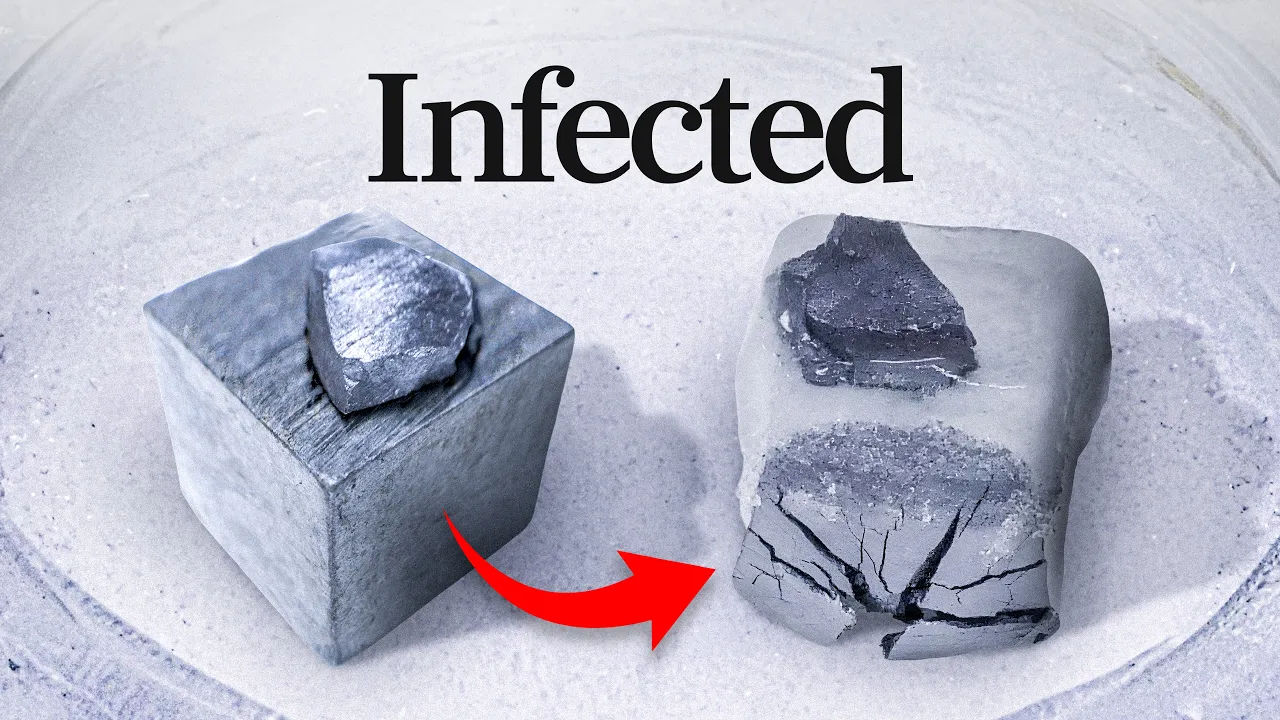
Due to various molecular configurations (aka polymorphs), currently known medicines when contaminated with a catalyst seed molecule/particle can become irreversibly unreproducible via chained-contaminations.
- the contamination can cause the existing configurations to become more stable in a negative fashion where the medicine/compounds no longer work they way we expect them to.
This system of contamination and reproduction acts in similar fashion to viral infections.
Current Solutions:
- better clean room procedures for all steps of medicine manufacturing.
- pour more money into medicine polymorph research.
I work professionally in the field of pharmaceutical manufacturing, though mainly with liquid and lyophilized presentations. The issue talked about in this video, polymorphism and isomerization, would primarily just be an issue with drugs that are considered small molecules. Historically, that is most drugs…but that is changing as more and more other modalities are hitting the market.
Small molecules, especially in a dry powder, undergo lots of processes that would make cleaning with enough rigor to completely eliminate a polymorph extremely difficult. Things like milling, mixing, spray drying, and pressing are extremely energetic and intentionally disperse powder like crazy. The cleaning cycles for all this equipment are already extremely rigorous, often reducing contaminants to levels too low to measure and then undergoing sterilization cycles with vaporized hydrogen peroxide (VHP) between batches. However, when you are talking about autocatalysis like this, it only takes ppb-level contamination to propagate through the whole batch.
When you are talking about large molecules like biologics (antibodies, most vaccines, etc.), there are a whole bunch of other things that can go wrong, but not this. The most analogous thing I can think of would be a persistent viral contamination. Current good manufacturing practices (cGMP) should be able to alleviate this though, and it wouldn’t impact tech transfer to a different site like what happened in the video. Alternatively, I have worked on mAbs where each batch would measure the glycosylation state because it impacted activity. That is a post-translational modification process for that drug that some batches worked better than others, but we never really tracked down a root cause (before the program was killed).
Another case study that happened on a program I was working on was that we had a series of batches where the active ingredient (a mAb) was oxidized at a much higher rate than normal. Nothing about our process had changed, but it was a clear night/day difference that happened all of a sudden. After lots of testing and ruling things out, we managed to figure out that there were elevated levels of iron in our product. By sampling at each step of our process, we figured out that the iron was being introduced during two steps called bioburden reduction filtration and sterile filtration. You might notice that these are both unit operations where our drug passes through filter membranes (they were in fact the same filters). Ultimately, it turned out that the supplier of our filters had a contamination issue that impacted their filters from a certain lot and later. So, we were ultimately able to fix it, but I remember those reports being literally hundreds of pages of ruling stuff out before we finally figured out the root cause.
Hope that helps you feel better!
Coming from a regulatory area, it’s interesting to hear about this from a manufacturer point of view.
Great and very accurate post.
Oh man, give me a scientific issue any day of the week. I would much rather deal with some investigation rather than work on an IND, BLA, or MAA section to submit to an agency. I have tremendous respect for reg folks that can make sense of the agency guidance. Thank you for your service!
Regulatory? Nice to hear some of you survived till today. Good luck buddy, I’m rooting for you!
Thank you!! You’re awesome to read.