

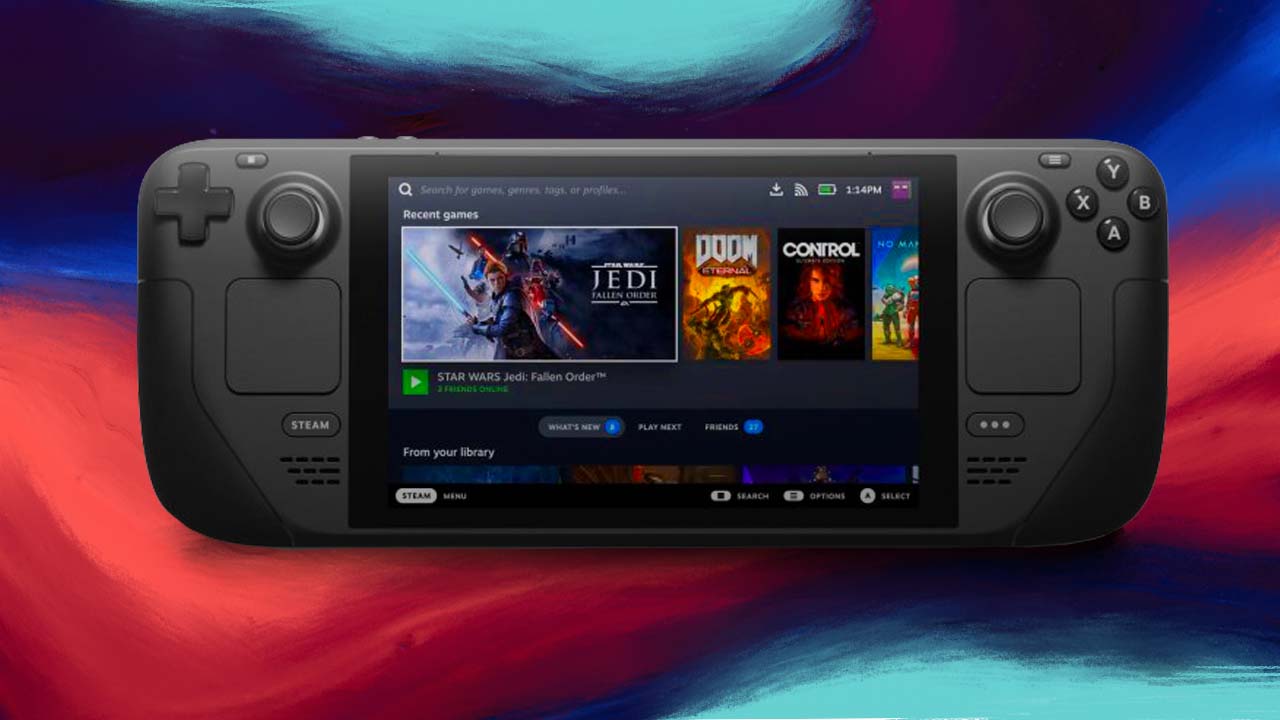
Valve recently raised the price on the Steam Deck, making the handheld gaming PC cost up to $949 for the 1TB OLED model. While that’s a massive $300 increase over its original price, the Steam Deck is once again sold out.
Valve recently raised the price on the Steam Deck, making the handheld gaming PC cost up to $949 for the 1TB OLED model. While that’s a massive $300 increase over its original price, the Steam Deck is once again sold out.
So, the bottleneck here is really the memory prices, and while Steam Deck sales do affect memory prices — as with anyone buying anything with memory — my guess is that it’s a pretty small factor relative to other devices using memory.
According to WP, the Steam Deck has 16GB and sold uh, 4 million units over its entire lifetime as of February this year. It’s been out for four years. So figure ~64 petabytes of DRAM over its lifetime, or ~16 petabytes of DRAM per year.
For comparison, in a single year, looking at smartphones:
https://wifihifi.com/1-25b-smartphone-units-produced-in-2025-apple-samsung-tied-for-tops/
https://counterpointresearch.com/en/insights/Global-Smartphone-Average-DRAM-Hits-Record-8.4GB-in-2025
8.4 GB is the per-phone average, including older phones, so this is probably a conservative estimate, but assume for 2025, that meant that phone manufacture consumed ~10,500 petabytes of DRAM in a single year.
EDIT: And I’m sure that AI consumers dwarf that, given announcements about how much OpenAI alone was buying 40% of global capacity.
EDIT2: And if one wants local LLMs — I’d like to run my LLMs locally, not have some cloud provider do it — and you assume maybe 1% capacity utilization, then we’re going to need something like 100 times what the cloud AI companies are getting in RAM to get to that point.
So, yeah, Steam Deck purchasers do count towards demand for memory, but…I don’t think that they likely move the needle all that much alone.