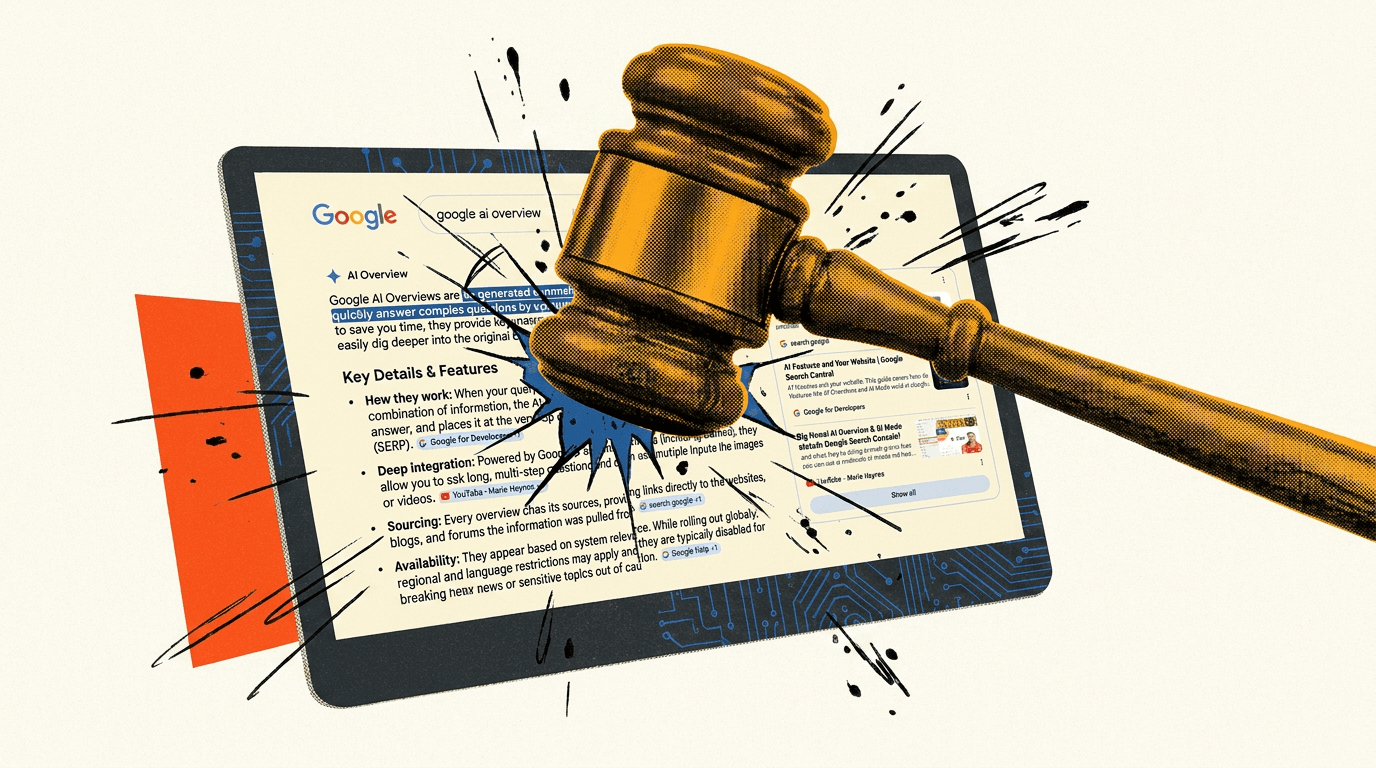
A German regional court has ruled that Google is directly liable for the content of its AI search overviews. According to the court, previous limited liability protections for search engine operators don't apply to AI overviews. In this case, Google's AI had falsely linked two publishers to fraud and made claims that didn't appear in any of the linked sources. The ruling could set a precedent for AI-generated content liability worldwide.


Can anyone explain how the appeals system works in German courts? I have no idea how the law works in Europe, but it can’t be that different from America that there’s a chance this could get overturned in appeals, right?
I don’t know how the German appeals system works, but there is a lot of room for difference.
A particular reading spree once caused me to learn that the UK, a modern civilized country, didn’t have what we would call a supreme court until 2009.
Their laws aren’t codified. We have a big book o’ laws, and we pass bills that modify the book. If it’s not in the book it’s not a law. They pass bills that are the laws. This sounds really similar until you consider that “the law” is a collection of every act of parliament going back nearly a thousand years, many of which cancel out others. Oh, and that extends to the concept of a “constitution”.
Some quick searching shows that Germany uses a fundamentally different legal model that views our big book o’ laws as unstructured because courts have a binding say in interpretation of the law. It seems that this regional court can be appealed, and also that their courts don’t use precedent like ours do, so an appeal is more like a second opinion than an escalation.
Judges are less referee and more investigator, so you can claim that the judge made a mistake with their decision, which is appeal.
Oh and the US and UK share what is called “common law” system as well in which decision by the courts are able to referenced as what the law is as well.
So if the legislator writes a law making apples illegal, but a court decided that wasnt true for guys named John, then when someone is charged for it they could cite the “not Johns” ruling as why it shouldn’t apply to them.
Yup, that’s the precedent bit I mentioned. They’re both valid ways of deciding ambiguity (a judge decides in this situation and other judges aren’t obligated to decide the same way, or lawyers debate the ambiguity, a jury decides, and courts strive for consistency), but they’re fundamentally different and slightly bewildering to people from the other model.
Purely an answer to the question "I mean, how different could they really be?”: fundamentally different in an almost unrecognizable way.