The idea that hibernation is going to cause substantial SSD wear is ludicrous on all but the smallest SSDs in systems with large amounts of RAM.
Hibernation is only going to be saving ram in memory, so for most consumer systems 8, 16 or 32GB. Most SSDs nowadays are rated for hundreds to thousands of terabytes written as an effective life so you would need to hibernate hundreds of thousands of times. Even an aggressively low lifespan drive like a 256GB with ~500TBW would last over 18,000 full 32GB writes. Let’s pretend you hibernate four times a day every day, every year. 365*4 = 1460 hibernations per year. 18,000/1460 = 12.32 years. Long past the lifespan of a computer. No spinning disk is likely to survive this long either.
They even call it out in their article with their own math of twice a year and come up with 25 years of life. Just not something to worry about, at all, for almost any practical use case.
My oldest SDD is still at like 85% health and it’s almost 15 years old O:
Shoot, my VR machine is about 13 years old with original CPU, RAM, and HDD! It has my old SSD now and a newer video card (2070) so it can play rhythm games at 90-120FPS.
My oldest working (working for tasks I’d actually use a computer for, not retro fun) computer is 15 years old! MacBook Pro. I need to get Linux installed on it. That’s a project for… eventually.
Mine is 17 years old and is still over-specced because I use Linux and bought it with 16GB RAM then. And it is the second PC I ever bought, my first one was an Pentium-class PC (actually AMD K6@300MHz) that I bought in 1998.
it usually depends on context of how the computer is being used, but usually speaking, the major OS companies invalidate older hardware.
intels 7700k(2017) and older are invalidated for W11 usage and W10 is on life support now for security. Apple is approaching the time period where its about to sunset intel based macbook/mac mini/imac/mac pro support.
in the context of mainstream general computers, 12 years is a LONG time. its also around the cutoff for whats worth selling vs whats worth recycling at my workplace.
I have a pile of spinning disks that were online for less than ten years under low usage load that failed. I have bins and bins full of them at work with enterprise drives too.
I have personally had a single ssd fail in 15 years, it was an SX6000 that died from controller issues. My first ones were 64GB ones back in the infancy of SSDs. The controllers have come a long way and speeds are now 10-100x faster and much more reliable. Never, ever had one go bad from TBW personally or professionally. I’ve never even met someone who has gotten that to happen, the controllers usually go long before the NAND.
12 years is still beyond the lifetime of a typical computer. Even if you do not have component failures you start spending more money on power to run these things than it would cost to replace them with faster, larger capacity newer systems that use less energy for more oompf. Only people with free or nearly free power are immune to this which is not common.
I’m not saying just throw out all the old systems though, but most people aren’t gonna limp along on a 12 year old system as their daily driver. It might be ok for basic web browsing, word processing and email… but not much more than that. If it’s a laptop it’s gonna be dog slow.
A mid-range PC (i5 4590 + 750ti) from 2014 would be a perfectly fine computer to use even today, and probably wouldn’t draw all that much more power than a modern PC either. Things last longer now that hardware advancements are slowing down. You’d have to use Windows 10 LTSC though because driver support for Linux has been discontinued, lol.
12 years is hardly past the lifespan of a computer. That is only past the lifespan of the computer if you want to run the latest stuff, particularly games. I even have spinning disk drives from a brand that hasn’t existed since 2006 that work without errors. I just keep coming up with ideas to use my old ‘ewaste’ on for the fun of it, because that old hardware still works great even if slow by modern standards.


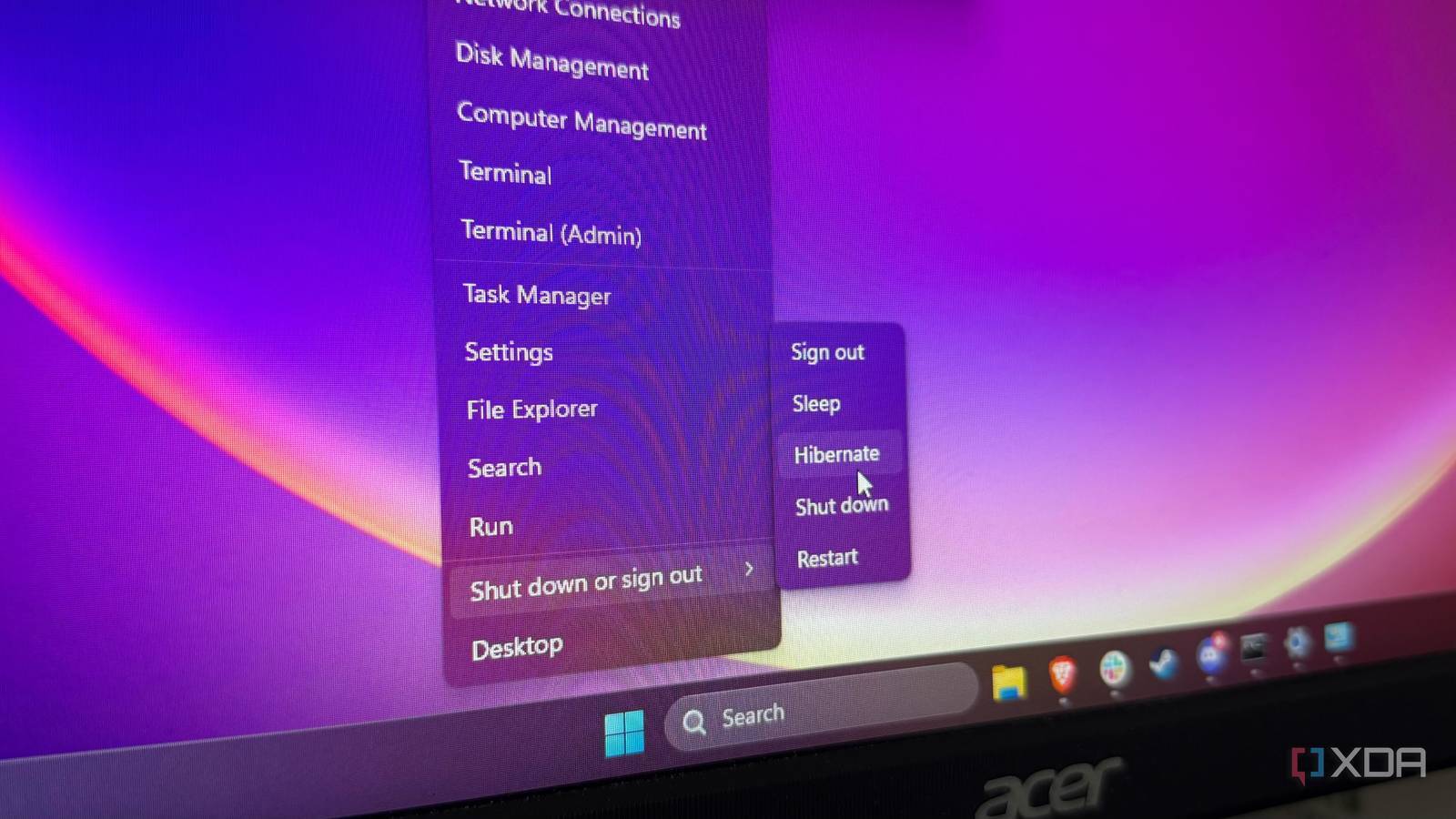
The idea that hibernation is going to cause substantial SSD wear is ludicrous on all but the smallest SSDs in systems with large amounts of RAM.
Hibernation is only going to be saving ram in memory, so for most consumer systems 8, 16 or 32GB. Most SSDs nowadays are rated for hundreds to thousands of terabytes written as an effective life so you would need to hibernate hundreds of thousands of times. Even an aggressively low lifespan drive like a 256GB with ~500TBW would last over 18,000 full 32GB writes. Let’s pretend you hibernate four times a day every day, every year. 365*4 = 1460 hibernations per year. 18,000/1460 = 12.32 years. Long past the lifespan of a computer. No spinning disk is likely to survive this long either.
They even call it out in their article with their own math of twice a year and come up with 25 years of life. Just not something to worry about, at all, for almost any practical use case.
12 years is beyond the lifetime of a computer?
looks at my 13-year-old PC w/ original hard drive still going strong
My oldest SDD is still at like 85% health and it’s almost 15 years old O:
Shoot, my VR machine is about 13 years old with original CPU, RAM, and HDD! It has my old SSD now and a newer video card (2070) so it can play rhythm games at 90-120FPS.
My oldest working (working for tasks I’d actually use a computer for, not retro fun) computer is 15 years old! MacBook Pro. I need to get Linux installed on it. That’s a project for… eventually.
Mine is 17 years old and is still over-specced because I use Linux and bought it with 16GB RAM then. And it is the second PC I ever bought, my first one was an Pentium-class PC (actually AMD K6@300MHz) that I bought in 1998.
it usually depends on context of how the computer is being used, but usually speaking, the major OS companies invalidate older hardware.
intels 7700k(2017) and older are invalidated for W11 usage and W10 is on life support now for security. Apple is approaching the time period where its about to sunset intel based macbook/mac mini/imac/mac pro support.
in the context of mainstream general computers, 12 years is a LONG time. its also around the cutoff for whats worth selling vs whats worth recycling at my workplace.
W11 is also on life support
so is W12…
I have a pile of spinning disks that were online for less than ten years under low usage load that failed. I have bins and bins full of them at work with enterprise drives too.
I have personally had a single ssd fail in 15 years, it was an SX6000 that died from controller issues. My first ones were 64GB ones back in the infancy of SSDs. The controllers have come a long way and speeds are now 10-100x faster and much more reliable. Never, ever had one go bad from TBW personally or professionally. I’ve never even met someone who has gotten that to happen, the controllers usually go long before the NAND.
12 years is still beyond the lifetime of a typical computer. Even if you do not have component failures you start spending more money on power to run these things than it would cost to replace them with faster, larger capacity newer systems that use less energy for more oompf. Only people with free or nearly free power are immune to this which is not common.
I’m not saying just throw out all the old systems though, but most people aren’t gonna limp along on a 12 year old system as their daily driver. It might be ok for basic web browsing, word processing and email… but not much more than that. If it’s a laptop it’s gonna be dog slow.
A mid-range PC (i5 4590 + 750ti) from 2014 would be a perfectly fine computer to use even today, and probably wouldn’t draw all that much more power than a modern PC either. Things last longer now that hardware advancements are slowing down. You’d have to use Windows 10 LTSC though because driver support for Linux has been discontinued, lol.
12 years is hardly past the lifespan of a computer. That is only past the lifespan of the computer if you want to run the latest stuff, particularly games. I even have spinning disk drives from a brand that hasn’t existed since 2006 that work without errors. I just keep coming up with ideas to use my old ‘ewaste’ on for the fun of it, because that old hardware still works great even if slow by modern standards.