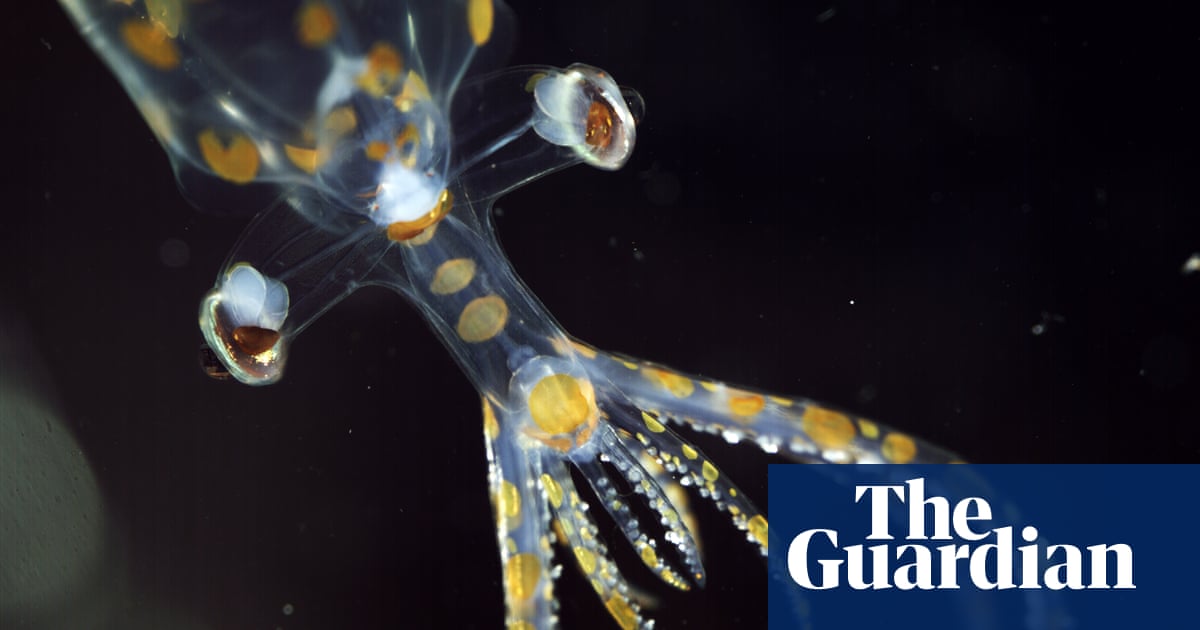
The list consists of an amphipod, a type of crustacean related to crabs and lobsters [AN: most closely related to isopods]; a gossamer worm that moves faster than scientists expect it to based on its body shape; nine jellyfish; seven siphonophores, colonial organisms related to jellyfish and corals; seven comb jellies or ctenophores, famous for the glittering cilia they use to swim; four larvaceans, tadpole-like creatures that live in mucus houses and are more closely related to humans than invertebrates [AN: larvaceans are inverts; I have no idea what the fuck this is talking about, albeit it’s alluding to it being in the phylum Chordata]; and two giant rhizarians, single-celled organisms visible to the naked eye.

Here’s the original press release from the Schmidt Ocean Institute.