If you go by the definition of “console” than includes things like the ZX Spectrum or the Amiga, then you are partly correct (you got my age wrong) as all home computing started with such “consoles” (and then there was a time when it was pretty much all PCs, and then came the modern consoles which are the ones I was talking about).
Technically speaking the modern age “console” was a reinvention of the “game consoles” of the pre-PC era, only originally the “closed system” nature was mainly a technical limitation as there was way less uniformisation of things like CPUs, whilst the closed system nature of the modern age consoles was a choice.
Having lived and used computing devices in both eras, I would say that the modern ones have almost nothing to do with the original ones, especially the business model - things like the ZX Spectrum tried to be open and educational (for example, by including a built-in BASIC language interpreter) whilst things like the PlayStation are almost the opposite.


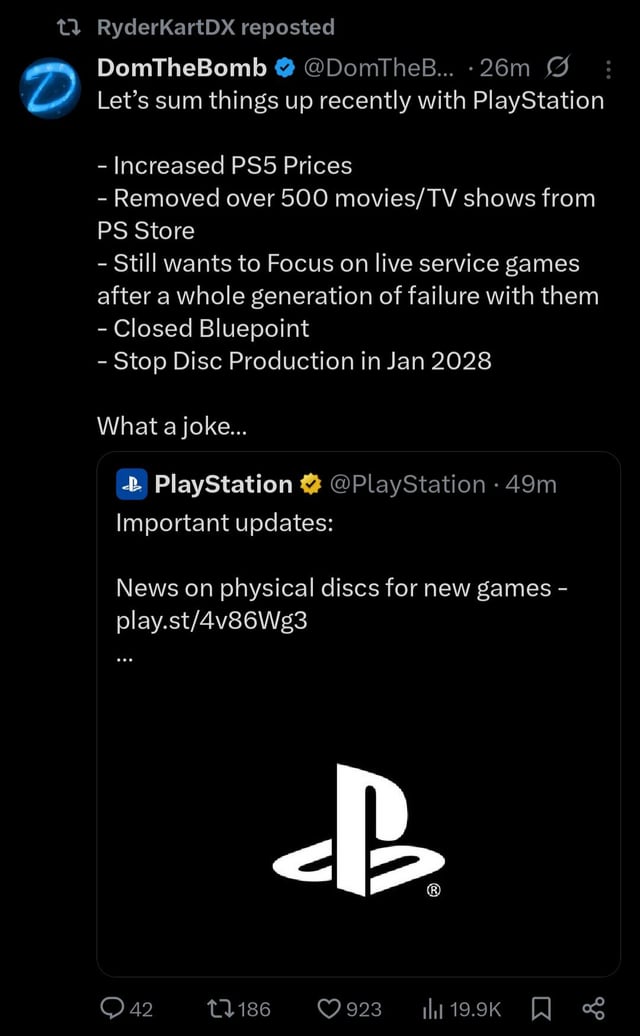
If you go by the definition of “console” than includes things like the ZX Spectrum or the Amiga, then you are partly correct (you got my age wrong) as all home computing started with such “consoles” (and then there was a time when it was pretty much all PCs, and then came the modern consoles which are the ones I was talking about).
Technically speaking the modern age “console” was a reinvention of the “game consoles” of the pre-PC era, only originally the “closed system” nature was mainly a technical limitation as there was way less uniformisation of things like CPUs, whilst the closed system nature of the modern age consoles was a choice.
Having lived and used computing devices in both eras, I would say that the modern ones have almost nothing to do with the original ones, especially the business model - things like the ZX Spectrum tried to be open and educational (for example, by including a built-in BASIC language interpreter) whilst things like the PlayStation are almost the opposite.
omg learn to write. Blather