

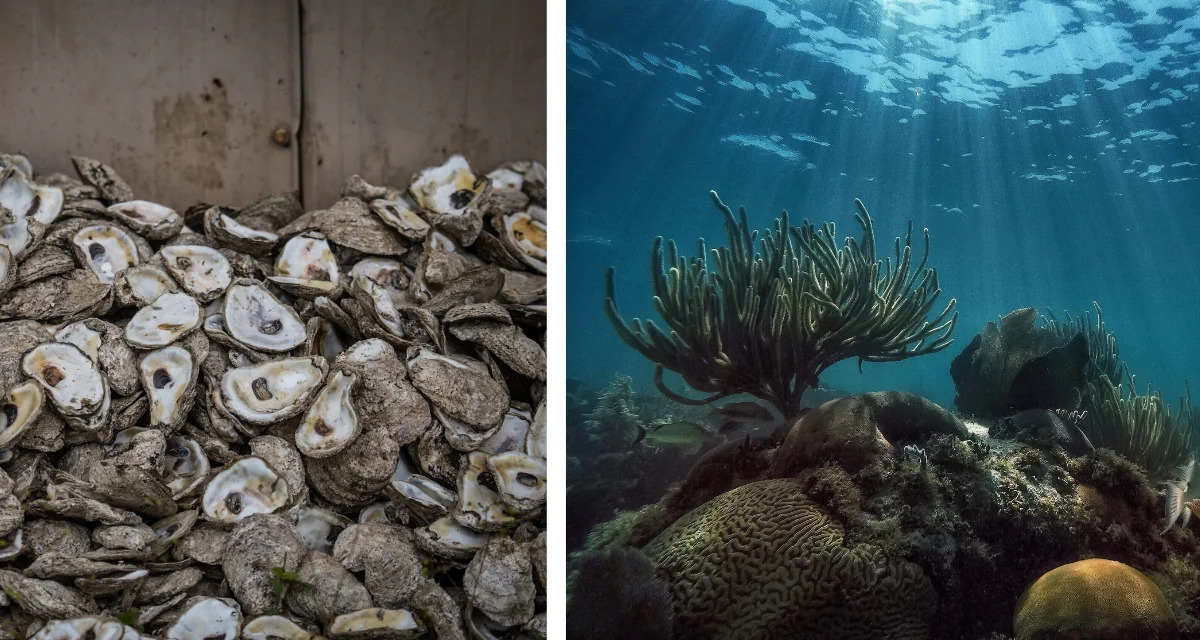
Some called it reckless dumping. Others warned it would be detrimental to an already dwindling ecosystem. And for a while, these concerns seemed valid. Even the researchers running this giant experiment had their doubts as no visible progress was initially seen.
All of these things and more helped revive fish, turtle, and dolphin populations to numbers not seen in over two and a half decades. Layer by layer, the ocean floor had rebuilt itself until the results were visibly undeniable.
“No one expected” sounds like they didn’t talk to any coral reef biologists.
It’s been known for a long time that marine invertebrate shells are mostly made of calcium carbonate which dissolves into the water, acting as a pH buffer. Since coral skeletons are also made of calcium carbonate, corals need calcium carbonate rich water to grow.
Ocean acidification is one of the big downstream negative effects of climate change. CO2 in the air dissolves in water and becomes carbonic acid, lowering ocean pH. As the pH drops, coral reefs begin to bleach and die off. By adding large amounts of calcium carbonate rich material to the ocean, ocean acidification can be counteracted and coral reefs protected.
They didn’t even need to meet that high a standard, lol, even though they should have.
I’m just your garden variety Lemmy computer nerd and I use oyster shell in my own little back yard pond. Baking soda is also useful, which is sodium bicarbonate rather than calcium carbonate.
The carbonates help keep pH stable and help the all-important bacteria in the filter do their thing.
I mean, it’s Florida…
The post title and body read like AI clickbait, maybe that’s why
Thank you for explaining.
So we should dump oyster shells around dwindling coral reefs? Sounds easy.
Absolutely, artificial reefs are not new in any way.
I didn’t know that CO2 contributed to bleaching, but I know the heat sure does. I wonder if they sunk these lower than usual or something.
You’re right though, the article is about as well researched as an ikea manual
It’s both, no? The CO² greenhousing but also increasing ocean acidity.
Yeah, I hadn’t honestly thought about the disolved CO2.
I guess I just figured algae was responsive enough and didn’t know there was that much CO2