That would be a good argument if not for the simple fact that ai straight up lies to you.
And its not even a question of using a “good” or “bad” model. We have observed a mathematical constant that shows no matter how large of a model you use, you can’t get below a certain percent of hallucinations.
Its far less common because models got bigger (and more Ressource intensive), but it still happens too often.
Or to phrase it in a different way, would you use a calculator if you knew every 30th answer it gives is wrong?
I see this argument often on Lemmy and I honestly have some trouble empathizing with it. Why should we demand that LLMs would be perfect, when nothing in life is perfect?
Books and scientific reports can, and often have, falsehoods printed in them. All sensors have error margins. A human expert can be convinced that they’re right and still be wrong.
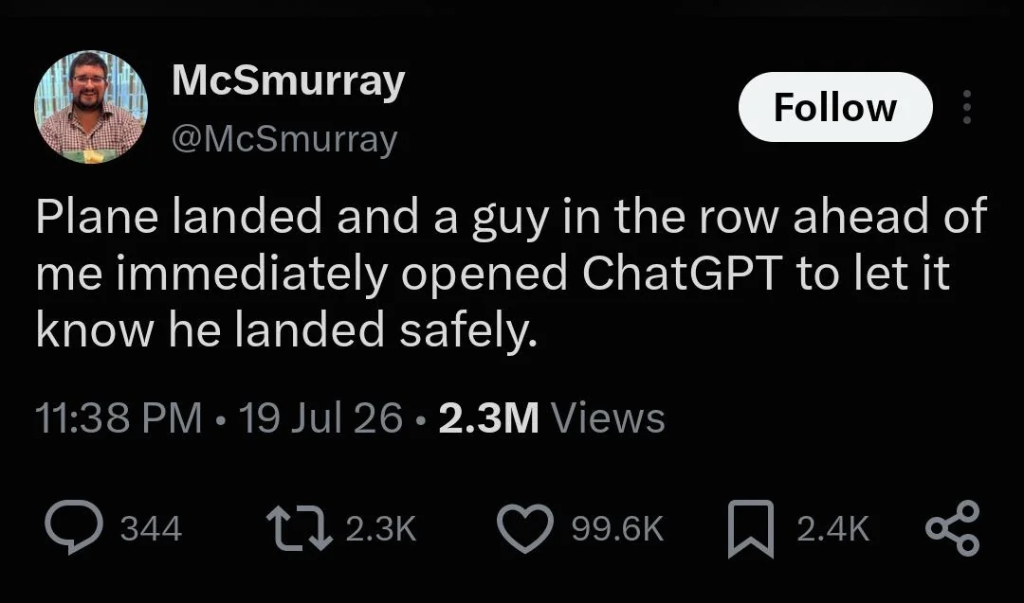
What I’m trying to say is we shouldn’t trust anything blindly. I absolutely agree that it’s frustrating to see so many people trust LLMs blindly, but used as a tool among others I think they’re most likely going to be very effective in a wide variety of fields.
LLMs are out there solving math problems, helping with biology research and fixing latent bugs in widely used open source software. Yes of course LLMs make mistakes, but you can verify their work.


That would be a good argument if not for the simple fact that ai straight up lies to you.
And its not even a question of using a “good” or “bad” model. We have observed a mathematical constant that shows no matter how large of a model you use, you can’t get below a certain percent of hallucinations.
Its far less common because models got bigger (and more Ressource intensive), but it still happens too often.
Or to phrase it in a different way, would you use a calculator if you knew every 30th answer it gives is wrong?
I see this argument often on Lemmy and I honestly have some trouble empathizing with it. Why should we demand that LLMs would be perfect, when nothing in life is perfect?
Books and scientific reports can, and often have, falsehoods printed in them. All sensors have error margins. A human expert can be convinced that they’re right and still be wrong.
What I’m trying to say is we shouldn’t trust anything blindly. I absolutely agree that it’s frustrating to see so many people trust LLMs blindly, but used as a tool among others I think they’re most likely going to be very effective in a wide variety of fields.
LLMs are out there solving math problems, helping with biology research and fixing latent bugs in widely used open source software. Yes of course LLMs make mistakes, but you can verify their work.