Attached: 1 image
Your phone breaks. Your washing machine gives up. Somehow, buying new seems cheaper than repairing.
The EU is making the Right to Repair the new standard in Europe.
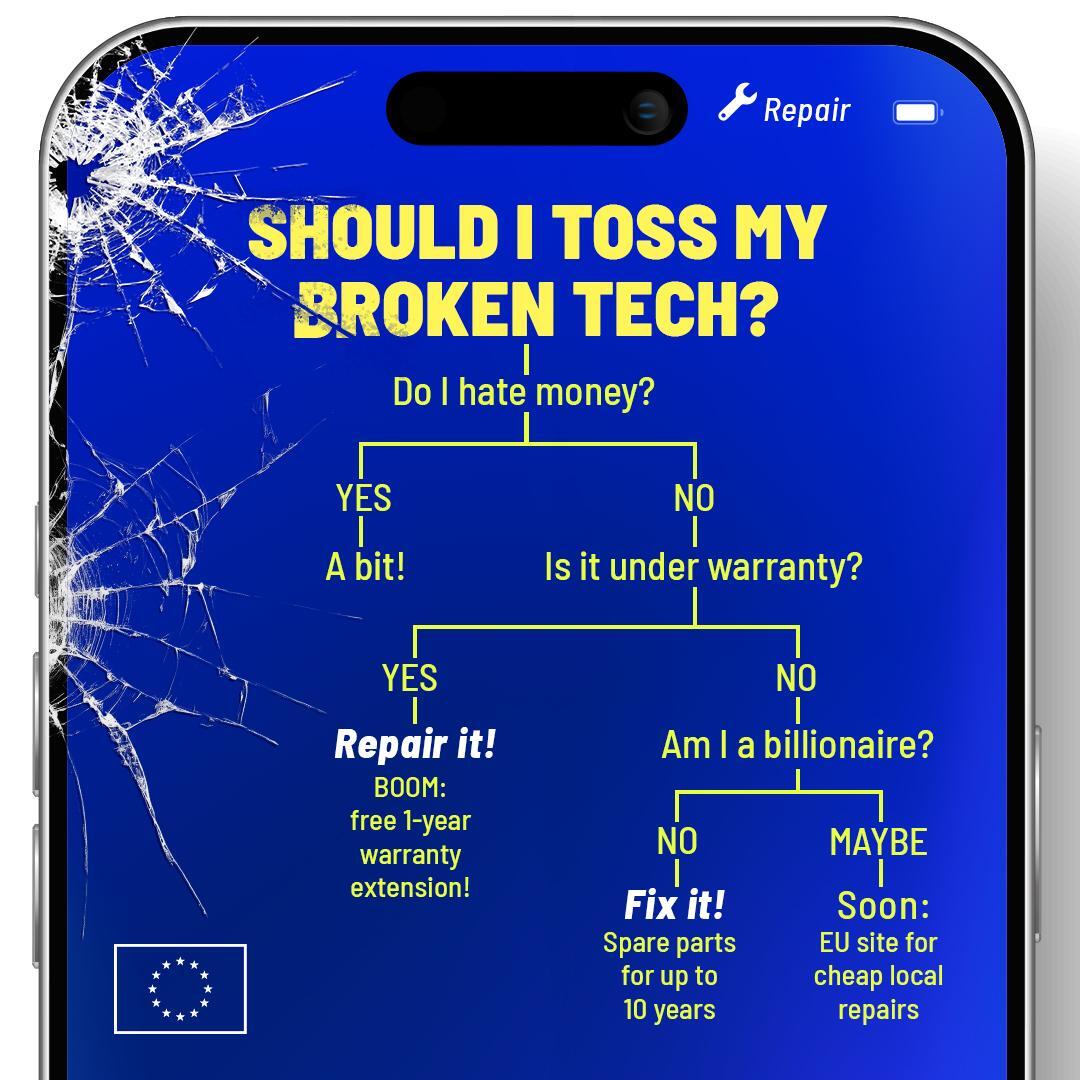
✅Repairs must be offered even after your warranty ends
🔧Parts must be available after the model is no longer sold
📅Choose repair under warranty and get an extra year of legal coverage
📍An EU platform will help you find local repair shops and fair prices
Less waste, more repairs. Good for your wallet, even better for the planet.
Sounds noble, but I have a gut-feeling it will simply result in more expensive electronics; which simply aren’t expensive enough as is… If an OEM is required to provide parts for 10 years for each device it sells, you better expect them to pass that additional cost onto the consumer. Besides that, there are already manufacturers providing parts for devices, but the high relative cost of parts make repairs unattractive, compared to simply “upgrading”. And the cheap segment of devices might disappear altogether, even more adware comes preinstalled onto them, or this line of devices is being subsidized by higher segments. Or perhaps more OEMs will lean into consumers leasing devices on a subscription basis, which would also compensate for the loss in sales for new devices (if actually effective); and seems in line with the anti-ownership trajectory. :)


Sounds noble, but I have a gut-feeling it will simply result in more expensive electronics; which simply aren’t expensive enough as is… If an OEM is required to provide parts for 10 years for each device it sells, you better expect them to pass that additional cost onto the consumer. Besides that, there are already manufacturers providing parts for devices, but the high relative cost of parts make repairs unattractive, compared to simply “upgrading”. And the cheap segment of devices might disappear altogether, even more adware comes preinstalled onto them, or this line of devices is being subsidized by higher segments. Or perhaps more OEMs will lean into consumers leasing devices on a subscription basis, which would also compensate for the loss in sales for new devices (if actually effective); and seems in line with the anti-ownership trajectory. :)