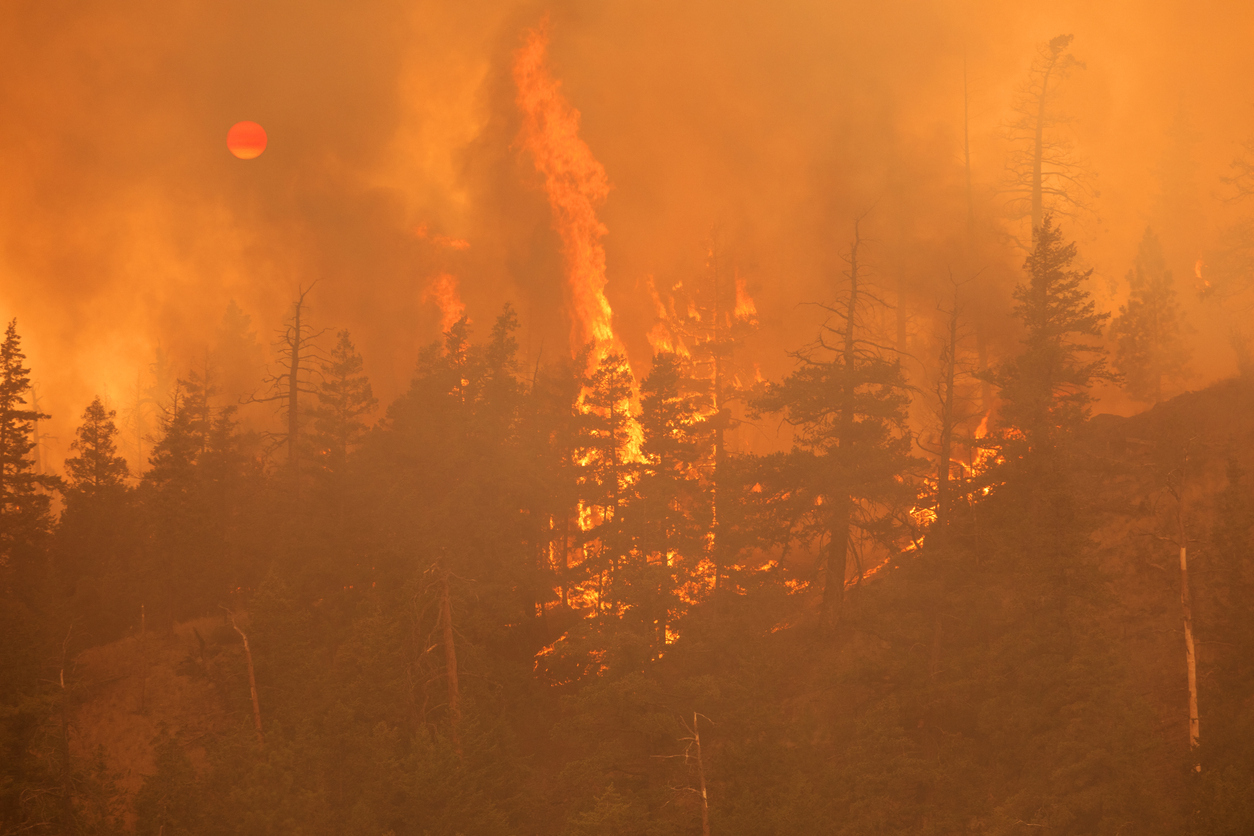
When the public broadcaster reports on wildfires, heat, and extreme weather without connecting the dots to fossil fuels, it leaves Canadians without the context they need to understand the crisis unfolding around them
Personally, when I’m reading an article, I skim past the parts that explain climate change, unless it has some new bit of information (ex. updates to historical trends). It’s not because I doubt climate change, but because I’m pretty familiar with the core points already.
I think it is helpful to talk about it in longer articles where you have room to dive into the topic, and put the current topic into a relevant wider context. However, I don’t think we should require it for the sake of mentioning it. It’s not effective at changing minds when its done like that.
I agree that the last article should have included the wider context. I would also be concerned if there is a growing pattern of not mentioning it when it needs to be. On this last point, while it’s more difficult, I would prefer if they analyzed sentiment and phrasing rather than counting mentions.
I’m not sure there are good journalistic practice’s for this yet. It takes space to properly cite that climate scientists have said that climate change has increased the intensity and frequency of these fires. Awkward too. I would like to see it settled that in short news articles, it is sufficiently settled science to simply use phrases like “climate change exacerbated wildfires” - but unfortunately, editors are still afraid of being accused of editoralizing.
Which is insane, as there are plenty of the conclusions of economists that get worked into the language without question, on far thinner support. Edit: or even pseudo-economists - I am thinking of the regular, unexplained language that equates a nations spending with a household budget, for example. That can be slipped in undefended no problem.
It’s not effective at changing minds when it’s done like that.
I had a rather lengthy response to Otter – then I read their post more carefully, so you get one even longer. 🙄 This is why I normally lurk. Moderation is not my strength.
Propaganda is absolutely effective, but only significantly so when measured, diverse, and subtle, at least until already enjoying widespread majority support. The tactics that work involve obscuring bias or position behind oblique or selective framing. Bludgeoning people with facts tends to be counter-productive, even alienating people who already share the same views. That means the data was incorrectly measured, with a bias toward checking boxes/signaling virtue rather than actually exerting influence.
And there lies the deeper problem as well. How does one form “good journalistic practice” around such manipulative presentation of information, when that is partly how we define bad journalistic practice? Honesty/diligence and effectiveness are directly at odds with one another, and that’s pretty hard to coherently codify. If you can’t always be objectively right, then you have to always be honest and transparent – to not exert influence that is not intrinsic to incontrovertible facts. And what today is ever incontrovertible to a general audience?
Journalism as a craft desperately needs the institutional trust it only ever earned by policing itself against such practices, so that it could leverage a trust that those who engage in more effective manipulations could not. And that didn’t even protect the truth nearly so much as it did the status quo and established beliefs. The reality is we always needed critical thinking that has to come from somewhere greater in breadth and capacity than our own imagination, intuition, or narrow experience could ever train.
When the walls around publishing collapsed, we lost the good with the bad. I don’t think the solution we need today can still (pretend to) exist within journalism/institutions, nor with a purely self-organized general public. Today, I find democratized aggregators like Lemmy helpful, but the quality is a direct consequence of its limited influence also limiting the incentive to subvert it. Even then it’s only a relative boost to signal quality, not a new kind of signal.
A new mechanism is needed to filter and direct trust irrespective of subject – perhaps as educational institutions once did to greater degree. If we don’t figure it out soon, AI will create that solution for us its creator-owners by becoming the substrate through which all human knowledge gets filtered and approximately summarized. We’ve likely already met the next Rupert Murdoch.


This one doesn’t: https://www.cbc.ca/news/canada/british-columbia/wildfire-smoke-health-effects-how-to-protect-air-quality-9.7297727
Nor this one: https://www.cbc.ca/news/canada/british-columbia/bradley-creek-evacuee-wildfire-9.7297911
This one? Nope. https://www.cbc.ca/news/world/spokane-washington-wildfires-9.7297896
This one really seems like it should, but it doesn’t: https://www.cbc.ca/news/world/south-korea-heatwave-9.7296123
Personally, when I’m reading an article, I skim past the parts that explain climate change, unless it has some new bit of information (ex. updates to historical trends). It’s not because I doubt climate change, but because I’m pretty familiar with the core points already.
I think it is helpful to talk about it in longer articles where you have room to dive into the topic, and put the current topic into a relevant wider context. However, I don’t think we should require it for the sake of mentioning it. It’s not effective at changing minds when its done like that.
I agree that the last article should have included the wider context. I would also be concerned if there is a growing pattern of not mentioning it when it needs to be. On this last point, while it’s more difficult, I would prefer if they analyzed sentiment and phrasing rather than counting mentions.
Dang it, of course I’d post in the wrong spot. For the record, this was a copy of the other reply, not the one I mentioned not posting.
I’m not sure there are good journalistic practice’s for this yet. It takes space to properly cite that climate scientists have said that climate change has increased the intensity and frequency of these fires. Awkward too. I would like to see it settled that in short news articles, it is sufficiently settled science to simply use phrases like “climate change exacerbated wildfires” - but unfortunately, editors are still afraid of being accused of editoralizing.
Which is insane, as there are plenty of the conclusions of economists that get worked into the language without question, on far thinner support. Edit: or even pseudo-economists - I am thinking of the regular, unexplained language that equates a nations spending with a household budget, for example. That can be slipped in undefended no problem.
I had a rather lengthy response to Otter – then I read their post more carefully, so you get one even longer. 🙄 This is why I normally lurk. Moderation is not my strength.
Propaganda is absolutely effective, but only significantly so when measured, diverse, and subtle, at least until already enjoying widespread majority support. The tactics that work involve obscuring bias or position behind oblique or selective framing. Bludgeoning people with facts tends to be counter-productive, even alienating people who already share the same views. That means the data was incorrectly measured, with a bias toward checking boxes/signaling virtue rather than actually exerting influence.
And there lies the deeper problem as well. How does one form “good journalistic practice” around such manipulative presentation of information, when that is partly how we define bad journalistic practice? Honesty/diligence and effectiveness are directly at odds with one another, and that’s pretty hard to coherently codify. If you can’t always be objectively right, then you have to always be honest and transparent – to not exert influence that is not intrinsic to incontrovertible facts. And what today is ever incontrovertible to a general audience?
Journalism as a craft desperately needs the institutional trust it only ever earned by policing itself against such practices, so that it could leverage a trust that those who engage in more effective manipulations could not. And that didn’t even protect the truth nearly so much as it did the status quo and established beliefs. The reality is we always needed critical thinking that has to come from somewhere greater in breadth and capacity than our own imagination, intuition, or narrow experience could ever train.
When the walls around publishing collapsed, we lost the good with the bad. I don’t think the solution we need today can still (pretend to) exist within journalism/institutions, nor with a purely self-organized general public. Today, I find democratized aggregators like Lemmy helpful, but the quality is a direct consequence of its limited influence also limiting the incentive to subvert it. Even then it’s only a relative boost to signal quality, not a new kind of signal.
A new mechanism is needed to filter and direct trust irrespective of subject – perhaps as educational institutions once did to greater degree. If we don’t figure it out soon, AI will create that solution for
usits creator-owners by becoming the substrate through which all human knowledge gets filtered and approximately summarized. We’ve likely already met the next Rupert Murdoch.