

Nice, but I want lower prices for the RAM and SSD modules.
I agree, but this will help pop the bubble because local models we can run on our own hardware will crash the demand for data centers
Not that I have anything against local use—I do my stuff locally—but people running local models will very probably greatly increase demand for memory relative to cloud-based AI compute (and it’s why I think that in the near term, most AI compute stuff is gonna be in the cloud, because we don’t have the memory to do everything locally).
If you run in the cloud, the hardware is shared. When one person isn’t using it, another can be. That can lead to high rates of capacity utilization, approaching 100%.
If I have local AI compute hardware, if I’m not using it, it’s idle. If 1% of the time, I have it crunching something for me, then I’m only getting 1% capacity utilization of that hardware. That means that to provide the same level of compute capability to everyone for local use, I need 100 times as much hardware.
AI cloud companies have purchased more memory than the rest of the world is buying.
If we did everything locally, we’d need a hundred times more memory than what the cloud AI companies are picking up.
We couldn’t do that without far more memory production capacity. Even if someone started on a buildout of that scale today, a new memory factory takes 4–5 years to get into production.
The people that use it super heavily can do on-prem and benefit and the people using it 1% of the time can use cloud and barely cost any money.
Correct. This isn’t an all or none situation.
128 GB of unified memory
I thought I was asking a lot when work asked me to pick a computer (with no guidelines) and I asked for a 36GB MacBook and justified it by saying I needed to run local models to save money. I didn’t ask for nearly enough. To its credit it does run local models fast, but it’s very limited in context window. It starts slowing down long before hitting context sizes I hit in frontier models.
I’m surprised you feel you need that much. Personally, I’m tinkering on a 7900XTX, with 24Gb of VRAM. I can’t run the massive new models, like the latest Deepseek Flash at 400+ Gb, but neither can 192Gb. Means my context isn’t unlimited, but I’m able to run even big local models like Qwen3.8 at Q4_K_M with a context of 64K, which is enough when paired with a front end like Hermes that can run compaction and invoke subagents. Honestly, I’d describe 24Gb as a sweet spot for local AI usage, 32Gb sounds like comfortable headroom for a larger context window, or even multiple heads.
To be fair, I guess it is unified memory, and it doesn’t sound like you’re running it on a dedicated machine, so maybe the other stuff you’re running is pushing past 8Gb and giving you less space for AI than me. But 128Gb still sounds like wild excess to me, well into the diminishing returns of slightly more accurate rounding and needlessly large context.
64k context is nowhere near enough. I try to remember to compact Claude when I hit 200k but sometimes when I’m not paying attention I can hit 600k. Yeah I’ve written little Python scripts on my machine using qwen, but some of my work projects have 80k tokens of just documentation.
some of my work projects have 80k tokens of just documentation
I feel like there’s got to be better approaches than just shoving the entire documentation into the context. Humans don’t try to memorize the entire documentation. We just search for relevant pieces and remember those, or have them open in a webpage alongside the code. We probably only have like 10k context maximum.
Do the modern agent harnesses not have automatic compaction?
Yeah so I’ve been working with Claude on that. Typically it greps to find what it’s looking for and that can be a lot of tokens. So I created something halfway between rag and that (semantic search), and overall it lowers token usage a bit, but even if it optimistically reduces tokens 20%, Claude is hungry for docs.
There is automatic compaction, but I typically want to control that myself when I change focus (if I don’t just /clear it). Still I’d say almost all of the stuff I do runs north of 100k tokens.
Surprised the community hasn’t found better ways to reduce context, 100k is insane. Is it possible to make the agent work on smaller pieces at a time, so less context is needed per piece?
Oh for sure. Agents often use under 30k tokens, but the orchestrator needs to have enough information to instruct the agents so it typically is a fair bit bigger in context. Agents tend to save you money on frontier models, but I’m skeptical about local LLMs. I suppose if you aren’t pressed for time it’s probably just fine. I haven’t played that much with it because anything big enough to bother with agents I typically feel is too big for local anyway. But I’m sure others have experimented more on that front than I have.
I was issued a laptop with 32GB for standard office work. 15 years ago our devs had 128GB. Of course, that was before COVID and AI insanity.
What in the fuck bloated skylab hokey ass shit were your devs making 15 years ago that demanded that kind of rocketship?
Lunchtime video games.
But also SharePoint, virtual. Bloated crap.

Meanwhile I’ve got 16GB and opening a third webbrowser causes shit to randomly close… Lol
Gorgon Halo, IIRC, goes up to a unified 192GB.
And while it depends on application, I generally agree that amount of memory is the most important factor. I started out with a 24GB RX 7950 XTX and then picked up a 128GB Framework Desktop. The larger amount of memory on the Framework is just a lot more useful than the greater bandwidth on the 7950, gives a lot more flexibility. I was always able to find useful things to do with more memory and could use more. For LLMs, more context, larger models, less quantitization. For image diffusion models, larger models, higher native resolutions without tradeoffs like having an upscaling pass, batch passes.
You can see why the cloud AI companies are hell-bent on getting all the memory that they can get their paws on.
Dis the same mistake. Feel you!
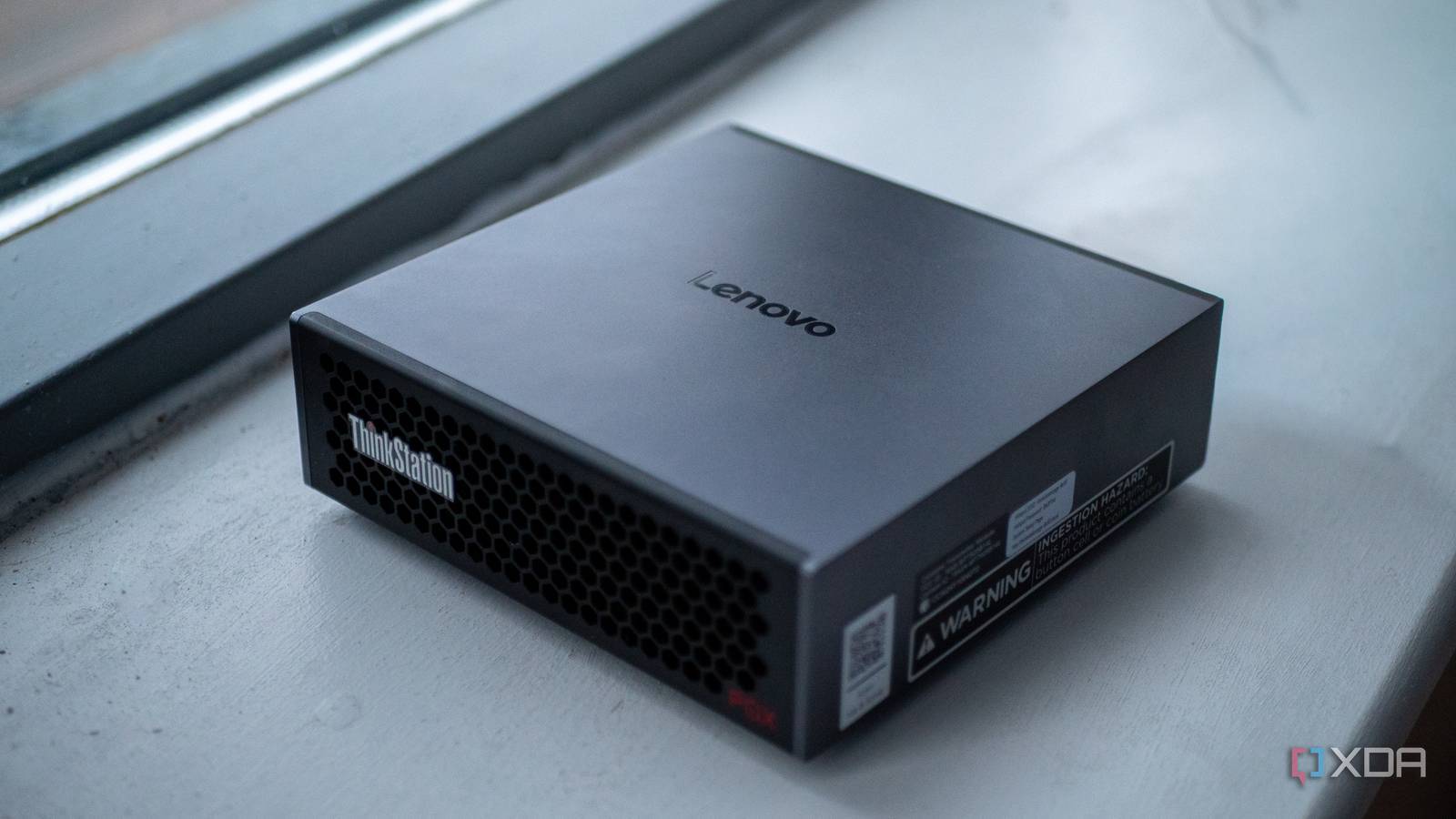
That thinkstation is now “starting at 5,849.00”. No matter how bad I want it, I can’t justify that cost. You can get nearly 6 years of Claude max for that amount. Maybe in 6 years the hardware cost will go down.
It was the kind of thing you could do painstakingly by hand with the likes of Ghidra.
You can give the model access to a tool like ghidra via a MCP and it will probably be able to solve the problem quicker and (if you ask it) you will get an annotated ghidra project out at the end.
Without it, it will likely write a series of python scripts using capstone etc.
But yes, local models are good. I just wish I could afford the hardware to run them.
You can give the model access to a tool like ghidra via a MCP
Better yet, give your model access to a CLI and save on context window
This is the current challenge, MCP and standards are helping to define the protocols, but harnesses and setting guardrails are almost as important as a quality model.




