Solar was rapidly getting cheaper, hydrogen isn’t. Sooner or later, batteries will be more energy-dense than hydrogen - I don’t think you understand just how dogshit hydrogen truly is.
Hydrogen is, IIRC, ~30% efficient roundtrip (multiply the efficiency of the electrolyser (70%?) with the efficiency of the fuel cell (50%?)), where batteries are 90%. And batteries are waaay cheaper per cycle. That’s why BEVs are selling like hotcakes whereas surplus hydrogen cars from failed hydrogen car initiatives can’t be sold (that’s not entirely true - they’re being bought up and converted into BEVs).
So batteries are cheaper, their power source is cheaper (because they’re ~3x the efficiency of hydrogen - and BTW that basically won’t change due to thermodynamics, hydrogen is just fundamentally rather inefficient), and you need a ridiculously absurdly expensive pressurized pumping system just to refill your hydrogen tank (which BTW has huge problems of its own because when you pump hydrogen into an empty tank it expands, and when hydrogen or helium expands it heats up, which then needs cooling which takes a bunch of power and engineering work), what’s the advantage of hydrogen?
Well theoretically hydrogen is more energy-dense. Except there are two types of “energy density” (the term is often used loosely/wrong) - there’s power per weight (specific energy), and there’s power per volume (energy density). And hydrogen is literally the least dense substance in the universe, that’s why we filled airships with it, and it’s why we need pressurised tanks in hydrogen cars. Pressurizing the tanks helps, but not by much. It still sucks unless you’re using it as rocket fuel (which cares a lot about weight, not so much for volume)
So, hydrogen needs pressurized tanks. Pressurised tanks weigh a lot, and they weigh more the smaller the tank! (the weight overhead follows the cube-square law). And car fuel tanks are much smaller than rockets.
What’s worse is that unlike fuel tanks, hydrogen tanks need to be cylindrical (or theoretically spherical) to efficiently contain the pressure. Which means they’re a pain in the ass to fit onto a car, because they can’t be flat. They’re in practice way worse than batteries, volumetrically, because batteries can be low and flat on the bottom of the car, in the middle between the axles for a nice clean centre of gravity. You can sort of flatten the hydrogen tank by having two cylinders side by side, but that’s inefficient and adds a ton of weight, which undercuts the point of using hydrogen in the first place.
Hydrogen refills quickly… But so do batteries nowadays. And of course if you really care them you can just make batteries swappable (check out Janus trucks, they have swappable batteries that take less than 5 minutes to swap with a forklift, and they’re actually commercially used in the real world on public roads, unlike hydrogen trucks).
By the way, you know how BEVs can literally be charged with a $20 power cord plugged into a standard wall outlet? Guess how much a hydrogen refuelling station costs (keep in mind the entire thing has to be pressurised). Are you ready?
$3million.
LOL
(Even a DC fast-charger is sub-$100k (might be closer to $10k I forget)
All that to pay more than petrol costs (even post-Hormuz, hydrogen is still 10x more expensive IIRC). But still, if you ignore the practical range limitations, you still have more range than a BEV though right?
Yes, you do. I forget the numbers but it’s not that much better (like 20% or 30% maybe?) and absolutely not worth almost literally everything else being worse than batteries.
But I forgot the worst part of hydrogen: it can’t be produced by unfirmed solar panels. It’s not a flexible chemical process, so realistically you need batteries to firm the solar panels while they electrolyze. Chuck that onto the giant “technical breakthroughs required to make hydrogen fuel a thing” pile, I suppose.
We’ll still need green hydrogen as a chemical input, it just doesn’t make sense as a fuel.
Seriously, why adopt the world’s most explosively flammable gas that’s also a chemical Houdini when you could just… Not handle fluid transfers in the first place and just transfer electricity normally, with a wire?
Why would anyone consider mass-adopting a 30%-efficient battery?
Hydrogen electrolysis currently requires an iridium catalyst for practical long-term durable efficient electrolysis, and might always require one. Iridium is stupidly expensive and a major reason why hydrogen can’t currently scale. Chuck it onto the “technical breakthroughs required” pile, I suppose.
I do think hydrogen-based energy has a future, funnily enough - I have high hopes for the TABQ “proton batteries” (AKA hydrogen-ion, which is like lithium-ion but a positive hydrogen ion is literally just a proton. It should be theoretically more efficient - hydrogen is lighter than lithium, after all). It’s a cool tech, if very new, and I hope it succeeds. It’s just a normal battery, one made from an organic molecule (TABQ) with no need for rare materials.
I used to be on the hydrogen hype train myself, but it took me an embarassingly long while to realise that hydrogen was motivated by hype and wrong thinking more than any technical merit. Especially said thinking by chemical and car companies. Hydrogen is a fuel, like hydrocarbons, and if you can’t imagine a world without fuel - a world where you don’t take your car to the fuel station and fill it up - then hydrogen is the only alternative. BEVs charge slower because they don’t need to charge quickly at home - in other words, they’re different and we have to think of them differently. Hydrogen is in basically every way the type of round-peg square-hole thinking that’s preventing adaptation to climate change; it’s this absolute turd that people are nonetheless actually considering adopting.
Seriously, why would you want to reinvent fuels? To paraphrase Technology Connections, the problem with fuel is that you have to literally light it on fire and replace it every time you use it. CATL’s latest Sodium-ion batteries claim a cycle-life of 15000 cycles, whereas hydrogen fuel has a cycle life of 1. Battery cycle life is only getting better, hydrogen will always be single-use, just like diesel.
We have commercially-viable battery-electric planes (namely the Heart X1, a 30-seat regional airliner - not just a wimpy Cessna replacement, although we have an electric Cessna knockoff too) before we have commercially viable hydrogen planes. Because batteries let airlines save money on fuel. If there’s one place where hydrogen’s better energy-weight ratio should dominate, it’s aerospace, but hydrogen has nothing.
I guess what I’m saying is: if you were wrong and hydrogen is indeed a pipedream, what would look different to our current situation?
Hydrogen EVs are not the topic, that might only male sense to replace diesel locomotives, if that. I am talking about standard store and use instead of coal or gas powerplants.
For one you need special alloys to store hydrogen, to avoid corrosion.
And solar and wind alno have not the same security problems of hydrogen, I am sure you understand that a tank of hydrogen that for some incident detonate is pretty bad (to use an euphemism)
No, it’s different with hydrogen. If you want green hydrogen, you’ll waste at least 50% of energy. Then there are storage and flammability etc. We have everything we need for using hydrogen today, but somehow it is not used besides minor experiments.
Yeah, but does energy waste matter if the other option is that you turn wind or solar input off? It should not run during high peak, of course, but if there is more energy in the grid than it uses? Turn it into hydrogen.
And storage, strangely that safety topic never gets raised with nuclear. If we can build safe nuclear, we can build safe hydrogen storage.
True, if we have huge surplus of renewables, then the cost doesn’t matter that much.
As per storage. Nuclear is far less problematic to handle in many aspects. Hydrogen is notoriously hard to store and if we go at scale, there would be massive amounts of hydrogen stored everywhere. A tiny spark away of a huge bomb.


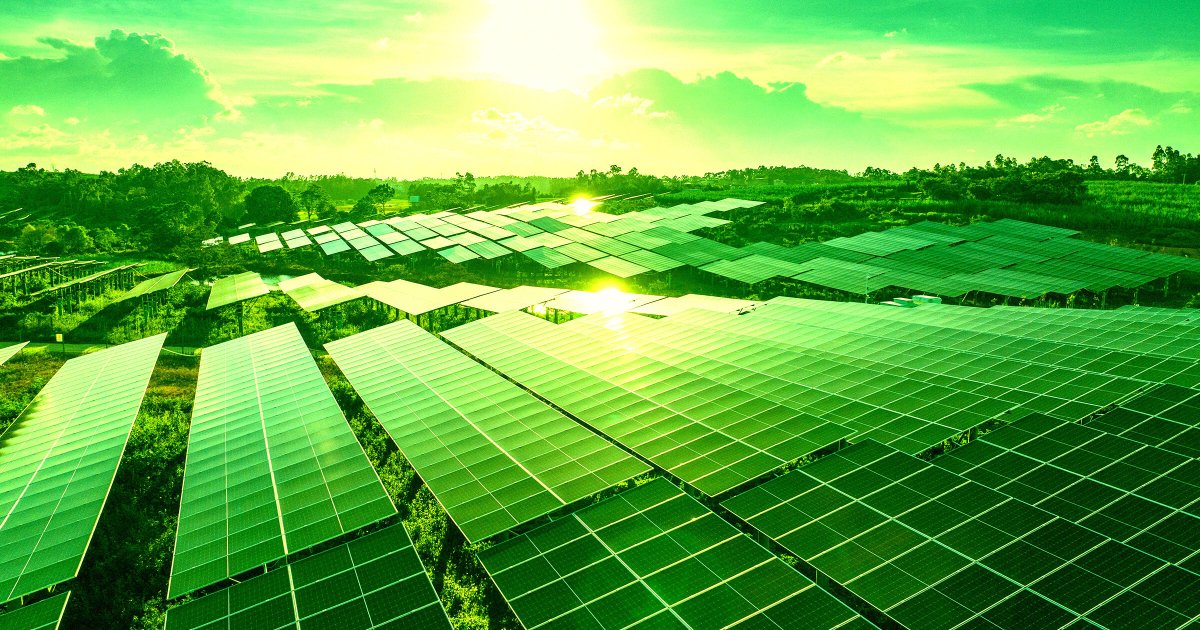
Yeah, yeah, same arguments as with solar, too expensive, not feasible, yadda yadda. Always the same.
Solar was rapidly getting cheaper, hydrogen isn’t. Sooner or later, batteries will be more energy-dense than hydrogen - I don’t think you understand just how dogshit hydrogen truly is.
Hydrogen is, IIRC, ~30% efficient roundtrip (multiply the efficiency of the electrolyser (70%?) with the efficiency of the fuel cell (50%?)), where batteries are 90%. And batteries are waaay cheaper per cycle. That’s why BEVs are selling like hotcakes whereas surplus hydrogen cars from failed hydrogen car initiatives can’t be sold (that’s not entirely true - they’re being bought up and converted into BEVs).
So batteries are cheaper, their power source is cheaper (because they’re ~3x the efficiency of hydrogen - and BTW that basically won’t change due to thermodynamics, hydrogen is just fundamentally rather inefficient), and you need a ridiculously absurdly expensive pressurized pumping system just to refill your hydrogen tank (which BTW has huge problems of its own because when you pump hydrogen into an empty tank it expands, and when hydrogen or helium expands it heats up, which then needs cooling which takes a bunch of power and engineering work), what’s the advantage of hydrogen?
Well theoretically hydrogen is more energy-dense. Except there are two types of “energy density” (the term is often used loosely/wrong) - there’s power per weight (specific energy), and there’s power per volume (energy density). And hydrogen is literally the least dense substance in the universe, that’s why we filled airships with it, and it’s why we need pressurised tanks in hydrogen cars. Pressurizing the tanks helps, but not by much. It still sucks unless you’re using it as rocket fuel (which cares a lot about weight, not so much for volume)
So, hydrogen needs pressurized tanks. Pressurised tanks weigh a lot, and they weigh more the smaller the tank! (the weight overhead follows the cube-square law). And car fuel tanks are much smaller than rockets.
What’s worse is that unlike fuel tanks, hydrogen tanks need to be cylindrical (or theoretically spherical) to efficiently contain the pressure. Which means they’re a pain in the ass to fit onto a car, because they can’t be flat. They’re in practice way worse than batteries, volumetrically, because batteries can be low and flat on the bottom of the car, in the middle between the axles for a nice clean centre of gravity. You can sort of flatten the hydrogen tank by having two cylinders side by side, but that’s inefficient and adds a ton of weight, which undercuts the point of using hydrogen in the first place.
Hydrogen refills quickly… But so do batteries nowadays. And of course if you really care them you can just make batteries swappable (check out Janus trucks, they have swappable batteries that take less than 5 minutes to swap with a forklift, and they’re actually commercially used in the real world on public roads, unlike hydrogen trucks).
By the way, you know how BEVs can literally be charged with a $20 power cord plugged into a standard wall outlet? Guess how much a hydrogen refuelling station costs (keep in mind the entire thing has to be pressurised). Are you ready?
$3million.
LOL
(Even a DC fast-charger is sub-$100k (might be closer to $10k I forget)
All that to pay more than petrol costs (even post-Hormuz, hydrogen is still 10x more expensive IIRC). But still, if you ignore the practical range limitations, you still have more range than a BEV though right?
Yes, you do. I forget the numbers but it’s not that much better (like 20% or 30% maybe?) and absolutely not worth almost literally everything else being worse than batteries.
But I forgot the worst part of hydrogen: it can’t be produced by unfirmed solar panels. It’s not a flexible chemical process, so realistically you need batteries to firm the solar panels while they electrolyze. Chuck that onto the giant “technical breakthroughs required to make hydrogen fuel a thing” pile, I suppose.
We’ll still need green hydrogen as a chemical input, it just doesn’t make sense as a fuel.
Seriously, why adopt the world’s most explosively flammable gas that’s also a chemical Houdini when you could just… Not handle fluid transfers in the first place and just transfer electricity normally, with a wire?
Why would anyone consider mass-adopting a 30%-efficient battery?
Hydrogen electrolysis currently requires an iridium catalyst for practical long-term durable efficient electrolysis, and might always require one. Iridium is stupidly expensive and a major reason why hydrogen can’t currently scale. Chuck it onto the “technical breakthroughs required” pile, I suppose.
I do think hydrogen-based energy has a future, funnily enough - I have high hopes for the TABQ “proton batteries” (AKA hydrogen-ion, which is like lithium-ion but a positive hydrogen ion is literally just a proton. It should be theoretically more efficient - hydrogen is lighter than lithium, after all). It’s a cool tech, if very new, and I hope it succeeds. It’s just a normal battery, one made from an organic molecule (TABQ) with no need for rare materials.
I used to be on the hydrogen hype train myself, but it took me an embarassingly long while to realise that hydrogen was motivated by hype and wrong thinking more than any technical merit. Especially said thinking by chemical and car companies. Hydrogen is a fuel, like hydrocarbons, and if you can’t imagine a world without fuel - a world where you don’t take your car to the fuel station and fill it up - then hydrogen is the only alternative. BEVs charge slower because they don’t need to charge quickly at home - in other words, they’re different and we have to think of them differently. Hydrogen is in basically every way the type of round-peg square-hole thinking that’s preventing adaptation to climate change; it’s this absolute turd that people are nonetheless actually considering adopting.
Seriously, why would you want to reinvent fuels? To paraphrase Technology Connections, the problem with fuel is that you have to literally light it on fire and replace it every time you use it. CATL’s latest Sodium-ion batteries claim a cycle-life of 15000 cycles, whereas hydrogen fuel has a cycle life of 1. Battery cycle life is only getting better, hydrogen will always be single-use, just like diesel.
We have commercially-viable battery-electric planes (namely the Heart X1, a 30-seat regional airliner - not just a wimpy Cessna replacement, although we have an electric Cessna knockoff too) before we have commercially viable hydrogen planes. Because batteries let airlines save money on fuel. If there’s one place where hydrogen’s better energy-weight ratio should dominate, it’s aerospace, but hydrogen has nothing.
I guess what I’m saying is: if you were wrong and hydrogen is indeed a pipedream, what would look different to our current situation?
Hydrogen EVs are not the topic, that might only male sense to replace diesel locomotives, if that. I am talking about standard store and use instead of coal or gas powerplants.
For one you need special alloys to store hydrogen, to avoid corrosion.
And solar and wind alno have not the same security problems of hydrogen, I am sure you understand that a tank of hydrogen that for some incident detonate is pretty bad (to use an euphemism)
No, it’s different with hydrogen. If you want green hydrogen, you’ll waste at least 50% of energy. Then there are storage and flammability etc. We have everything we need for using hydrogen today, but somehow it is not used besides minor experiments.
Yeah, but does energy waste matter if the other option is that you turn wind or solar input off? It should not run during high peak, of course, but if there is more energy in the grid than it uses? Turn it into hydrogen.
And storage, strangely that safety topic never gets raised with nuclear. If we can build safe nuclear, we can build safe hydrogen storage.
True, if we have huge surplus of renewables, then the cost doesn’t matter that much.
As per storage. Nuclear is far less problematic to handle in many aspects. Hydrogen is notoriously hard to store and if we go at scale, there would be massive amounts of hydrogen stored everywhere. A tiny spark away of a huge bomb.
They’re facing entirely different problems.