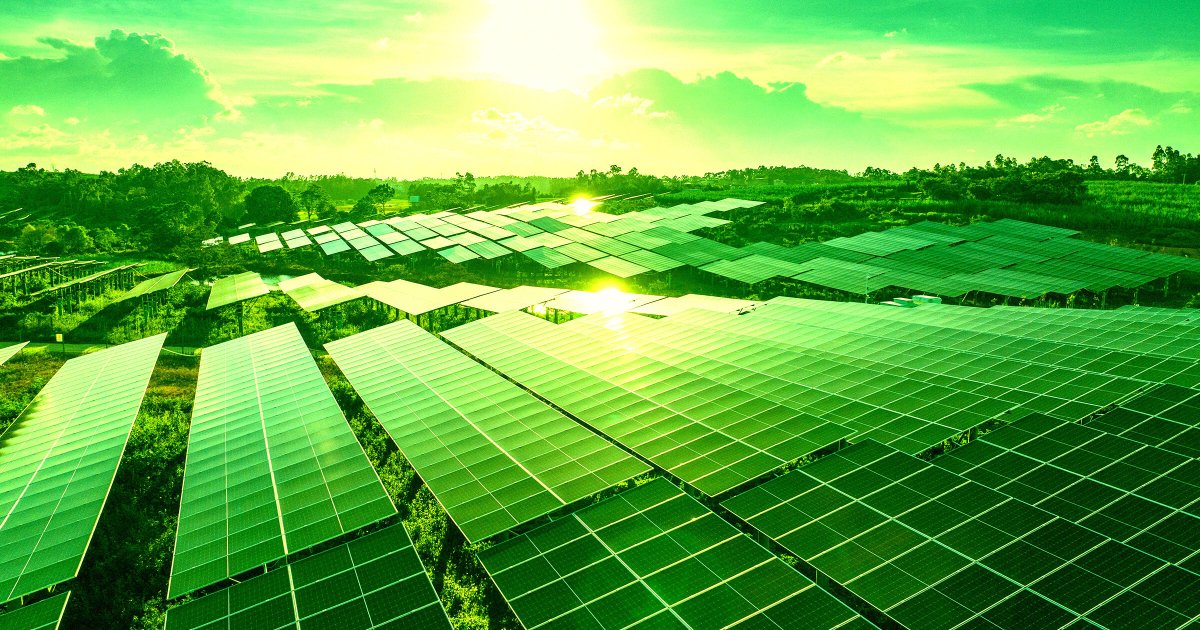
You mean we can make FREE ENERGY in our BACKYARD for almost NO Money? This is TERRIBLE!
-LITERALLY Conservatives!
Don’t y’all know everything is made from oil and this is why we should keep burning the stuff to never see it again?
-Also LITERALLY Conservatives
I heard Hunter’s laptop ran on solar energy!!
Turns out we already have fusion power, it’s just been placed safely 149.6 million km away. The solution to energy independence comes up every morning.
149.6 million km
how many American hotdogs is that?
At least three.
All energy comes from the sun except for geothermal which comes from the Earth’s rotational momentum which might as well be the sun because it wouldn’t rotate without something to orbit around.
Technically nuclear came from a different star. The sun won’t create those kinds of heavier elements until it burns through its hydrogen and helium fuel to start fusing its way up to lead, and I don’t think it’s massive enough to actually reach the kind of supernova collapse required to smash lesser elements together into heavier elements than that in any significant amount. So technically, fission is the only the form of energy that isn’t based on solar. It’s just the still-cooling-embers leftover from someone else’s dying star, a whole bunch of billions of years ago. I guess you could say the sun’s gravity at least attracted it all into this general vicinity though, at least until the Earth’s own gravity started pulling its own weight.
except for geothermal which comes from the Earth’s rotational momentum
emm that is not the source of geothermal energy…

TIL - according to one source 80% of the geothermal energy comes from radiation and the remaining 20% is from the sun.
Didn’t the molten core also originate in some way from the sun?
The molten core is hot because a whole lot of rocks crashed into each other. Also, nuclear decay.
Probably
geothermal which comes from the Earth’s rotational momentum
umm… that is not the source of geothermal energy…

Yes it is, and the earth is gradually slowing down because of it.
You mean a Dyson Sphere right?
Dyson swarms would be more feasible. Heat rejection on a sphere would give an engineer a complete meltdown.
First a Dyson Ring; have you read any of the Ringworld series by David Niven? And for the time being solar panels, solar architecture, cardboard solar fucking ovens, solar deathray from a satellite dish, etc, etc, etc…
While I consider myself pro nuclear, there is something that gets forgotten everytime this conversation comes up.
Nuclear produces waste, which is mentioned often but it is usually responded by pointing out that it could be recycled and the worse to be buried.
Here is what people miss:
Are all our nuclear waste handled correctly today? If not then why should we imply that they will be in the future.
The problem with nuclear isn’t that the waste is impossible to handle, it’s that humans are too short sighted to follow through with it.
And imo that’s a very valid argument on why we should use solar as much as we can.
Being pro-nuclear was a very valid position up until a few years ago. Now solar has gotten so cheap that there is practically no reason to do it except to protect yourself against US imperialism.
Solar still has some huge problems when it comes to seasonality and day/night cycle. You either need massive battery build out or some other form of energy to handle base loads and/or offset when solar isn’t producing enough.
Not saying solar isn’t part of the future, but we literally can’t just rely on solar.
Battery tech is getting super good though, and the materials are recyclable. If solar becomes cheap enough we could even store it in creative (but less efficient) batteries like lake batteries or weight batteries and the like.
Nuclear, both fission and fusion (which will never happen anyway) are relics of an era of cheap fossil fuels and relative world order.
Solar electricity is viable at scale but also indicates a change in our species’ living arrangements on this planet.
You do realize that you can support multiple things? You don’t have to be antinuclear to be pro-solar.
You need to choose a thing to build there is not unlimited budget.
While I consider myself pro nuclear, there is something that gets forgotten everytime this conversation comes up.
The problem with nuclear isn’t that the waste is impossible to handle, it’s that humans are too short sighted to follow through with it.
Thats not even the biggest problem with nuclear power as the waste angle, at scale, will hit us decades in the future. The more urgent problem hitting us now on even on existing deployed nuclear plants is cooling water.
The byproduct of nuclear power generation is lots AND LOTS of waste heat. You have to get rid of this every second to continue to produce electricity. This is why nuclear power plants are typically built next to a large body of water. However, with reduced water supplies in reseviors theres less water to use for cooling nuclear plants. A double whammy is with climate change increasing temperatures, the water that remains is already hotter than it was, meaning it can carry away even less heat.
If a plant can’t get rid of its heat it needs to curtail (reduce) electricity production. This isn’t just theoretical. Its happening now in 2026 to existing power plants:
-
Hungary - Aug 2026 Hungary plans to shut down only nuclear power plant amid drought
-
Romania - Aug 2026 Nuclear power plants are being shut down as Europe’s drought becomes an energy crisis
-
France & Switzerland - Aug 2026 Droughts cause nuclear power plants in Europe to reduce output
At the time when Europe was experiencing its worst heatwave is recorded history, many European reactors had to be turned down or off. 2026 isn’t the first time this has happened either, you can go back in the last 5 years or so and see many reports of nuclear plant curtailment because of lack of cooling capacity (cool water).
When we know global temperature are rising, it looks like this will just get worse. How can we say nuclear is the future when the conditions for it working well are already declining?
Fuck, that’s a terrifying thought. Bring on the panic attacks! Yay!
-
To the disposal argument i like to ask; are we handling our waste from burning fossil fuels well?
Is run away climate change “doing it well”?
Would you rather your waste be buried in the ground or pumped into the atmosphere?
Containing the waste and burying it in the ground is the default for nuclear, meanwhile doing the same for CO2 is very challenging and it may never be viable.
But we are comparing solar to nuclear.
Being better than fossil fuels is a pretty low bar.
And yes better nuclear than oil but the whole thing about nuclear is that it has a very delayed start time, so the argument of needing it ASAP supports solar if anything.
The fact is that humans are just not well equipt to deal with problems beyond human scales.
We’re not good at accurately assessing risks beyond human time scales and we’re not good correctly prioritizing action when the benefit is beyond human time scales.
Big Oil predicted global warming pretty spot on, they just fought it and hid the findings instead.
To some extent I think we’ve gotten pretty good at long term predictions on things like this, but no one wants to hear it.
fire it into space futurama style
Let’s just not do it Space 1999 style.
Would you trust a SpaceX rocket with radioactive waste?
I would. If my goal was crashing that waste into a random subdivision or exploding on the launchpad dirty bomb style.
IMHO another big issue with nuclear is concentration of power. nuclear is quite stable, but not always and when it fails you suddenly loose a huge bunch of production that becomes hard to replace. (and Im not even getting into safety here)
France had to deal with a lot of issues just this year, with around 20% of their nuclear plants unoperative, which increased prices dramatically.
Solar is mostly distributed by design (and need) and failures are smaller
A hailstorm wiped out 350mW of solar in Texas in 2024. But, they learned that the angle of panels was critical to avoid damage and now they have a hail storm mode that increases the angle to protect the panels.
Not sure if panels can survive hurricanes, certainly not tornados.
350mW
Maybe they should keep some AA batteries around just in case another hailstorm hits.
We also have limited potential stores of uranium. When Chinese reactors all get on line, maybe 40 years left.
Agreed. Are we seriously forecasting 5000 years of stable, deep, under-mountain storage. For all those years, waste storage is a prime target for contaminating locales.
The other quality argument I’ve heard from Lemmy, is that the security requirements for nuclear plants are essential and costly, due to plants being a similar target for creating contamination.
Essentially, nuclear power is a fascist tech, due to the centralised, militaristic, security apparatus required for the life of the plant and waste.
nuclear power is a fascist tech
Calm down, Francis.
Guess which single country is making all the PV panels?
Technically solar power is nuclear power ☝️🤓
All power is solar power if you go deep enough. Or to be more accurate, stellar power.
Tidal and geothermal are not.
This raises an interesting question in my mind, does tidal power make the earth get closer to the moon? Because if you got all the energy out of it, then the water wouldn’t move, so I guess it’s the same as gravitational potential in that sense, but I guess it’s removing it, so less gravitational potential means either less mass (not the case) or less distance.
You’re not deep enough yet, tides and earths core only exist because stars exploded billions of years ago and some particles eventually formed earth
Geothermal comes from friction inside the core, residual heat from planet formation, and radioactive decay. Since all elements heavier than hydrogen were fused inside stars, and heavier actinides like uranium are formed in second gen stars, and the inertia of dust that coalesces into planetary bodies including the earth and the moon originated from dying stars going supernovae, geothermal and tidal energy are products of stellar explosions, either inertial, kinetic, or radioactive. Tides are driven by the moon, whose energy is kinetic, stored from past supernovae
All stars came from the Big Bang.
So it’s all Big Bang powered.
Checkmate.
You’re right, we are all just passengers on this bang bus
Planet wouldn’t exist if stars didn’t explode billions of years ago, checkmate.
Most usable energy on Earth comes from fusion of hydrogen into helium in the Sun, creating radiation that hits the Earth. That’s solar energy, of course, either thermal or photovoltaics, but also the wind caused by uneven warming, the evaporation and condensation of water that flows downhill for hydro power, the chemical bonds formed by photosynthesis making renewable biofuels or older fossil fuels.
Some portion of energy on Earth is gravitational potential energy and the kinetic energy of stuff moving around settling into a lower energy state: the moon dragging the oceans around, the heat of the Earth’s core spinning and tectonic plates moving from the momentum of all the dust that got pulled into what is now a planet. Geothermal and tidal energy mostly come from these planet scale phenomena.
Some portion of energy is the release of energy stored in nuclei formed from some past supernova, of less stable isotopes of atoms heavier than iron. Some portion of geothermal is traceable to this kind of nuclear decay, and obviously we can isolate and enrich those nuclear elements into fission fuel for nuclear power, as well.
Hard to categorize the second and third categories into solar power, though. Yeah, it comes from astronomical phenomena tracing back to how our solar system and planets were formed, from the materials they’re made out of, and found their way into their current shapes and orbits, but is that solar power?
Which is ultimately caused or released by gravity.
Stellar? Mmmm never thought about this word much. Constellation? Stars? Stellar?
I have some holes to go down
Fusion as well
Goated power generation method because no form of water needed.
Averaging nuclear over the entire world really doesn’t give it a fair shake, since there are many jurisdictions that won’t build nuclear capacity for political and societal-preference reasons, rather than technical ones. Where I am, the percentage of electricity supplied by nuclear power plants is more than five times what’s supplied by solar and wind combined, and we’re doing just fine (and building out more nuclear in addition to more renewables).
Nuclear is slow. Solar is fast.
Nuclear has been slow, for a variety of reasons, but that is about to change.
SMR
Modular reactors are fast. Ontario will have three online in 2 years.
Solar is fast and getting better continuously. The new battery technologies like Sodium Ion are eliminating the downsides to it. We just need a big battery shack on every block with safe sodium battery storage and solar panels on all the house roofs.
In UK in 2010, 10 new nuclear plants were announced. Since then 5 older plants have been shut leaving us with 5 active. 1 of the 10 new ones started construction and it’s massively over budget and delayed.
In the same time we’ve added about 20GW of solar.
New nuclear plants take like 10 years to build, and need to plan out a 50+ year useful life in order to be worth the up-front construction costs.
I wonder what the state of energy production in 2075 will be, where a nuclear power plant designed in 2025 and completed in 2035 will still have 10 years in order to break even on cost, competing with whatever the state of the art is on generation in 2075. Fusion? Widespread solar+wind+geothermal+batteries? Something we haven’t even dreamed of?
That’s why I’m skeptical of nuclear fission these days. It locks us in too long.
I’m all in on solar for most places.
Sure it uses a bit more land, but it makes no noise, no pollution, there’s zero risk of an accident, no targets for terrorism and your grid isn’t completely shut down if it is somehow turned offline.
You don’t depend on others for your own resilience. No need for oil, gas or uranium.
Unless you live in the high northern latitudes, there is almost no reason to not be building a durable and resilient battery-renewable grid
Solar should be in every parking lot and the median of every highway as the baseline, already space we’ve developed and can (more) easily add to.
Solar and wind don’t render entire regions uninhabitable when something goes wrong.
Its possible to build reactors that don’t fail spectacularly. Just look at penslyvania with the three mile island nuclear plant or hell you could even look at fukushima. People still live around those locations.
edit: Build out more solar too because that is a great way to generate power but don’t snub other things just because they aren’t “perfect” from your perspective.
Solar and wind alone can’t run a grid unless there is a significant amount of battery storage.
Okay? That doesn’t have anything to do with the issue.
I think the main advantage is how much easier and cheaper solar is than nuclear. Also apparently nuclear will have diminishing returns as the earth warms up, due to cooling issues.
Also with things like balcony solar, you can easily get a distributed power network.
That being said, nuclear is also great. Especially the newer powerplants behind produce very little waste material.
since there are many jurisdictions that won’t build nuclear capacity for political and societal-preference reasons, rather than technical ones
Most jurisdictions aren’t allowed to build nuclear, for nonproliferation reasons. That’s because nuclear technology can be used for nefarious purposes, and requires a highly functioning security apparatus in order to enforce safety requirements. So as a society we’ve tried to keep it out of the hands of those that the great powers have decided can’t be trusted with the tech.
Which then raises the uncomfortable question of whether we should trust ourselves, the current great powers, with this technology? If we plan out a 50-year useful life for a power plant, do we trust that the governments and companies operating that plant (and its supply chains and its waste management) will still be doing things safely in 50 years?
These days, I’m less sure.
Unless you’re in Epstein Land of America where coal is now the golden standard for the predator administration
Coal is for cowards, burn whale blubber and trees
I have solar power at home in the USA. I just set it up by myself without asking permission.
Big star object provide energy for everyone for most of day, it s possible now to make it available for entire day with battery tech, affordable with less waste and risk than old fossils energy. Sounds good and should applied to all of place asap.
I have been do disenfranchised with this world.
I had a private education and strong interest into alternative fuels and power. I was so happy to learn about hydrogen fuelcell cars, solar, and wind energy.
I really thought we were all collectively passionate about saving the planet, back when I was 14 and learning about this stuff in grade 7.
Now, 25 years later and its a joke. Billionaires are going to burn up the world.
Same, friend.
You could see it in things like Back to the Future and Bill and Ted about how awesome the future was going to be.
It only takes a few of these guys to throw all of humanity in the shitter too. I mean, there’s the people that put them into power and all that, but it is the key people were people seem to love a charlatan.
The majority of human history was solar powered. It took fossil fuels to allow us to reach 8 billion with our current level of resource use.
Please describe how sunshine alone will sustain this unchanged.
Best to think of fossil fuels as a shot in the arm of the development of human civilization. On that timescale, It was always going to be temporary, whether due to climate change or simply the limits of availible fuel. We were always going to need to use it to bootstrap onto something else within a couple hundred years of the invention of the steam engine. The math is reasonable and yes, total solar power isnt a problem (storage and distribution is, but total availability isnt hard).
Please describe how sunshine alone will sustain this unchanged.
Because you’re ignoring the hugely inefficient baseline of how much sunlight we have historically been able to harvest.
From this page, sunlight-to-biomass efficiency of wild plants is less than 1%. For crops specifically bred over thousands of years to grow as much useful biomass as quickly as possible in each season, the number ticks up to 2%. But even that number also fails to account for the periods in which fields lay fallow between seasons, or for crop rotation.
Then, once you have that biomass, converting it into a useful form of fuel for burning, or food for biomechanical energy, has huge efficiency losses along the way.
Meanwhile, solar panels achieve approximately 25% solar efficiency.
That’s how we can collect far more energy from the sun today than at any point in the past. Biology is inefficient compared to photovoltaics.
Who said we need to sustain it? Personally, I think we should reduce our energy use. Fewer private vehicles and more public transit, for example.
We didn’t have means to convert it into electricity for the majority of human history or machines to run with that electricity that made it possible to produce enough to support all those people. We’re able to do a lot of shit with just electricity now that used to require engines running fossil fuels
Nuclear plants - with high start-up costs, national security risks and high output - will always require concentrating large amounts of power in few hands.
Solar has much greater potential for decentralization.
Greater inequality results in a worse society in just about every imaginable way. And nuclear will always encourage that more than solar.
Solar has much greater potential for decentralization.
Not when we buy all our panels from China.
Yeah, damn governments holding all the uranium for themselves. It’s just not fair.
I know right. How can I become a super hero from exposure if I can’t get some uranium.
My son would argue that governments should have invested heavily in thorium reactor technology instead.
That is remains a cool potential technology, but why spend billions of dollars trying to develop a worse technology when solar already exists and for much cheaper? It’s just being sidetracked while letting investors enrich themselves on government research money
Plus it harkens back to the old adage about base power. No, we don’t need base power when we have large scale grid storage. Thats just coal propaganda
That is remains a cool potential technology, but why spend billions of dollars trying to develop a worse technology when solar already exists and for much cheaper?
This was the exact same argument made against solar. We should research and improve energy technologies. I doubt Thorium is the solution, but we’ve discovered a lot of our technology by researching something else and then discovering an interesting function or byproduct unrelated to the original goals.
Plus space exploration will need to be nuclear.
LOL
Why bring Space Nuttery into this?
Nuttery?
Every dollar spent at NASA has returned so much more. They develop things for space travel that have uses far beyond space. We wouldn’t even have satellites and GPS if we didn’t venture into space.
Space has a lot for us to explore and a ton of resources we can use. Why strip mine the Earth when we could just take it from the asteroid belt?
You really need to disconnect space exploration from the likes of Musk or Bezos. We’ve been advancing humanity through space exploration before those two assholes were born
NASA has nothing to do with nuclear research. The world would benefit from nuclear research more than sending another group for a lap around the moon.
Nuclear power is a very important technology for space vehicles, probes and bases. There’s proven potential for greatly improved propulsion systems as well.
You can’t just hear the word space and declare it “nuttery”, that’s just ignoring whole industries and areas of active research and engineering.
Space Nuttery is thinking it’s somehow important or relevant for humanity going forward.
A power source for a floating camera to go take pictures of dead rocks and frozen chemicals is a niche interest. No one has a RTG powered city.
“You can’t just hear the word space and declare it “nuttery”,”
You can’t just hear “Space Nuttery” and talk about space. Space is a mostly empty sucking vacuum hostile to all life and a radiation-blasted hell.
Space Nuttery is living in a fantasy world where we’ll just somehow go space mining and colonizing Mars with water from Saturn’s rings like it’s just a question of a longer trip to Home Depot.
It’s an intellectual dead end.
Your response is exactly Space Nuttery. Dream-like nerd fantasies.
I seriously doubt there’s any useful overlap between nuclear for space and for terrestrial power generation. Even if there were, we’ve spent close to a century proving that nuclear is expensive and time consuming to run and thorium’s theoretical advantages re mostly only in comparison to existing nuclear technology. Research is always good, but that really looks like a dead end, especially in comparison to something that is cheap and ubiquitous, and entirely ready, just needs scale out. Even that is already happening
especially in comparison to something that is cheap and ubiquitous
In some countries nuclear is cheap and ubiquitous. The key is simple standardization.
In France for instance, nuclear accounts for about 70% of their power. They operate 57 nuclear reactors, all of which are one of 4 reactor designs. By having standardized designs these reactors are cheaper to maintain, parts and equipment are more available. The engineers that run the facilities are more familiar with every aspect of the plant, operating procedures are better understood. It’s easier to find qualified engineers and technicians. Accidents are uncommon (I believe they’ve never had any kind of major accident).
The price French households pay for power is comparable to what we pay in the US and they generate significantly less CO2 per capita. They also have less reliance on oil states.
We could have that too if we were motivated to make it happen.
And trains!
Thorium has been imminent for the last 40 years, like fusion.
I think thorium reactors are more complicated though. You have to achieve very high pressure or they don’t work. They just hasn’t really been an impetus to develop the technology.
This is why SMRs are a thing, and may still take off.
Solar is great but so is nuclear. They have different use cases, we need both.
Nukes are very expensive to build, but easily the cheapest energy is that you have a nuclear power plant up already and you keep it running. Germany royally fucked that one up.
People say nuclear power is cheap, but I love near a failed nuclear plant that was too expensive to ever turn on. Nuclear shills consistently downvote me for this, but like I’m sorry, I’m just not very impressed by how “cheap” this technology is. I understand that it’s cheap once it’s running, but crucially, that doesn’t matter because it’s so dang expensive to get it running in the first place.
I also love that lemmy is apparently big enough to get nuclear shills
Nuclear plants that are already running are very cheap to continue running.
That’s mostly beside the point, though, because, as you explain, they’re very expensive to construct, and that’s before even getting to the ones that never get completed because the cost overruns get the project canceled.
So I’m always in favor of running existing nuclear plants as long as possible, but am pretty skeptical of building any new nuclear plants.
Nuclear is not there when you need it. It’s prohibitively expensive to build, it takes decades to finish. If we wait for nuclear power to replace coal, we’ll be at 4°C.
Better stop complaining about that fantastical technology and use the tools that are there. They’re quite good already, we can do it.
I live in Finland, in a few months it’ll be -20C outside and about 0-10 hours of sun per month, depending on cloud coverage. Solar is not really an option for half the time here. Wind is bit better, but unfortunately doesn’t quite work at the coldest times.
It’s possible that nobody should live in Finland…
You guys may be fine with 4°C and already have nuclear power. Weird country.
What about using both instead of being idiots who fight about which is better? They clearly have their use cases. We can use all kind of renewables to decommission coals and meanwhile build nuclear reactors.
Because it can be accomplished without nuclear, meaning nuclear is a huge expense and a lot of toxic waste for no advantage?
Nuclear waste can mostly be reused and what remaiin can just be sealed off, also, they are experimentig with thorium rn which is a LOT more safe; you also ignore that solar energy uses a lot of terrain
And also the mining and manufacturing and disposal/recycling for the panels. They don’t just pop into existence at the supply warehouse. Any full analysis should include the environmental entire manufacturing chain, regardless of whether it’s solar, wind, or nuclear.
Should also included the conseguences of installing them: will it disrupt any habitat? Will the color of the materials/object affect the temperature of the zone? Etc etc
they are experimentig with thorium rn
For the last 50 years.
a LOT more safe
There’s a reason why Texas bought 8 CANDU reactors.
Because nuclear is just an expensive and time consuming distraction at this point. Itis usually brought up mostly to delay the energy transition
fantastical technology
Ah, the “fantastical technology” of the 1950s.
It’s only prohibitively expensive the way that we’re currently doing it in the US, there are better ways.
Not in France, Great Britain or Germany either. Or Poland or Spain. To my knowledge not in Japan either.
Probably you are talking about some countey with lax regulations. Which is curious , because proponents of nuclear power always say Chernobyl could not have happened in a country with good regulations (so Japan probably is not included in that list either)
Fukushima survived an earthquake and then a tsunami before partly going prompt critical. The meltdown was incredibly controlled compared to Chernobyl.
That…is remarkable brain acrobatics to paint Fukushima somehow in a good light. Tell that shit to yourself. The lucky thing that happened to them was the wind blowing seaside, and not towards Tokyo, else they’d have to evacuate a 30 million inhabitant metropolis. That’s not an achievement of well controlled technology.
You’ve got some valid points in your criticism of nuclear. They are also points that could be addressed - we built lots of nuclear power plants within budget and timelines, once. Like solar, and like everything, nuclear benefits from scale.
Similarly, there are valid points of criticism that solar gushing ignores: Power is needed 24/7, solar doesn’t deliver power 24/7 and batteries (pumped hydro, chemical, heat etc) are nowhere near large enough to see the whole of society powered through the winter. If we built renewables like we built traditional power plants we would say “I’d like 1 GW, 95% availability, steerable down to 0.6 GW”. Solar right now goes “weeell, not really my problem what you want - I can give you power sometimes and sometimes not”.
So like coal power socialises the cost of pollution, renewables socialises the cost of consistency.
We could instead say “storage is the solar field operators’ concern” and then you’d be able to see what solar really costs”.
And hear me right; I’m ALL in on renewables. I’m also ALL in on nuclear. We need everything that can deliver power with low carbon output. If nuclear goes away, you’ll have to start a tonne of gas peaker plants when there’s not enough wind and not enough sun to power everything.
It’s a mix, not a battle. Kill nuclear and you pretty much kill decarbonisation.
The underlying issue with energy is always storage. That has always been the appeal of fossil fuels and now nuclear.
Shelf stable energy ready to be unlocked in a rock or liquid that nature provides right out of the ground.
It’s a mix, not a battle. Kill nuclear and you pretty much kill decarbonisation.
We need some nuance here. In e.g. South Korea, I agree. Nuclear is needed.
But here in Australia, nuclear is unfathomably stupid. Not only do we not need nuclear, but it’d take decades to build (because we haven’t built one before so we’d have to first write the laws, then build the supply chain, train the workforce, design a nuclear plant to build (again: we haven’t built one on this continent before, we can’t just assume a design from a different climate will work) and then build it (with a construction workforce we might have to import or train). All up, it’ll take longer than building 100% renewables.
Which is exactly why our far right-wing lunatics are advocating it as an alternative to renewables (note that I said alternative, not complement), and to build more coal plants in the mean time.
The whole battery discussion is similarly stupid. In Australia, you don’t need storage for more than a week. And within that week, renewables rarely reach less than 70% average (note that “fucktons of energy on Monday and fuck all on Tues through Sunday” can still add up to 70% of an average week’s energy, though), and never reaches 50%. What that means is that we will need at most 2x the renewables and half a week’s worth of batteries. And of course realistically it means we only need ~1.43x the renewables (it’s not always worth building to meet every possible once-in-a-blue-moon outage when we can pay people (especially commercial customers) to take their demand offline) and to diversify our energy sources (read: offshore wind and onshore wind peak at dusk and nighttime).
More importantly, sooner or later the combination of renewables and batteries will make the marginal Watt-hour from a battery cheaper than the marginal Watt-hour from burning a unit of gas in a turbine. Especially when chasing reliability will inevitably produce cheap surplus energy to store - e.g. suppose solar has collapsed the market for midday power but a new solar farm might still be profitable just by selling more power from 3PM onwards and before 9AM in the morning. That solar farm still wants a customer for its otherwise-wasted midday power and will take basically any price above zero, which means the cost of battery power is effectively just the cost of the battery itself since the midday solar is essentially free and infinite.
This is already in the process of happening (again, in Australia) and gas turbines are dying.
And seriously, fuck nuclear (in Australia). It’s main advocates here deny global warming is real (or at least deny that humans caused it), reject Net Zero by 2050 as radical and unaffordable, and want to block wind/solar farms and transmission lines as much as they can get away with. They are fucking clowns.
To be fair, I don’t think they actually want to build nuclear, they’re just pushing it as a bad-faith ploy to kill renewables, and if they succeed will immediately pivot to “nuclear unsafe, we should build coal plants instead”. They already need a stopgap since our current coal plants will shut down ~2035 and there’s no way we’ll have nuclear up by then, so if not renewables then we’ll need to build coal or gas as a stopgap (and there’s no way that those coal/gas plants will be profitable if they’re shut down 10 years after construction due to the nuclear plant being ready, so they’ll be even more expensive in that context).
Seriously, the Liberal Party (a conservative party), the National party (rural party, also conservative) and Pauline Hanson’s One Nation Party (PHON is like Nigel Farage’s party I think, BTW I’m assuming you’re British because your instance is feddit.uk) are absolute clowns on climate policy (and nuclear). Although it doesn’t help that the Libs have completely collapsed to the point that One Nation is looking to eat their lunch in the next election, so they’re currently trying to out-One Nation One Nation, which they’re obviously failing because they can never be as One Nation as One Nation so voters will just vote for the genuine article. And One Nation’s policies (assuming they have any) are unfettered by any concern about actually getting into power and implementing them, with Pauline Hanson (and her fellow party members) will respond to questions about their policy by trying to pick a fight and throwing names (a comparison to Trump isn’t too far off).
Anyway, I don’t know whether nuclear would be a good idea in UK, and it might well be, but it’s stupid in Australia and so is basically everyone who advocates for it (in Australia) at this point.
Completely agree on your nuance point. There are regions that can run on 100% renewables; Australia may be one on solar, the Nordics another with abundant hydro and wind + small area so interconnect is cheap.
My point is globally. Globally we need nuclear.
the planet has a finite amount of uranium. It’s rare.
New nuclear power plants and current reprocessing can absolutely make this a non-problem. There’s plenty of radioactive material.
Australia has a perfect proposal -https://www.aemo.com.au/-/media/files/major-publications/isp/2024/2024-integrated-system-plan-isp.pdf
I hear your argument, it’s old. But I also listen to news, and the storage problem seems to not be a technological problem anymore. Battery storages for the evenings/nights are almost trivial today, it’s a matter of just allowing investors to build.
For winters, the solution could be green methane in existing storages, and for that we’ll also need gas plants. Green methane is sorta inefficient to produce, I get that, but we’re still in a phase where we need much more solar and wind to get across spring and fall. Simultaneously we need to shut the existing production off in summer. Let’s not do that, and produce inefficient methane instead.
But for this transformation we’re constantly held up by the “what about nuclear” argument straight from the fossil lobby playbook. Sorry to say that, but if you are pro sustainability you should be careful whose arguments you repeat. Just like the individual CO2 footprint, there are a number of popular stories propagated by the fossil lobby with the purpose to sow doubt, and therefore stagnation.
The fossil fuel industry was the one stopping nuclear in the 20th century because they were worried about being replaced. Maybe you should also look at who’s talking points you’re copying
Which battery technology are you referring to?
Lithium-ion has pretty big operational safety concerns (thermal runaway) and as far as I know we haven’t completely figured out the recycling either.
Pumped storage has massive environmental implications and is typically very difficult to get approved by local governments.
Flow batteries are still a very infant technology. There’s very big design differences between manufacturers that have very big tradeoffs. But I do believe these will “win” the storage race, eventually.
Flywheel and gravity storage don’t have the magnitude and duration requirements for grid-level storage solutions.
I listen to news, some of them dedicated to sustainable energy markets, but I’m not an engineer nor so I pretend to be. That news reported in depths about how many large scale battery power plants want to get permission, being blocked primarily by regulation, not technology.
Sure, we’ll put it down your street and bury all the waste in your backyard if you don’t mind.
deleted by creator
If I could have a small modular reactor in my neighborhood, I would be all over that.
This is such a cheap shot, nuclear power generation and waste disposal is mostly a solved and highly regulated and enforced problem. I can just as easily ask what is the solution to the waste regarding batteries/panels? I know the industry is saying recycling, may I ask the figures, especially regarding normal folks at home.
Don’t get me wrong, I am pro solar just as much pro nuclear. The future should be a mix of what works best at a given location and constraints. Solar saved my country South Africa, read about how a corrupt government destroyed a world class energy company, built the most cost and time overrun and largest two coal plants in the world, they fucked up. We sat for years in the dark and the private sector built the same capacity, using mostly solar, as the two coal plants within 4 years.
Recurring blackouts, load shedding, are a thing of the past.
I hate that this is the arguement that nuclear bros always make. It is not the same, and you know that. And if you don’t, you are not educated enough to have an opinion on this, broken glass, metal, and batteries do not give people cancer and poisoning for just standing within a few feet of them.
It’s highly regulated to evade them just dumping it in your backyard. As for solved… A decade after shutting down the power plants, Germany is still looking for a final storage.
Unclear waste disposal is “solved” by saying “just leave it”. Thats not an answer
Batteries can be recycled into… new batteries. The panels are mostly glass and metals.
We actually have kind of solved that problem in Finland. It’s essentially burying the waste in our backyard, but the backyard is half a kilometer underground.
Great solution. Will you take ours, too? Sincerely, Germany.
I think you guys also have an underground. Have you checked?
Endlessly, and with no results.
If you use breeder reactors there is very little waste. And they extract significantly more energy from uranium than something like a light water reactor.
no problem.
Wake me up when it beats fossils:

2021?

Not quite the same format, but 2025. And not so much transition as addition. On top of still increasing coal and gas.
A lot of that coal is temporary in China before they get their reactors on line. They have 43 under construction.
Grüße gehen raus an unsere Gaskathi
Turns out the sun has a few competitive advantages over nuclear: free fuel, no radioactive waste, and it doesn’t need a decade of permits before it starts shining. The real bottleneck now is grids and storage. Imagine losing the energy race to a giant fusion reactor 93 million miles away. 😎
*long term storage, cause batteries are good for ~24 hrs
Take Germany that has solar and wind combined production capacity between 4 and 5 time its needs in electricity. Yet, It can not cover its needs. If you cannot produce electricity to cover your needs, you are far from being able to store an excess of your production. The last solar farm Germany was building south of Berlin had an estimated efficiency of 10%… The capacity of the power grid isn’t a light issue, and it is far from being resolved.
So before thinking about having a full working renewable power grid, you have to rely on a working mass production system. Germany choose coal and gas, which makes their emission of CO2 for producing electricity high during most of the year
Now take France. It has a solid capacity of electricity based on nuclear. It is among the least CO2 emitter in the world to produce electricity. Now, if their energetic politics was a future oriented one, France would ramp up its renewable capacity while maintaining its nuclear capacity (so building new reactors to replace old ones) to not loose on stability.
Nuclear isn’t the energy of the past, nor a nostalgic one. It is probably the most efficient mass production system for electricity we have to transitionning to renewable while not messing up the CO2 emissions.
Not all countries have ideal solar exposition, nor constant wind… Not to mention that hydroelectricity requires land specifics advantages and geothermal energy isn’t an everywhere solution, as drilling can cause problems.
There is no miracle solution, only partially satisfying ones.
Most of the country that have a 100% or near 100% renewable power grid rely on hydroelectricity. Which is not achievable by all.It’s not a race between technologies, it is a race to find the most efficient way to produce low CO2 electricity… while maintaining the confort of people and factory productivity, because, you know… Shareholders are the most important thing in the world… Apparently…
Searching for Germany, I see many articles on grid storage - basically at its infancy but exploding in popularity. I also see huge expectations on pumped hydro storage
Seems like you’re arguing that we should stop building out these proven, low cost solutions in favor of dumping tons more money into a problematic technology that will take decades and billions of dollarseach
The hydro storage has the same problem than the battery storage. You have to build a reliable eletricity production that cover your needs before being able to store your excess.
How much power can you store with hydro storage ? Do you have enough land/mountain to create the artifical lakes at different elevation ? Can you store enough energy to compensate the reduced production of solar power during winter ? For now, storage is either for short periode ,(days, maybe weeks, with batteries) or limited capacity (hydro pumping). If you are interested on storage technology you should look on the CO2 storage that Italy built lately.
It is complicated to rely on yet to develop technologies to power an entire country. Some can, they should, other can’t, and have to rely on non renewable energy.
I’ve written than Nuclear is probably the best way to produced decarbonated electricity while waiting for good solutions for the renewable energy. I’ve never said that we should stop developping renewable. While the world spend money on an energy and water consuming technoloy like IA, it would be way more intelligent to focuse all that money on developping renewable… Yet to produce solar panel, wind turbin, concrete, we still need fossile fuel or nuclear. So giving up on it would only make things more complicated.
It has its issues, but yeah currently it is the cheapest source of power, it got so cheep that individuals can build their personal power plant for their home.
And we still have idiots fighting it. Even if you don’t care about environment (you are “drill baby drill” kind of person) it still makes sense economically.
The weirdest thing about it are fascists who support oil and gas imports from Russia and complain about woke left-green sleep paralysis demons but at the same time they have solar cells on their roofs and will tell you how much money they‘re saving them and how liberating it is. Call them renewables however and you can expect a rant about woke conspiracies and chemtrails or something.
The real bottleneck now is grids and storage.
And turns out nuclear has a few competitive advantages over solar. They are both great and serve different purposes.
Nuclear’s big selling point is that the sun goes down. Batteries have apparently missed that memo: they keep getting cheaper, better, and more efficient. Storage won’t solve every grid problem overnight, but pretending today’s limitations are permanent is a strange way to plan tomorrow’s energy system.
another big selling point of nuclear is it’s easy to drop in at old coal plants that already have grid connections ready to go.
pretending today’s limitations are permanent is a strange way to plan tomorrow’s energy system.
how long are you willing to wait for perfect energy storage?
obviously battery tech will improve, but the point is we cannot afford to assume that problem will be solved 100%, meanwhile experiencing more and more irreversible damage to our environment. We need to put our eggs into all clean energy baskets to get off CO2 as soon as possible. Not whenever battery tech happens to be ready to handle everything.
Nobody’s asking us to bet on miracle batteries: Wind and solar paired with storage are already cheaper than building new nuclear. Reusing a coal plant’s grid connection doesn’t magically make a reactor cheap or quick to build. If speed and CO2 matter, follow the numbers, not the nostalgia.
“Cheaper” is not the most important metric.
Maybe cheaper in money terms, not others, first of all space.
But how much would cost to build a solar farm with the same output of a nuclear plant, both on days and night ?
“it’s easy to drop at a place that has grid connections”
Funny, because solar or literally any other plant will also benefit from having existing connections, and all of them are easier and cheaper to build than nuclear.
Nuclear is dead but for niche applications.
In your world, is “tomorrow’s energy system” exclusively solar/hydro?
No, in my world tomorrow’s grid uses whatever delivers reliable electricity at the lowest total cost: solar, wind, hydro, geothermal, storage, and yes, nuclear if it can compete. This isn’t a religion with approved energy sources. It’s an engineering problem with a price tag, and nobody gets bonus points for glowing in the dark.
Exactly, this is an engineering problem. You’re talking it like it’s an accounting one. Reliability, emergency use, redundancy, generating potential and universal scalability are the most important factors. Cost is a completely separate issue governed by separate factors, many of which are 100% artificial.
Dude, the cost is the final decision point after all those concerns are handled…
You’re stringing worlds together at this point.
Cost is the single largest factor in the deployment of new power plants, and solar is just impossible to match right now.
You could spend literally decades and billions building a nuclear plant, or start deploying solar right this minute and immediately reap the rewards of that investment.
It’s a no-brainer.
Cost is the single largest factor in the deployment of new power plants, and solar is just impossible to match right now.
I would say that even availability is an important factor, maybe more important then the mere price.
But it doesn’t need to be one or the other. The more diverse the grid the better. I’ll also say again, cost on both sides is mostly artificial anyway.
nobody gets bonus points for glowing in the dark.
where the fuck did anybody say that?
“Glowing in the dark” refers to nuclear power sources. Hope this helps.
yes i know that, genius. the point is that is not an argument people are using for nuclear. it’s a blatant straw man from someone clearly not engaging in a goood faith discussion.
A lot of people support nuclear for largely cultural reasons.
What cultural reasons would anybody support it for?
Nuclear is simply incompatible with renewables, if the price tag is of any concern to you. Nuclear reactors take long and cost a lot to build, still aren’t cheap to operate if you include the infrastructure cost of getting, handling and storing the fuel, can’t respond to changing demand quickly and are centralized.
Nuclear power plants need subsidies over their whole life, mainly to handle the risk inherent with nuclear fuel and the finincial risk of having to handle spent fuel for centuries to come. Nuclear power plants need to run at full power, which costs money every time renewables are pushing the energy price into the negatives. Nuclear power plants need a centralized power grid.
Renewables work in exactly the opposite way. They are cheap to build and maintain, they are variable and decentralized. So to use renewables effectively, you need to build a decentralized grid and ideally on-premise energy storage.
Renewable energy simply wins in terms of cost, risk-management and scalability. So the energy grid of the future will be purpose-built to accomodate renewable energy. Trying to force nuclear energy generation into that mix only makes sense, if you have a clear, non-monetary reason to do so, like enriching uranium for bombs. For strictly commercial use, nuclear power is dead.
Nuclear is simply incompatible with renewables, if the price tag is of any concern to you. Nuclear reactors take long and cost a lot to build, still aren’t cheap to operate if you include the infrastructure cost of getting, handling and storing the fuel, can’t respond to chaning demand quickly and are centralized.
The fact is that the price tag is not the only factor.
It is true that a 1000 MW nuclear plant cost about 10 times the equivalent solar field (about 6-9 billions for the nuclear plant Vs about 800 millions for panels) but at this point you use about 15 square Km to just match the output of the nuclear plant, with no storage, and only in the best case scenario.In a real case scenario the price tag of building a solar field that could replace a nuclear plant is probably not that different anymore.
To produce the same amount of power in every condition you could not install the exact amout of panels, you need way more (double ? triple ?) with the associated costs and space requirements.
And then you need batteries to be able to offer energy also at night and to store energy for the days when the sun is not enough to produce the energy required.I would say that to match a nucler plant a solar field would cost about half of it for the same power generation but with the additional problem that you need way more space, which itself is a cost.
Nuclear power plants need subsidies over their whole life, mainly to handle the risk inherent with nuclear fuel and the finincial risk of having to handle spent fuel for centuries to come.
We have nuclear power plants that uses less problematic fuel which is easier to handle and less risky.
Nuclear power plants need to run at full power, which costs money every time renewables are pushing the energy price into the negatives.
True, but when the renewables are not producing enough ?
Nuclear power plants need a centralized power grid.
Like a solar farm.
Renewables work in exactly the opposite way. They are cheap to build and maintain, they are variable and decentralized. So to use renewables effectively, you need to build a decentralized grid and ideall, on-premise energy storage.
No, they work in the exactly same way. What is different is that renewables can be made decentralized. Solar panels on the roof produce only for the house, not for the power grid (even if you can connect them to the grid to fill in the surplus).
I think you are comparing a nuclear plant with the small panels you install on your roof but you cannot make such comparison.
So the energy grid of the future will be purpose-built to accomodate renewable energy.
As far as I remember, what was told me when I worked in the field was that power grids does not care about the source, only the power: a power grid do not care if the 10 Gw power it transfer comes from a nuclear plant, a solar farm or from a squirrel on a wheel.
And the grid is already ready, we are already able (ok at least here) to send to the grid the surplus generated by the solars panels on the roof. And adding the batteries will not require anything done on the grid itself (at least this is what my collegues said).
Trying to force nuclear energy generation into that mix only makes sense, if you have a clear, non-monetary reason to do so, like enriching uranium for bombs. For strictly commercial use, nuclear power is dead.
What about being sure that a 5 days of bad weather cannot stop a society ?
You are mixing up many different things.
First, you don’t have to install the solar capacity in one huge blob. Solar farms also don’t have to be the only use of the land. You can still farm crops that like shade, you can hold cattle, build the energy storage right beneath the solar farm, a car park or what have you. There is also a lot of currently “wasted space”, such as roof tops or existing car parks. There are also swimming solar pannels that have the added benefit of keeping lake temparatures in check in the summer. You also have wind turbines that can contribute their fair share to the energy mix. So no, you don’t need to build huge over-capacity and you don’t need to bulldoze huge swaths of land to install solar. And the price to build solar and battery storage is still going down.
Where are the nuclear plants that use “safer fuels”?
Renewables are cheaper to build and run, meaning that renewable energy is always cheaper than nuclear power. You’d need to artificially limit the amount of renewables companies are allowed to build or subidize nuclear, otherwise renewables will price nuclear out of the market.
No, solar farms don’t need centralized grids nearly as much as nuclear power does. What is much more important for renewables is monitoring the local grids, so they don’t get overwhelmed by people providing power to the grid with their solar pannels.
And people already absolutely do provide power to the grid with their own solar pannels, you denying that just shows that you haven’t mich thought about/experienced local “grass roots” energy production. In Germany, the capacity of the local grids is one of two big hurdles renewable energy production is facing right now. Commercial and private energy producers are complaining that the utility companies are forcibly cutting their power plants from the energy grid to stabilize it.
And like I said in other comments already, hydrogen/natural gas power plants are a much better fit to handle extended lulls in wind and solar.
There will be diversity in the future grid, but that diversity will be in the forms of energy storage used. I think the grid of the future is almost entirely solar but with different energy storage systems optimized for different time scales. For storage on the order of seconds, you use fly wheels to replace the spinning mass once provided by gas turbines. For daily swings, vast warehouses full of old electric car batteries work well. For longer term storage, you can use chemical energy storage or flow batteries. Think making vast tanks of ammonia or methane. You use excess electricity in the summer, store it as chemical energy in vast tank farms, and then burn it or run it through a fuel cell in the winter.
Although, for seasonal variation, the most practical solution might be just to spam solar panels. It just depends on the price ratio of solar panel cost to storage cost. You could have a grid that just had so much solar deployed that it is able to cover energy demand even on cloudy winter days. You just flat out build that many panels. Maybe then in the summertime you’re capable of producing 10x your normal power needs.
Seems wasteful, but this would just encourage a lot of very energy-intensive industries to become more seasonal. We have a farming season, why not an steal smelting season? Why not an AI model training season? Maybe for datacenters, the big runs are done during the summer when power is dirt cheap. Then the companies spend the winter planning next year’s runs, etc. Or the extra power could be used to make synthetic fuels from CO2 pulled from the air. Maybe we never figure out how to make batteries good enough to power a trans-oceanic jumbo jet. But maybe we don’t have to. You offer dirt cheap energy on a seasonal basis, and people will find uses for it eventually.
To be fair the construction time on a star is actually a really long compared to nuclear.
And what happens when the sun goes out?
Riddle me that, solar elitists.
It always reignites in the morning.
While very impressive, solar power is not the the ultimate power source.
For us in the nordic regions we don’t get enough sun during the winter just as we need it.
We still need nuclear power unless we make ourselves dependent on other nations for power generation and transfer.
Just look at how Russia tried to hold Europe’s supply of gas hostage after the 2022 invasion of Ukraine, I don’t want us to ever be so completely dependant on another nation/entity again.
“Oh, but we can use batteries!”
Sure, but batteries degrade over time, meaning we will need a continous way to replace them, and since most manufacturers of batteries are located in China (same goes for solar panels) we will just become dependent on China for our energy needs, so we have replaced Russia’s gas monopoly with China’s solar and battery monopoly.
Untill we have the ability to build and deploy solar panels and batteries at scale inside the EU we should be careful about giving up our current traditional powerplants.
batteries degrade over time, meaning we will need a continous way to replace them, and since most manufacturers of batteries are located in China
Batteries are largely recyclable and worth recycling, at least the ones of the scale used for grid-scale power storage.
And manufacturing can be done outside of china; it’s just a bit more expensive.
Do you realize how heavily Europe still depends on fossil fuels today? And that some of its nuclear reactors still use fuel supplied by Russia? If your big argument is avoiding dependence on hostile suppliers, swapping Russian gas for Russian nuclear fuel is a pretty spectacular blind spot.
Do you realize how heavily Europe still depends on fossil fuels today? And that some of its nuclear reactors still use fuel supplied by Russia?
Yes.
If your big argument is avoiding dependence on hostile suppliers, swapping Russian gas for Russian nuclear fuel is a pretty spectacular blind spot.
When did I mention using Russian nuclear fuel?
Sweden has actually a fair bit of uranium, we could mine it, have France process it and run our nuclear plants on our own fuel.
You may import turbines or panels, but no foreign government can turn off your wind or sunshine. Equipment supply chains can be diversified: imported fuel remains a recurring dependency. That’s a pretty important difference.
I just mentioned that we have the fuel and the enrichment facilities in the EU…
Having enrichment facilities doesn’t mean controlling the entire nuclear fuel cycle:
France still imports Russian enriched uranium and relies on Russia to convert and enrich recycled uranium. Longstanding contracts and missing European processing capacity explain why. Energy independence is clearly more complicated than owning uranium deposits.
A reactor needs an industrial fuel supply chain, while wind and solar need no fuel imports once installed. Nobody can embargo the breeze. If energy independence is the goal, why treat fuel free generation as an afterthought?
I feel like we have strayed too far away from my main point, solar doesn’t work when it is dark outside.
It is dark for long streaches of time in the Nordics.
When it is dark, we use more energy to heat and light our homes.
Batteries can’t supply enough power during that time.
Importing power is expensive.
So domestic power generation it is, and since nuclear power is one of the most environmentally friendly power sources we have and will work in the dark, it makes sense to use it to complement renewables.
Modern batteries degrade much slower than earlier generations did. Especially if you remove the size- and weight requirements of mobile batteries, we already have battery technologies that push a century in usable time.
Cool, I didn’t know that.
Cmon guys, coal still leaves the most dust.
There have been 400 nuclear power plants worldwide for 40 years now. The pre-condition to leave nuclear power plants in the dust is consistent, leisurely growth.
Approaching this problem like it has one perfect solution is pure ignorance.
In the end, the cheapest reliable kilowatt hour wins. Not the technology with the loudest fan club, the best nostalgia, or the most impressive lobbying budget. Energy markets don’t award participation trophies for expensive electricity.
The issue is that with solar “cheapest” and “reliable” depends on how sunny your geography is. It’s not cheapest and reliable everywhere.
Not really addressing what I said at all. But hey, the words sound good if you’re ignorant on the subject.
Then, by all means elaborate on your perspective.
I personally view this issue as a fight between energy technology and energy resources.
If the main energy system is based on a technology that utilises the environment, such as solar, wind, hydro, tidal and others, of course energy output fluctuates due to conditions, but you can mass manufacture and slowly iterate on them overtime, just like how solar pricing has dropped almost exponentially.
If the main energy system is based on utilising a resource, such as natural gas, coal, uranium, thorium and others, of course you’ll get a ton of energy output and systems within can keep it perfectly stable, but the downside is that emissions, accidents, centralisation and the ethics of mining these resources are a pretty substantial issue.
Ideally, we should have an energy grid mostly consisting of passive technology based energy systems, with suitable resource based energy systems coming in second, since we can have the benefits of decentralisation allowing building based and community micro grids to continue functioning, while also having the redundancy of resource energy systems to account for any defects caused by environmental issues, such as volcanic ash blocking the sun in certain areas, but realistically the need for resource energy systems would be low, as the whole environment can’t be nullified by conditions. If there isn’t sun, there would likely still be wind, tidal and hydro, and vice versa for all.
It’d be interesting to see your take.
I don’t believe a decentralized grid is a good thing in most situations. In fact I think that’s extremely dangerous. So, we likely won’t find common ground there. I wont waste time trying to convince you otherwise.
The crux of your point seems to be that renewables should be the majority (excluding nuclear) and fuel based systems (including nuclear) should be the minority. If we take nuclear out of the equation I agree with you. I’m not anti renewables, I’ve spent my career working in various forms of generation, including oil, gas and hydro. My stance is that they all have a place, even gas and oil but especially nuclear.
Side note, the ethics of mining could be pointed at heavily for the current state of battery and solar pannel tech as well.
Thank you for putting it this way. I hope it helps others.
It doesn’t need one perfect solution, just needs the best solution to become dominant. Obviously solar is not perfect or even best in every situation, but you don’t need 100%.