Turns out the sun has a few competitive advantages over nuclear: free fuel, no radioactive waste, and it doesn’t need a decade of permits before it starts shining. The real bottleneck now is grids and storage. Imagine losing the energy race to a giant fusion reactor 93 million miles away. 😎
Take Germany that has solar and wind combined production capacity between 4 and 5 time its needs in electricity. Yet, It can not cover its needs. If you cannot produce electricity to cover your needs, you are far from being able to store an excess of your production. The last solar farm Germany was building south of Berlin had an estimated efficiency of 10%… The capacity of the power grid isn’t a light issue, and it is far from being resolved.
So before thinking about having a full working renewable power grid, you have to rely on a working mass production system. Germany choose coal and gas, which makes their emission of CO2 for producing electricity high during most of the year
Now take France. It has a solid capacity of electricity based on nuclear. It is among the least CO2 emitter in the world to produce electricity.
Now, if their energetic politics was a future oriented one, France would ramp up its renewable capacity while maintaining its nuclear capacity (so building new reactors to replace old ones) to not loose on stability.
Nuclear isn’t the energy of the past, nor a nostalgic one. It is probably the most efficient mass production system for electricity we have to transitionning to renewable while not messing up the CO2 emissions.
Not all countries have ideal solar exposition, nor constant wind… Not to mention that hydroelectricity requires land specifics advantages and geothermal energy isn’t an everywhere solution, as drilling can cause problems.
There is no miracle solution, only partially satisfying ones.
Most of the country that have a 100% or near 100% renewable power grid rely on hydroelectricity. Which is not achievable by all.
It’s not a race between technologies, it is a race to find the most efficient way to produce low CO2 electricity… while maintaining the confort of people and factory productivity, because, you know… Shareholders are the most important thing in the world… Apparently…
Searching for Germany, I see many articles on grid storage - basically at its infancy but exploding in popularity. I also see huge expectations on pumped hydro storage
Seems like you’re arguing that we should stop building out these proven, low cost solutions in favor of dumping tons more money into a problematic technology that will take decades and billions of dollarseach
The hydro storage has the same problem than the battery storage. You have to build a reliable eletricity production that cover your needs before being able to store your excess.
How much power can you store with hydro storage ? Do you have enough land/mountain to create the artifical lakes at different elevation ? Can you store enough energy to compensate the reduced production of solar power during winter ?
For now, storage is either for short periode ,(days, maybe weeks, with batteries) or limited capacity (hydro pumping).
If you are interested on storage technology you should look on the CO2 storage that Italy built lately.
It is complicated to rely on yet to develop technologies to power an entire country. Some can, they should, other can’t, and have to rely on non renewable energy.
I’ve written than Nuclear is probably the best way to produced decarbonated electricity while waiting for good solutions for the renewable energy. I’ve never said that we should stop developping renewable.
While the world spend money on an energy and water consuming technoloy like IA, it would be way more intelligent to focuse all that money on developping renewable… Yet to produce solar panel, wind turbin, concrete, we still need fossile fuel or nuclear. So giving up on it would only make things more complicated.
It has its issues, but yeah currently it is the cheapest source of power, it got so cheep that individuals can build their personal power plant for their home.
And we still have idiots fighting it. Even if you don’t care about environment (you are “drill baby drill” kind of person) it still makes sense economically.
The weirdest thing about it are fascists who support oil and gas imports from Russia and complain about woke left-green sleep paralysis demons but at the same time they have solar cells on their roofs and will tell you how much money they‘re saving them and how liberating it is. Call them renewables however and you can expect a rant about woke conspiracies and chemtrails or something.
Nuclear’s big selling point is that the sun goes down. Batteries have apparently missed that memo: they keep getting cheaper, better, and more efficient. Storage won’t solve every grid problem overnight, but pretending today’s limitations are permanent is a strange way to plan tomorrow’s energy system.
another big selling point of nuclear is it’s easy to drop in at old coal plants that already have grid connections ready to go.
pretending today’s limitations are permanent is a strange way to plan tomorrow’s energy system.
how long are you willing to wait for perfect energy storage?
obviously battery tech will improve, but the point is we cannot afford to assume that problem will be solved 100%, meanwhile experiencing more and more irreversible damage to our environment. We need to put our eggs into all clean energy baskets to get off CO2 as soon as possible. Not whenever battery tech happens to be ready to handle everything.
Nobody’s asking us to bet on miracle batteries: Wind and solar paired with storage are already cheaper than building new nuclear. Reusing a coal plant’s grid connection doesn’t magically make a reactor cheap or quick to build. If speed and CO2 matter, follow the numbers, not the nostalgia.
Maybe cheaper in money terms, not others, first of all space.
But how much would cost to build a solar farm with the same output of a nuclear plant, both on days and night ?
“it’s easy to drop at a place that has grid connections”
Funny, because solar or literally any other plant will also benefit from having existing connections, and all of them are easier and cheaper to build than nuclear.
No, in my world tomorrow’s grid uses whatever delivers reliable electricity at the lowest total cost: solar, wind, hydro, geothermal, storage, and yes, nuclear if it can compete. This isn’t a religion with approved energy sources. It’s an engineering problem with a price tag, and nobody gets bonus points for glowing in the dark.
Exactly, this is an engineering problem. You’re talking it like it’s an accounting one. Reliability, emergency use, redundancy, generating potential and universal scalability are the most important factors. Cost is a completely separate issue governed by separate factors, many of which are 100% artificial.
Cost is the single largest factor in the deployment of new power plants, and solar is just impossible to match right now.
You could spend literally decades and billions building a nuclear plant, or start deploying solar right this minute and immediately reap the rewards of that investment.
You could say that the numbers scribbled down on pieces of paper next to a dollar sign are artificial or miscalculated, but the invested manpower and resources and time (and a large number of other consequences) are all very real, and translate into a cost.
yes i know that, genius. the point is that is not an argument people are using for nuclear. it’s a blatant straw man from someone clearly not engaging in a goood faith discussion.
That’s kind of the point; it’s not a straw man, it’s saying that the options should be considered on their merits not on irrelevancies. “There are no bonus points added to the scoring just because nuclear looks cool when it glows”
Not among the general population, but among internet nerd culture, nuclear has a certain level of support purely for cultural reasons. There’s a culture of people on the internet who like nuclear primarily as a cultural shibboleth. If you can convince yourself that the only reason nuclear hasn’t taken off is due to unreasonable fear and technical illiteracy, then supporting nuclear is extremely self-affirming. Supporting nuclear is a way of saying to yourself and others “I am a rational and scientific person. I know the facts about nuclear. I know the fears of its safety are overblown. I’m smart and intelligent while the common rubes are scientifically illiterate fools.”
The truth is that while groups like Greenpeace exist, nuclear has failed largely because it’s just too damn expensive. But fission fanboys never talk about the cost. They just wax endlessly about how safe nuclear is, or repost old canards about how coal releases more radiation than nuclear, or the per-watt death figures. Etc. Endless repetition of factually correct but utterly irrelevant information.
Nuclear is simply incompatible with renewables, if the price tag is of any concern to you. Nuclear reactors take long and cost a lot to build, still aren’t cheap to operate if you include the infrastructure cost of getting, handling and storing the fuel, can’t respond to changing demand quickly and are centralized.
Nuclear power plants need subsidies over their whole life, mainly to handle the risk inherent with nuclear fuel and the finincial risk of having to handle spent fuel for centuries to come.
Nuclear power plants need to run at full power, which costs money every time renewables are pushing the energy price into the negatives.
Nuclear power plants need a centralized power grid.
Renewables work in exactly the opposite way. They are cheap to build and maintain, they are variable and decentralized. So to use renewables effectively, you need to build a decentralized grid and ideally on-premise energy storage.
Renewable energy simply wins in terms of cost, risk-management and scalability. So the energy grid of the future will be purpose-built to accomodate renewable energy. Trying to force nuclear energy generation into that mix only makes sense, if you have a clear, non-monetary reason to do so, like enriching uranium for bombs. For strictly commercial use, nuclear power is dead.
Nuclear is simply incompatible with renewables, if the price tag is of any concern to you. Nuclear reactors take long and cost a lot to build, still aren’t cheap to operate if you include the infrastructure cost of getting, handling and storing the fuel, can’t respond to chaning demand quickly and are centralized.
The fact is that the price tag is not the only factor.
It is true that a 1000 MW nuclear plant cost about 10 times the equivalent solar field (about 6-9 billions for the nuclear plant Vs about 800 millions for panels) but at this point you use about 15 square Km to just match the output of the nuclear plant, with no storage, and only in the best case scenario.
In a real case scenario the price tag of building a solar field that could replace a nuclear plant is probably not that different anymore.
To produce the same amount of power in every condition you could not install the exact amout of panels, you need way more (double ? triple ?) with the associated costs and space requirements.
And then you need batteries to be able to offer energy also at night and to store energy for the days when the sun is not enough to produce the energy required.
I would say that to match a nucler plant a solar field would cost about half of it for the same power generation but with the additional problem that you need way more space, which itself is a cost.
Nuclear power plants need subsidies over their whole life, mainly to handle the risk inherent with nuclear fuel and the finincial risk of having to handle spent fuel for centuries to come.
We have nuclear power plants that uses less problematic fuel which is easier to handle and less risky.
Nuclear power plants need to run at full power, which costs money every time renewables are pushing the energy price into the negatives.
True, but when the renewables are not producing enough ?
Nuclear power plants need a centralized power grid.
Like a solar farm.
Renewables work in exactly the opposite way. They are cheap to build and maintain, they are variable and decentralized. So to use renewables effectively, you need to build a decentralized grid and ideall, on-premise energy storage.
No, they work in the exactly same way. What is different is that renewables can be made decentralized. Solar panels on the roof produce only for the house, not for the power grid (even if you can connect them to the grid to fill in the surplus).
I think you are comparing a nuclear plant with the small panels you install on your roof but you cannot make such comparison.
So the energy grid of the future will be purpose-built to accomodate renewable energy.
As far as I remember, what was told me when I worked in the field was that power grids does not care about the source, only the power: a power grid do not care if the 10 Gw power it transfer comes from a nuclear plant, a solar farm or from a squirrel on a wheel.
And the grid is already ready, we are already able (ok at least here) to send to the grid the surplus generated by the solars panels on the roof. And adding the batteries will not require anything done on the grid itself (at least this is what my collegues said).
Trying to force nuclear energy generation into that mix only makes sense, if you have a clear, non-monetary reason to do so, like enriching uranium for bombs. For strictly commercial use, nuclear power is dead.
What about being sure that a 5 days of bad weather cannot stop a society ?
First, you don’t have to install the solar capacity in one huge blob. Solar farms also don’t have to be the only use of the land. You can still farm crops that like shade, you can hold cattle, build the energy storage right beneath the solar farm, a car park or what have you. There is also a lot of currently “wasted space”, such as roof tops or existing car parks. There are also swimming solar pannels that have the added benefit of keeping lake temparatures in check in the summer. You also have wind turbines that can contribute their fair share to the energy mix. So no, you don’t need to build huge over-capacity and you don’t need to bulldoze huge swaths of land to install solar. And the price to build solar and battery storage is still going down.
Where are the nuclear plants that use “safer fuels”?
Renewables are cheaper to build and run, meaning that renewable energy is always cheaper than nuclear power. You’d need to artificially limit the amount of renewables companies are allowed to build or subidize nuclear, otherwise renewables will price nuclear out of the market.
No, solar farms don’t need centralized grids nearly as much as nuclear power does. What is much more important for renewables is monitoring the local grids, so they don’t get overwhelmed by people providing power to the grid with their solar pannels.
And people already absolutely do provide power to the grid with their own solar pannels, you denying that just shows that you haven’t mich thought about/experienced local “grass roots” energy production. In Germany, the capacity of the local grids is one of two big hurdles renewable energy production is facing right now. Commercial and private energy producers are complaining that the utility companies are forcibly cutting their power plants from the energy grid to stabilize it.
And like I said in other comments already, hydrogen/natural gas power plants are a much better fit to handle extended lulls in wind and solar.
There will be diversity in the future grid, but that diversity will be in the forms of energy storage used. I think the grid of the future is almost entirely solar but with different energy storage systems optimized for different time scales. For storage on the order of seconds, you use fly wheels to replace the spinning mass once provided by gas turbines. For daily swings, vast warehouses full of old electric car batteries work well. For longer term storage, you can use chemical energy storage or flow batteries. Think making vast tanks of ammonia or methane. You use excess electricity in the summer, store it as chemical energy in vast tank farms, and then burn it or run it through a fuel cell in the winter.
Although, for seasonal variation, the most practical solution might be just to spam solar panels. It just depends on the price ratio of solar panel cost to storage cost. You could have a grid that just had so much solar deployed that it is able to cover energy demand even on cloudy winter days. You just flat out build that many panels. Maybe then in the summertime you’re capable of producing 10x your normal power needs.
Seems wasteful, but this would just encourage a lot of very energy-intensive industries to become more seasonal. We have a farming season, why not an steal smelting season? Why not an AI model training season? Maybe for datacenters, the big runs are done during the summer when power is dirt cheap. Then the companies spend the winter planning next year’s runs, etc. Or the extra power could be used to make synthetic fuels from CO2 pulled from the air. Maybe we never figure out how to make batteries good enough to power a trans-oceanic jumbo jet. But maybe we don’t have to. You offer dirt cheap energy on a seasonal basis, and people will find uses for it eventually.
While very impressive, solar power is not the the ultimate power source.
For us in the nordic regions we don’t get enough sun during the winter just as we need it.
We still need nuclear power unless we make ourselves dependent on other nations for power generation and transfer.
Just look at how Russia tried to hold Europe’s supply of gas hostage after the 2022 invasion of Ukraine, I don’t want us to ever be so completely dependant on another nation/entity again.
“Oh, but we can use batteries!”
Sure, but batteries degrade over time, meaning we will need a continous way to replace them, and since most manufacturers of batteries are located in China (same goes for solar panels) we will just become dependent on China for our energy needs, so we have replaced Russia’s gas monopoly with China’s solar and battery monopoly.
Untill we have the ability to build and deploy solar panels and batteries at scale inside the EU we should be careful about giving up our current traditional powerplants.
Do you realize how heavily Europe still depends on fossil fuels today? And that some of its nuclear reactors still use fuel supplied by Russia? If your big argument is avoiding dependence on hostile suppliers, swapping Russian gas for Russian nuclear fuel is a pretty spectacular blind spot.
You may import turbines or panels, but no foreign government can turn off your wind or sunshine. Equipment supply chains can be diversified: imported fuel remains a recurring dependency. That’s a pretty important difference.
Having enrichment facilities doesn’t mean controlling the entire nuclear fuel cycle:
France still imports Russian enriched uranium and relies on Russia to convert and enrich recycled uranium. Longstanding contracts and missing European processing capacity explain why. Energy independence is clearly more complicated than owning uranium deposits.
A reactor needs an industrial fuel supply chain, while wind and solar need no fuel imports once installed. Nobody can embargo the breeze. If energy independence is the goal, why treat fuel free generation as an afterthought?
I feel like we have strayed too far away from my main point, solar doesn’t work when it is dark outside.
It is dark for long streaches of time in the Nordics.
When it is dark, we use more energy to heat and light our homes.
Batteries can’t supply enough power during that time.
Importing power is expensive.
So domestic power generation it is, and since nuclear power is one of the most environmentally friendly power sources we have and will work in the dark, it makes sense to use it to complement renewables.
Modern batteries degrade much slower than earlier generations did. Especially if you remove the size- and weight requirements of mobile batteries, we already have battery technologies that push a century in usable time.


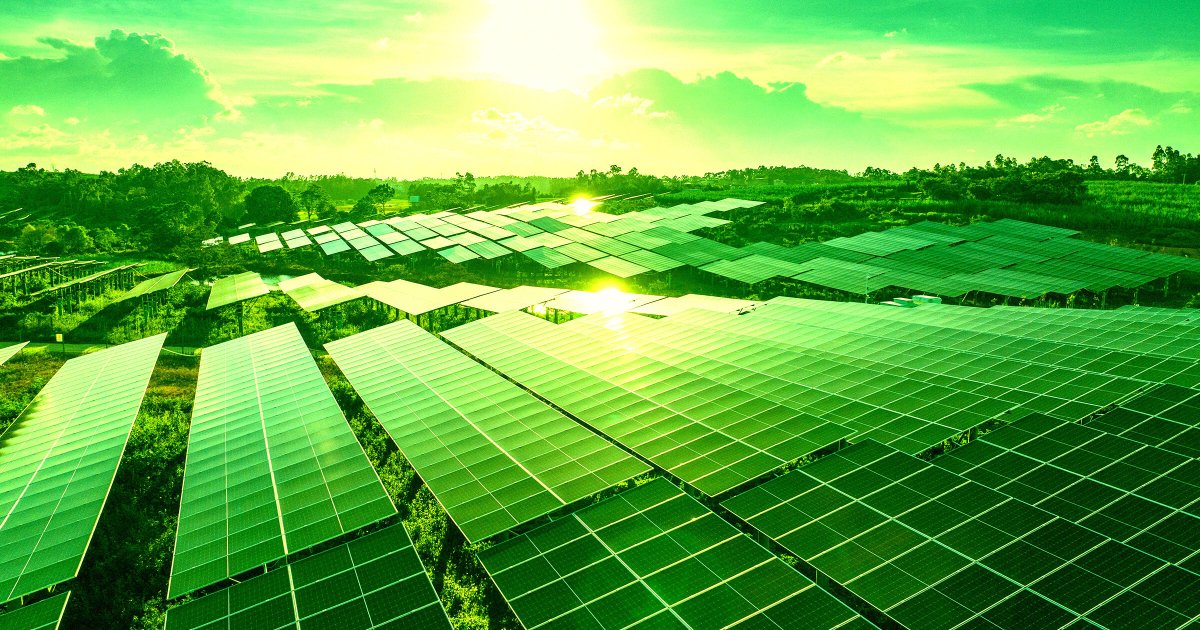
Turns out the sun has a few competitive advantages over nuclear: free fuel, no radioactive waste, and it doesn’t need a decade of permits before it starts shining. The real bottleneck now is grids and storage. Imagine losing the energy race to a giant fusion reactor 93 million miles away. 😎
*long term storage, cause batteries are good for ~24 hrs
Take Germany that has solar and wind combined production capacity between 4 and 5 time its needs in electricity. Yet, It can not cover its needs. If you cannot produce electricity to cover your needs, you are far from being able to store an excess of your production. The last solar farm Germany was building south of Berlin had an estimated efficiency of 10%… The capacity of the power grid isn’t a light issue, and it is far from being resolved.
So before thinking about having a full working renewable power grid, you have to rely on a working mass production system. Germany choose coal and gas, which makes their emission of CO2 for producing electricity high during most of the year
Now take France. It has a solid capacity of electricity based on nuclear. It is among the least CO2 emitter in the world to produce electricity. Now, if their energetic politics was a future oriented one, France would ramp up its renewable capacity while maintaining its nuclear capacity (so building new reactors to replace old ones) to not loose on stability.
Nuclear isn’t the energy of the past, nor a nostalgic one. It is probably the most efficient mass production system for electricity we have to transitionning to renewable while not messing up the CO2 emissions.
Not all countries have ideal solar exposition, nor constant wind… Not to mention that hydroelectricity requires land specifics advantages and geothermal energy isn’t an everywhere solution, as drilling can cause problems.
There is no miracle solution, only partially satisfying ones.
Most of the country that have a 100% or near 100% renewable power grid rely on hydroelectricity. Which is not achievable by all.
It’s not a race between technologies, it is a race to find the most efficient way to produce low CO2 electricity… while maintaining the confort of people and factory productivity, because, you know… Shareholders are the most important thing in the world… Apparently…
Searching for Germany, I see many articles on grid storage - basically at its infancy but exploding in popularity. I also see huge expectations on pumped hydro storage
Seems like you’re arguing that we should stop building out these proven, low cost solutions in favor of dumping tons more money into a problematic technology that will take decades and billions of dollarseach
The hydro storage has the same problem than the battery storage. You have to build a reliable eletricity production that cover your needs before being able to store your excess.
How much power can you store with hydro storage ? Do you have enough land/mountain to create the artifical lakes at different elevation ? Can you store enough energy to compensate the reduced production of solar power during winter ? For now, storage is either for short periode ,(days, maybe weeks, with batteries) or limited capacity (hydro pumping). If you are interested on storage technology you should look on the CO2 storage that Italy built lately.
It is complicated to rely on yet to develop technologies to power an entire country. Some can, they should, other can’t, and have to rely on non renewable energy.
I’ve written than Nuclear is probably the best way to produced decarbonated electricity while waiting for good solutions for the renewable energy. I’ve never said that we should stop developping renewable. While the world spend money on an energy and water consuming technoloy like IA, it would be way more intelligent to focuse all that money on developping renewable… Yet to produce solar panel, wind turbin, concrete, we still need fossile fuel or nuclear. So giving up on it would only make things more complicated.
It has its issues, but yeah currently it is the cheapest source of power, it got so cheep that individuals can build their personal power plant for their home.
And we still have idiots fighting it. Even if you don’t care about environment (you are “drill baby drill” kind of person) it still makes sense economically.
The weirdest thing about it are fascists who support oil and gas imports from Russia and complain about woke left-green sleep paralysis demons but at the same time they have solar cells on their roofs and will tell you how much money they‘re saving them and how liberating it is. Call them renewables however and you can expect a rant about woke conspiracies and chemtrails or something.
And turns out nuclear has a few competitive advantages over solar. They are both great and serve different purposes.
Nuclear’s big selling point is that the sun goes down. Batteries have apparently missed that memo: they keep getting cheaper, better, and more efficient. Storage won’t solve every grid problem overnight, but pretending today’s limitations are permanent is a strange way to plan tomorrow’s energy system.
another big selling point of nuclear is it’s easy to drop in at old coal plants that already have grid connections ready to go.
how long are you willing to wait for perfect energy storage?
obviously battery tech will improve, but the point is we cannot afford to assume that problem will be solved 100%, meanwhile experiencing more and more irreversible damage to our environment. We need to put our eggs into all clean energy baskets to get off CO2 as soon as possible. Not whenever battery tech happens to be ready to handle everything.
Nobody’s asking us to bet on miracle batteries: Wind and solar paired with storage are already cheaper than building new nuclear. Reusing a coal plant’s grid connection doesn’t magically make a reactor cheap or quick to build. If speed and CO2 matter, follow the numbers, not the nostalgia.
“Cheaper” is not the most important metric.
Maybe cheaper in money terms, not others, first of all space.
But how much would cost to build a solar farm with the same output of a nuclear plant, both on days and night ?
“it’s easy to drop at a place that has grid connections”
Funny, because solar or literally any other plant will also benefit from having existing connections, and all of them are easier and cheaper to build than nuclear.
Nuclear is dead but for niche applications.
In your world, is “tomorrow’s energy system” exclusively solar/hydro?
No, in my world tomorrow’s grid uses whatever delivers reliable electricity at the lowest total cost: solar, wind, hydro, geothermal, storage, and yes, nuclear if it can compete. This isn’t a religion with approved energy sources. It’s an engineering problem with a price tag, and nobody gets bonus points for glowing in the dark.
Exactly, this is an engineering problem. You’re talking it like it’s an accounting one. Reliability, emergency use, redundancy, generating potential and universal scalability are the most important factors. Cost is a completely separate issue governed by separate factors, many of which are 100% artificial.
Dude, the cost is the final decision point after all those concerns are handled…
You’re stringing worlds together at this point.
Cost is the single largest factor in the deployment of new power plants, and solar is just impossible to match right now.
You could spend literally decades and billions building a nuclear plant, or start deploying solar right this minute and immediately reap the rewards of that investment.
It’s a no-brainer.
I would say that even availability is an important factor, maybe more important then the mere price.
It ultimately gets translated into costs, that’s what greenlights a project.
But it doesn’t need to be one or the other. The more diverse the grid the better. I’ll also say again, cost on both sides is mostly artificial anyway.
Again, you’re stringing words together.
Cost is a very real measure.
You could say that the numbers scribbled down on pieces of paper next to a dollar sign are artificial or miscalculated, but the invested manpower and resources and time (and a large number of other consequences) are all very real, and translate into a cost.
where the fuck did anybody say that?
“Glowing in the dark” refers to nuclear power sources. Hope this helps.
yes i know that, genius. the point is that is not an argument people are using for nuclear. it’s a blatant straw man from someone clearly not engaging in a goood faith discussion.
That’s kind of the point; it’s not a straw man, it’s saying that the options should be considered on their merits not on irrelevancies. “There are no bonus points added to the scoring just because nuclear looks cool when it glows”
A lot of people support nuclear for largely cultural reasons.
What cultural reasons would anybody support it for?
Not among the general population, but among internet nerd culture, nuclear has a certain level of support purely for cultural reasons. There’s a culture of people on the internet who like nuclear primarily as a cultural shibboleth. If you can convince yourself that the only reason nuclear hasn’t taken off is due to unreasonable fear and technical illiteracy, then supporting nuclear is extremely self-affirming. Supporting nuclear is a way of saying to yourself and others “I am a rational and scientific person. I know the facts about nuclear. I know the fears of its safety are overblown. I’m smart and intelligent while the common rubes are scientifically illiterate fools.”
The truth is that while groups like Greenpeace exist, nuclear has failed largely because it’s just too damn expensive. But fission fanboys never talk about the cost. They just wax endlessly about how safe nuclear is, or repost old canards about how coal releases more radiation than nuclear, or the per-watt death figures. Etc. Endless repetition of factually correct but utterly irrelevant information.
Nuclear is simply incompatible with renewables, if the price tag is of any concern to you. Nuclear reactors take long and cost a lot to build, still aren’t cheap to operate if you include the infrastructure cost of getting, handling and storing the fuel, can’t respond to changing demand quickly and are centralized.
Nuclear power plants need subsidies over their whole life, mainly to handle the risk inherent with nuclear fuel and the finincial risk of having to handle spent fuel for centuries to come. Nuclear power plants need to run at full power, which costs money every time renewables are pushing the energy price into the negatives. Nuclear power plants need a centralized power grid.
Renewables work in exactly the opposite way. They are cheap to build and maintain, they are variable and decentralized. So to use renewables effectively, you need to build a decentralized grid and ideally on-premise energy storage.
Renewable energy simply wins in terms of cost, risk-management and scalability. So the energy grid of the future will be purpose-built to accomodate renewable energy. Trying to force nuclear energy generation into that mix only makes sense, if you have a clear, non-monetary reason to do so, like enriching uranium for bombs. For strictly commercial use, nuclear power is dead.
The fact is that the price tag is not the only factor.
It is true that a 1000 MW nuclear plant cost about 10 times the equivalent solar field (about 6-9 billions for the nuclear plant Vs about 800 millions for panels) but at this point you use about 15 square Km to just match the output of the nuclear plant, with no storage, and only in the best case scenario.
In a real case scenario the price tag of building a solar field that could replace a nuclear plant is probably not that different anymore.
To produce the same amount of power in every condition you could not install the exact amout of panels, you need way more (double ? triple ?) with the associated costs and space requirements.
And then you need batteries to be able to offer energy also at night and to store energy for the days when the sun is not enough to produce the energy required.
I would say that to match a nucler plant a solar field would cost about half of it for the same power generation but with the additional problem that you need way more space, which itself is a cost.
We have nuclear power plants that uses less problematic fuel which is easier to handle and less risky.
True, but when the renewables are not producing enough ?
Like a solar farm.
No, they work in the exactly same way. What is different is that renewables can be made decentralized. Solar panels on the roof produce only for the house, not for the power grid (even if you can connect them to the grid to fill in the surplus).
I think you are comparing a nuclear plant with the small panels you install on your roof but you cannot make such comparison.
As far as I remember, what was told me when I worked in the field was that power grids does not care about the source, only the power: a power grid do not care if the 10 Gw power it transfer comes from a nuclear plant, a solar farm or from a squirrel on a wheel.
And the grid is already ready, we are already able (ok at least here) to send to the grid the surplus generated by the solars panels on the roof. And adding the batteries will not require anything done on the grid itself (at least this is what my collegues said).
What about being sure that a 5 days of bad weather cannot stop a society ?
You are mixing up many different things.
First, you don’t have to install the solar capacity in one huge blob. Solar farms also don’t have to be the only use of the land. You can still farm crops that like shade, you can hold cattle, build the energy storage right beneath the solar farm, a car park or what have you. There is also a lot of currently “wasted space”, such as roof tops or existing car parks. There are also swimming solar pannels that have the added benefit of keeping lake temparatures in check in the summer. You also have wind turbines that can contribute their fair share to the energy mix. So no, you don’t need to build huge over-capacity and you don’t need to bulldoze huge swaths of land to install solar. And the price to build solar and battery storage is still going down.
Where are the nuclear plants that use “safer fuels”?
Renewables are cheaper to build and run, meaning that renewable energy is always cheaper than nuclear power. You’d need to artificially limit the amount of renewables companies are allowed to build or subidize nuclear, otherwise renewables will price nuclear out of the market.
No, solar farms don’t need centralized grids nearly as much as nuclear power does. What is much more important for renewables is monitoring the local grids, so they don’t get overwhelmed by people providing power to the grid with their solar pannels.
And people already absolutely do provide power to the grid with their own solar pannels, you denying that just shows that you haven’t mich thought about/experienced local “grass roots” energy production. In Germany, the capacity of the local grids is one of two big hurdles renewable energy production is facing right now. Commercial and private energy producers are complaining that the utility companies are forcibly cutting their power plants from the energy grid to stabilize it.
And like I said in other comments already, hydrogen/natural gas power plants are a much better fit to handle extended lulls in wind and solar.
There will be diversity in the future grid, but that diversity will be in the forms of energy storage used. I think the grid of the future is almost entirely solar but with different energy storage systems optimized for different time scales. For storage on the order of seconds, you use fly wheels to replace the spinning mass once provided by gas turbines. For daily swings, vast warehouses full of old electric car batteries work well. For longer term storage, you can use chemical energy storage or flow batteries. Think making vast tanks of ammonia or methane. You use excess electricity in the summer, store it as chemical energy in vast tank farms, and then burn it or run it through a fuel cell in the winter.
Although, for seasonal variation, the most practical solution might be just to spam solar panels. It just depends on the price ratio of solar panel cost to storage cost. You could have a grid that just had so much solar deployed that it is able to cover energy demand even on cloudy winter days. You just flat out build that many panels. Maybe then in the summertime you’re capable of producing 10x your normal power needs.
Seems wasteful, but this would just encourage a lot of very energy-intensive industries to become more seasonal. We have a farming season, why not an steal smelting season? Why not an AI model training season? Maybe for datacenters, the big runs are done during the summer when power is dirt cheap. Then the companies spend the winter planning next year’s runs, etc. Or the extra power could be used to make synthetic fuels from CO2 pulled from the air. Maybe we never figure out how to make batteries good enough to power a trans-oceanic jumbo jet. But maybe we don’t have to. You offer dirt cheap energy on a seasonal basis, and people will find uses for it eventually.
To be fair the construction time on a star is actually a really long compared to nuclear.
And what happens when the sun goes out?
Riddle me that, solar elitists.
It always reignites in the morning.
While very impressive, solar power is not the the ultimate power source.
For us in the nordic regions we don’t get enough sun during the winter just as we need it.
We still need nuclear power unless we make ourselves dependent on other nations for power generation and transfer.
Just look at how Russia tried to hold Europe’s supply of gas hostage after the 2022 invasion of Ukraine, I don’t want us to ever be so completely dependant on another nation/entity again.
“Oh, but we can use batteries!”
Sure, but batteries degrade over time, meaning we will need a continous way to replace them, and since most manufacturers of batteries are located in China (same goes for solar panels) we will just become dependent on China for our energy needs, so we have replaced Russia’s gas monopoly with China’s solar and battery monopoly.
Untill we have the ability to build and deploy solar panels and batteries at scale inside the EU we should be careful about giving up our current traditional powerplants.
Batteries are largely recyclable and worth recycling, at least the ones of the scale used for grid-scale power storage.
And manufacturing can be done outside of china; it’s just a bit more expensive.
Do you realize how heavily Europe still depends on fossil fuels today? And that some of its nuclear reactors still use fuel supplied by Russia? If your big argument is avoiding dependence on hostile suppliers, swapping Russian gas for Russian nuclear fuel is a pretty spectacular blind spot.
Yes.
When did I mention using Russian nuclear fuel?
Sweden has actually a fair bit of uranium, we could mine it, have France process it and run our nuclear plants on our own fuel.
You may import turbines or panels, but no foreign government can turn off your wind or sunshine. Equipment supply chains can be diversified: imported fuel remains a recurring dependency. That’s a pretty important difference.
I just mentioned that we have the fuel and the enrichment facilities in the EU…
Having enrichment facilities doesn’t mean controlling the entire nuclear fuel cycle:
France still imports Russian enriched uranium and relies on Russia to convert and enrich recycled uranium. Longstanding contracts and missing European processing capacity explain why. Energy independence is clearly more complicated than owning uranium deposits.
A reactor needs an industrial fuel supply chain, while wind and solar need no fuel imports once installed. Nobody can embargo the breeze. If energy independence is the goal, why treat fuel free generation as an afterthought?
I feel like we have strayed too far away from my main point, solar doesn’t work when it is dark outside.
It is dark for long streaches of time in the Nordics.
When it is dark, we use more energy to heat and light our homes.
Batteries can’t supply enough power during that time.
Importing power is expensive.
So domestic power generation it is, and since nuclear power is one of the most environmentally friendly power sources we have and will work in the dark, it makes sense to use it to complement renewables.
There’s more than solar and batteries or nuclear. We need cheap reliable energy. And thankfully there’s plenty.
Modern batteries degrade much slower than earlier generations did. Especially if you remove the size- and weight requirements of mobile batteries, we already have battery technologies that push a century in usable time.
Cool, I didn’t know that.