

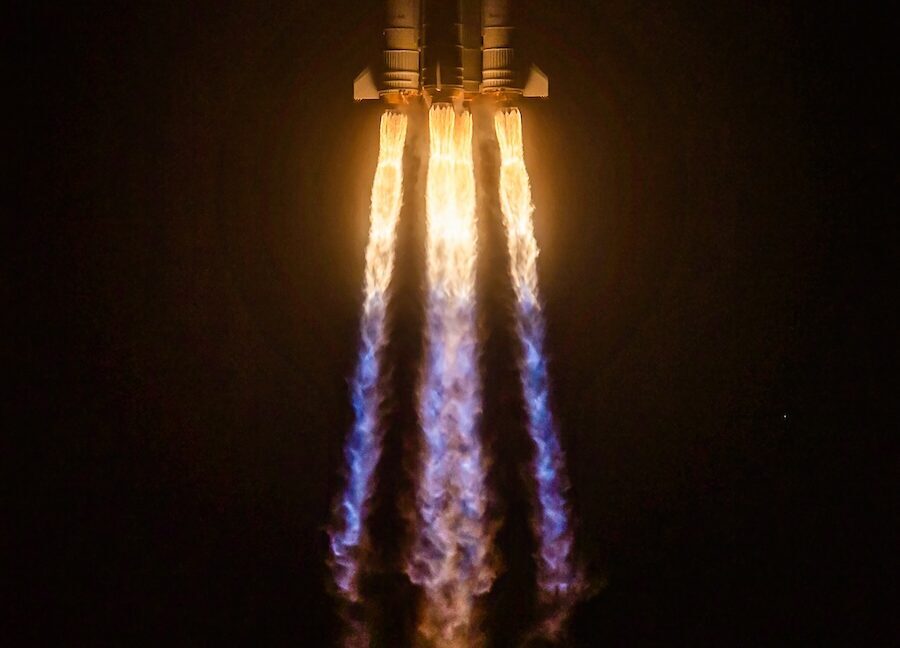
In recent months, it has begun dawning on US lawmakers that, absent significant intervention, China will land humans on the Moon before the United States can return there with the Artemis Program.
So far, legislators have yet to take meaningful action on this—a $10 billion infusion into NASA’s budget this summer essentially provided zero funding for efforts needed to land humans on the Moon this decade. But now a subcommittee of the House Committee on Space, Science, and Technology has begun reviewing the space agency’s policy, expressing concerns about Chinese competition in civil spaceflight.
Starship has absolutely not done cryogenic fuel transfer demos. They have attempted to do so, but have so far not succeeded. And they are a long way of having two ships in orbit and transferring fuel between those.
Also the ISS has not been refueled in terms of rocket fuel, because it has no rockets itself. It relies on attached capsules to boost the orbit. These capsules bring their own fuel and engines.
However I agree it should be possible in principle and will probably be demonstrated somewhere in the next couple of years.
But the point isn’t that it technically can’t be done, the point is it can’t practically or economically be done. It isn’t as simple as putting some kind of big storage up there, slowly fuel it up and when it’s full, launch your mission and stop by the gas station. This is a much too simplistic view. First of all, how are you going to get the big fuel depot up there? That would require multiple missions and in orbit construction on a large scale. Something that is expensive and takes a lot of time. Second of all, these are cryogenic fuels, as the name suggests, these need to be kept very cold. But space is really cold right? No actually, the distance from the sun is what mostly governs the temperature, so orbit around Earth is still pretty hot. It does get cold in the shadow, but in the sunlight it’s hot. That’s why the ISS for example has huge radiators, because they need to get rid of that heat. And since radiation is the only way to get rid of heat, it’s pretty inefficient. Third of all, storing cryogenics is very hard, to the point of impossible. For rocket launches the fuel is stored for only a couple of weeks and needs a huge amount of power and infrastructure. And it requires continuous venting as to not build the pressure to dangerous levels. Getting an infrastructure like that going in space would be very hard if not impossible at this time. Best we can do is just let it vent a lot and use that venting to regulate the temperature. But that means losing a lot of fuel all the time. So if the refueling missions don’t get there fast enough, so much fuel would be lost, there is no point.
All this boils down to either a huge infrastructure project on orbit, on a scale and cost we’ve never seen before. And/or depending on how well that turns out, dozens of launches within hours of each other. That means a whole bunch of rockets, huge amounts of fuel. The logistics and timing would be insane and the amount of infrastructure needed for something like that is insane as well.
Falcon 9 is breaking records with their launch cadence, but they are only doing on average 3 launches per week. And that’s a much smaller, much simpler rocket by comparison and includes re-use of a lot of the rocket. For something like Starship the scale goes up by a lot, requiring a lot more to get to the same level. And if you want to bring as much fuel as possible up there, re-use becomes a lot harder. Keep in mind that it took SpaceX a very long time to get Falcon 9 to this level. Starship hasn’t even done a single orbit yet, on paper it is an impressive machine, but it will take a very long time and huge effort to get it to the level of Falcon 9. And even if you do, it’s not good enough, what’s required is something on the order of 18 launches within a few days.
And this isn’t something far fetched, a lot of people have done the math and it just doesn’t work out. But as the reasons behind the current approach are political and not technical, pointing out the technical impossibility isn’t really going to change anything. And so many people have drunk the Musk kool-aid, believing his wild and unsubstantiated claims. Starship is hella impressive, but the thing ain’t magic and it also doesn’t exist yet.
While I agree with you on the difficulty of cryogenic fuel storage and re-fueling in orbit, the ISS does actually have some of it’s own rocket thrusters. They’re on the Zvezda module and are re-fuelled by Progress vehicles. Relevant section from the Wikipedia article on Zvezda:
https://en.wikipedia.org/wiki/Zvezda_(ISS_module)
That’s pretty neat. I knew the ISS had thrusters but didn’t know it could also be used to boost. Note however UDMH isn’t a cryogenic fuel.
those are not boosting rockets, they’re maneuver, they’re also not cryogenic but UDMH, a toxic methyl derivative that was once one part of the two-part combo Devil’s venom, being combined with red fuming nitric acid (!!!) and used as rocket propellant.
UDMH is both toxic and corrosive. but not cryogenic fuel.
Starship has done cryogenic fuel transfer between header tanks. The ship to ship transfer should happen in 2026 as long as they don’t blow up V3s like they blew up V2s.
I think Starship HLS can work with or without full upper stage reuse, but the reuse route is obviously preferable. Firstly, the refuelling depot is a stretched Starship, presumably with a recondenser and better thermal control, not a multi-launch, super bespoke assembly. The refuelling flights with reuse will be more common and boring than current Falcon 9 Starlink flights. Or, if Starship reuse keeps failing, disposable ships should have the payload and launch cadence to fill a depot in a month.
As far as the Starship vs Falcon 9 timeline, Starship has stayed in development longer than Falcon had the luxury to. They’ve already reused first stages. They launched 5 times in 2025.
That demonstration was planned but didn’t work. Details are obfuscated by SpaceX, but I’d imagine if it did work they would share a lot more about it. From people close to the source, the message off the record is it did not work. Media reporting around this is very spotty, as most report on what they were intending to do on the test flight, not what actually happened. There was a 2024 test flight where they did do some transfer between tanks, which met NASAs requirements at that time. But the amount of data collected was minimal and the vehicle was lost. It is unclear how representative this test was or how successful it actually was. Technical data of this test has not been made public, other than NASA saying it satisfied the contract requirement.
Also note that there hasn’t been 5 Starship launches in 2025. There have been in fact 0 launches as Starship doesn’t exist at the moment. SpaceX has had 5 test flights of prototypes, which are nothing close to the real thing. And these test flights have been mainly demonstrating the booster, which is very impressive. But the Starship part wasn’t very successful and is no where near a finished vehicle.
It’s exactly this sort of bullshitting that annoys me to no end, Musk is famous for this and his fans love to repeat it. He claims his products can do something today, where in fact all they have is a prototype that kinda sorta does the thing poorly. And often the claims being made vastly exaggerate capabilities of the planned product at that time. Which again to repeat they do not have.
I’m addressing the headline that says the plan “cannot work”. Starship is really shoehorned into this role, and I think a more appropriately sized lander like Blue Moon is a better option if they can get it up and running, but I don’t see anything about Starship that makes this impossible, just clunky.
If NASA called the internal cryogenic fuel transfer demo a success and paid SpaceX for it, then I’m inclined to call it a success. I would love to see anything other than hearsay that says otherwise.
5 prototype launches, with design changes and fixes in between, is already a better cadence than New Glenn, Vulcan, Ariane 6, or H3. Atlas 5 can tie it if they get another Amazon launch off this month. The Starship cadence should only go up as the design matures and they start actually launching Starlinks and Tankers.