

- cross-posted to:
- technology@beehaw.org
cross-posted from: https://beehaw.org/post/24650125
Because nothing says “fun” quite like having to restore a RAID that just saw 140TB fail.
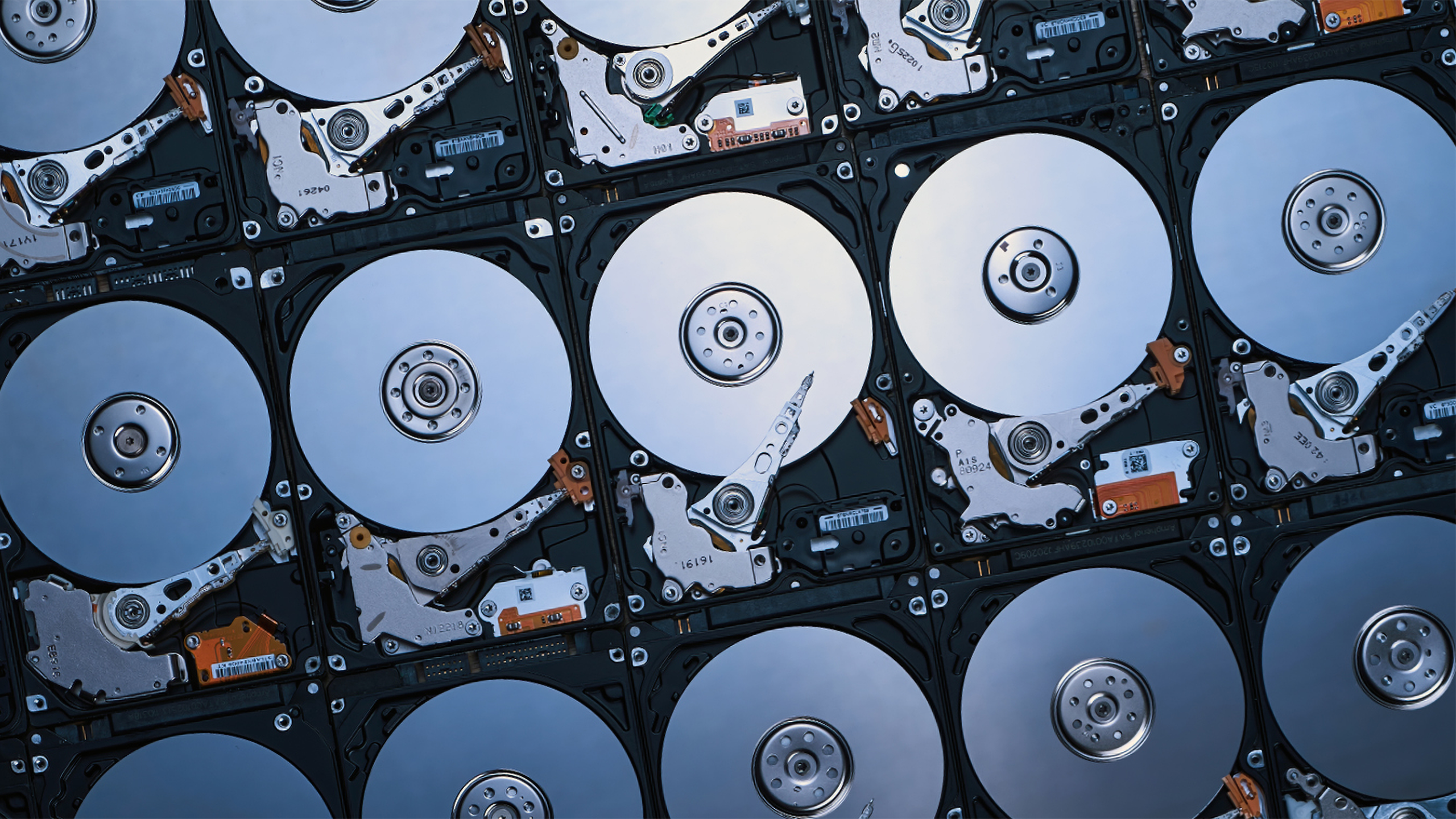
Western Digital this week outlined its near-term and mid-term plans to increase hard drive capacities to around 60TB and beyond with optimizations that significantly increase HDD performance for the AI and cloud era. In addition, the company outlined its longer-term vision for hard disk drives’ evolution that includes a new laser technology for heat-assisted magnetic recording (HAMR), new platters with higher areal density, and HDD assemblies with up to 14 platters. As a result, WD will be able to offer drives beyond 140 TB in the 2030s.
Western Digital plans to volume produce its inaugural commercial hard drives featuring HAMR technology next year, with capacities rising from 40TB (CMR) or 44TB (SMR) in late 2026, with production ramping in 2027. These drives will use the company’s proven 11-platter platform with high-density media as well as HAMR heads with edge-emitting lasers that heat iron-platinum alloy (FePt) on top of platters to its Curie temperature — the point at which its magnetic properties change — and reducing its magnetic coercivity before writing data.
This ONLY works at an insane scale. This will never hit the consumer market.
Also what current consumer level application could require of storage 140TB. That would be some advanced level data hoarding or smth.
The failure rate is going to be absolute INSANE as well.
@Korkki @just_another_person I see 4k HDR blue ray movie rips these days on the order of 50GB (edit: eg, Eddington.2025.MULTi.VFF.2160p.DV.HDR.BluRay.REMUX.HEVC-[BATGirl]: 77.73G).
Which is too rich for my blood (I’m still watching on 1080p screens over here), but for someone with the right kind of home theater… that’s only ~280 movies on a 14TB drive. Lots of movie collections, even in the olden days of physical VHS and DVDs, span 1,000+ movies.