Another response was to suggest that this was more of an issue of younger women criticizing the makeup styles of middle-aged women than politics.
Not all the criticism came from the right. Colette Carbonara, a Columbia undergraduate writing in the Columbia Political Review, feared that it might alienate some voters who might otherwise support Democratic policies and candidates while lacking “real substance”. Many of the critiques on TikTok, she noted, admitted that the style was more common and less political in 2016. “By engaging in this caricature, liberals reinforce the stereotype of themselves as urbane cultural elites who relish the opportunity to mock people from the South or rural areas whose makeup is, perhaps, slightly dated compared to the newest trends in wealthy, progressive cities.”
Essentially, this.
To the extent that the makeup trend is a political strategy at all, I expect it will be a fairly successful one, as it (1) supports traditional gender roles by highlighting the fact that women use makeup. (2) Appeals to older americans who are more likely to vote because “she looks like me” or “she looks like my wife”. (3) Appeals to poorer (trashier) Americans who are more likely to over-apply makeup.


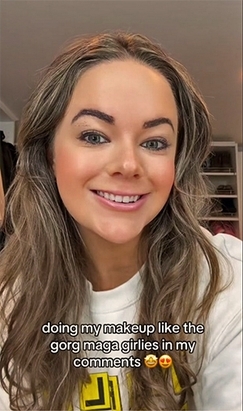
Essentially, this.
To the extent that the makeup trend is a political strategy at all, I expect it will be a fairly successful one, as it (1) supports traditional gender roles by highlighting the fact that women use makeup. (2) Appeals to older americans who are more likely to vote because “she looks like me” or “she looks like my wife”. (3) Appeals to poorer (trashier) Americans who are more likely to over-apply makeup.