There were even quite a few games from the 80s and 90s that required you to use the manual in order to play with translations, instructions, sometimes even hidden codes to move forward.
there would almost always be a moment where you’d use the manual to answer a password and that was their copy protection. that kind of copy protection continued into the 90s
Up to the late 90s at least, Metal Gear Solid had a moment where, in order to progress, you had to enter a codec frequency that was in the back of the CD case.
We had a Mickey game that came with a dark maroon piece of paper with a bunch of Mickey poses on it, each one had a number or letter code (it would show a pose and you had to give it the code for the pose to start the game). The black ink on dark maroon paper was intended to prevent photocopying.
We also had this F1 racing game that had a bunch of F1 history in its manual and would ask F1 history trivia to get into the game.


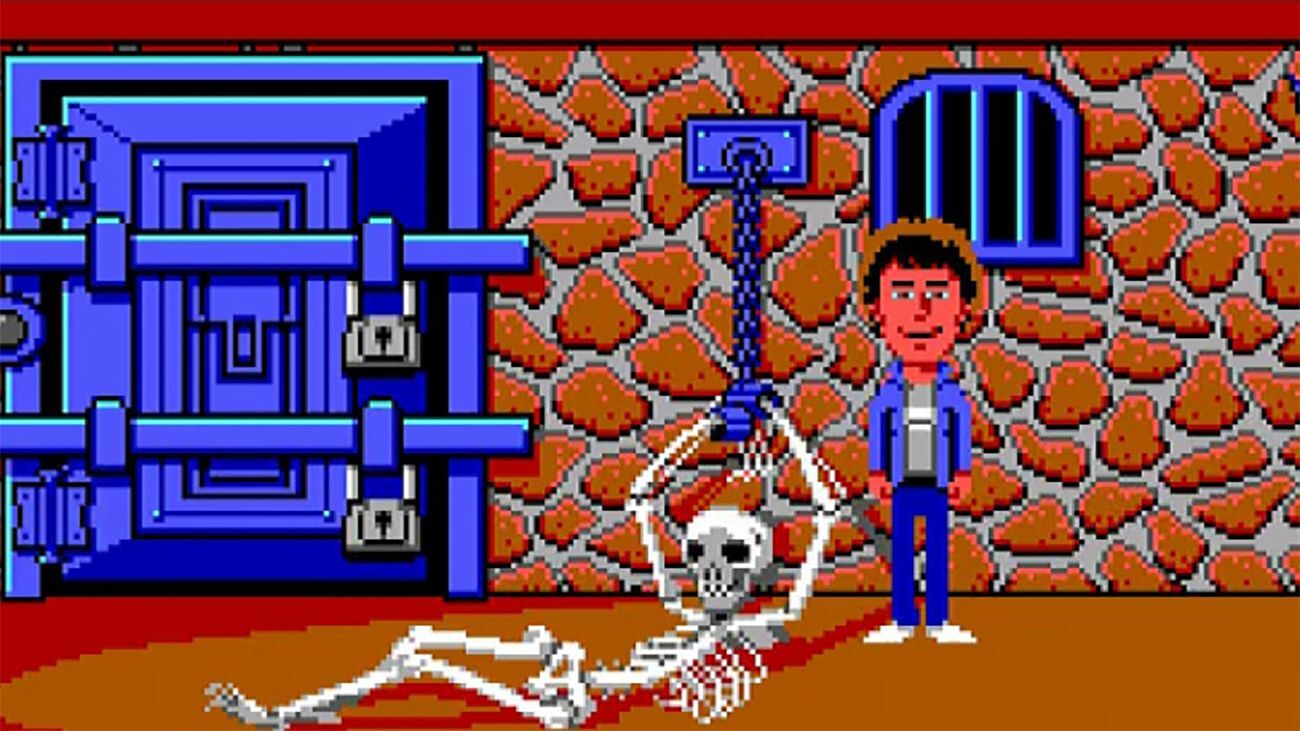
There were even quite a few games from the 80s and 90s that required you to use the manual in order to play with translations, instructions, sometimes even hidden codes to move forward.
there would almost always be a moment where you’d use the manual to answer a password and that was their copy protection. that kind of copy protection continued into the 90s
Up to the late 90s at least, Metal Gear Solid had a moment where, in order to progress, you had to enter a codec frequency that was in the back of the CD case.
We had a Mickey game that came with a dark maroon piece of paper with a bunch of Mickey poses on it, each one had a number or letter code (it would show a pose and you had to give it the code for the pose to start the game). The black ink on dark maroon paper was intended to prevent photocopying.
We also had this F1 racing game that had a bunch of F1 history in its manual and would ask F1 history trivia to get into the game.