I’m not normally a huge fan of the economist, but I’d be genuinely interested to hear their perspective on this (if I could find an archive). They are a pillar of the fiscal conservative camp, but they tend to be quite insightful on international politics.
I have been wondering if this is the focal point in the US / China power transition. Iran is not just another tiny state the US can muscle in on, it’s a global economic and population power, and its influence in the region (most obviously on shipping trade) hurts everyone. The open question is whether it hurts manufacturers or the Petro dollar more, though I suspect it’s the latter.
I DMed you a gift link
Can you paste it in text format and share it please? Pastebin or something works as well ! Pleasse
Going to war against Iran promised to change the Middle East by weakening a villainous regime and thwarting its nuclear ambitions. To its most bullish supporters, the war would also change the world by cowing an ascendant China. It would show how America’s control over the flow of oil leaves China vulnerable. And it would boost deterrence by contrasting America’s military supremacy with China’s reluctance or inability to save its friends.A month into the fighting, this logic still seems misguided and hubristic. Certainly, that is the way it looks from Beijing. The Economist has been speaking to diplomats, advisers, scholars, experts and current and former officials in China. Almost all of them see the war as a grave American error. China has stood aside, they say, because its leaders understand the maxim attributed to Napoleon Bonaparte, supposedly uttered as his foes were abandoning high ground at Austerlitz: “Never interrupt your enemy when he is making a mistake.” Many Chinese say the war will accelerate America’s decline. They see American aggression as a validation of President Xi Jinping’s focus on security over economic growth. And they expect peace, when it comes, to create opportunities for China to exploit. Only in the background is there anxiety—and the hint of a possible Chinese miscalculation.First, the view in Beijing is that America is lashing out at Iran because it feels its power ebbing. Like Britain in the 19th century, its formidable display of military force contrasts with its lack of purpose or restraint. President Donald Trump has spurned the advice of experts. He has issued wild threats and, as this was published, was about to address the nation amid talk of pulling out. His lack of a strategy has set America up for failure.Chinese experts hope the war will amplify talk of decline. Mr Trump’s musings about a ground operation are a sign of how easily one ill-considered step can lead to the next. If Iran falls into chaos or the regime clings on, America may spend years fighting fires in the Middle East. If Iran seeks nuclear weapons, Uncle Sam may go to war yet again.All that would distract America from East Asia where, if China has its way, the 21st century will be shaped. This war will also worry countries that depend on America. Not only has their ally become less reliable, but they are paying for its hot-headedness in expensive energy and raw materials. Will Asian countries therefore become more wary of offending China?Second, Chinese officials think the war shows the wisdom of Mr Xi’s emphasis on fostering self-reliance in technology and commodities, even when those efforts have come at the expense of economic growth (which remains stubbornly and wastefully below its potential). Mr Xi has strived to protect China from chokepoints being closed. He has created a 1.3bn-barrel strategic reserve of crude oil, enough for several months. He has diversified power-generation to nuclear, solar and wind while maintaining the use of domestically mined coal. China is being characteristically pragmatic, by facilitating Iran’s oil trade.Mr Xi has also invested in chokepoints of his own as a deterrent against America. Last year, after Mr Trump escalated tariffs, he threatened to restrict supplies of rare earths, vital for electronics and green tech. Although this leverage will fade as America finds alternative sources, Mr Xi is already seeking new pressure points, including vital pharmaceutical molecules, some chips and logistics. He wants China to dominate new technologies, such as quantum computing and robotics.Last, the war will create opportunities. The Gulf countries and Iran will tender lucrative rebuilding contracts. Many countries worried about future embargoes in the Strait of Hormuz will want to buy Chinese green technology, including gear from solar, wind and battery producers—all of which have overcapacity. Whereas America blows hot and cold, China’s brand of cynical self-interest is at least dependable.China also thinks it can exploit America. Weakened in Iran, Mr Trump may be easier to negotiate with. At his summit with Mr Xi in Beijing in May, China hopes to lay the ground for a deal that will curb America’s use of tariffs and export controls and possibly create a framework for Chinese investment in America. Ideally for China, Mr Trump will say that America opposes Taiwanese independence and supports peaceful unification—a shift from the studied ambiguity of Henry Kissinger’s original formulation.Yet China’s optimism is tempered by anxiety. Experts are taken aback by how the American armed forces are using artificial intelligence to co-ordinate operations. That is one more reason for dismissing the idea that Mr Xi is impatient to invade Taiwan. As Iran has shown, war is unpredictable. And if America is declining, war will be unnecessary. Other worries are economic. If war drags on, the harm to China and its exports will mount, even if other countries suffer more.For all China’s hard-headed analysis, it has one strategic blind spot. Chinese thinkers are too reluctant to contemplate a scenario in which America acts as a rogue power, ripping up the world order it created. Although China likes to complain about Western values, it has thrived under rules that America has laboured to sustain.An unstable planet would be uncomfortable for China. Global disorder would undermine its export-fuelled growth, a worry for a party whose legitimacy rests on prosperity, iron-fisted order and Chinese exceptionalism.That scenario may well accompany America’s decline. But not necessarily. Faced with technological and political change, America has repeatedly shown a remarkable ability to reinvent itself. By contrast, China is cautious, ageing and hidebound by party ideology. So far, whenever America does not provide global security it has been loth to step in.China is putting a lot of weight on the assumption that America will fail to thrive amid the anarchy it is creating. There is a future in which America embraces upheaval and China shuts itself off. That future may belong to America.
Thank you so much !
Thank you! It was a good read, and raised some points that hadn’t crossed my mind.
If you follow professor pape, there is a decent chance Iran comes out of this conflict stronger than it was. It’s already had sanctions on its oil removed. Could they toll every tanker that goes through from now on? It’s against international law but that doesn’t seem to mean much anymore.
When the petro dollar starts slipping, petro yuan enters the chat.
I think solar yuan is the more relevant concept, as China produces 99% of solar cell wafers globally.
Anyone got a similar periodical to recommend? I used to sub to them as their international coverage is great but I couldn’t stand the sanewashing of trump and his bullshit and refuse to return til their terrible editor in chief resigns or moves on.
The Atlantic maybe? Not that they’re perfect these days either…
Project Syndicate?
The US has been showing its ass globally for a while now, and with this administration its showing its whole hand.
What are you talking about? They lean slightly left of center.
https://www.allsides.com/news-source/economist-media-bias
https://adfontesmedia.com/the-economist-bias-and-reliability/"The Economist was founded in 1843 by James Wilson, a British businessman who objected to heavy import duties on foreign corn. Mr Wilson and his friends in the Anti-Corn Law League were classical liberals in the tradition of Adam Smith and, later, the likes of John Stuart Mill and William Ewart Gladstone. This intellectual ancestry has guided the newspaper’s instincts ever since: it opposes all undue curtailment of an individual’s economic or personal freedom.
That’s not very left according to my center.
They’re fairly socially liberal and keep a decent objective reach, but they’re also unapologetically capitalistic.
Which personally I think is fine.
Slightly left on social issues but generally right on financial issues and it is mainly a final based newspaper. Through an emeicsn lens, it might all appear more left than the reality due to the Overton window shift.
What’s nice is they do look at social programs on a cost benefit basis. So, where something helps people and saves money, it can help to remove any opposition ideologically.
What are you talking about? They lean slightly left of center.
The Overton Window has shifted so far that an old school conservative rag is now seen as left of center
what a world… sigh

Touché
Also never interrupt you enemy when he is slumped over drooling, and punching himself in the balls.
While shitting himself.
China has 4-6 months national use in their oil reserves and they have a pipeline to Russia, but if this goes long enough they will starve and their economy will crash.
Currently, China is watching America set itself on fire, but those flames are spreading.
Iran is letting China’s ships through
They are buying Iranian oil, but they are cut off from gulf state suppliers, except for the fraction of Soudi oil that goes to the red sea.
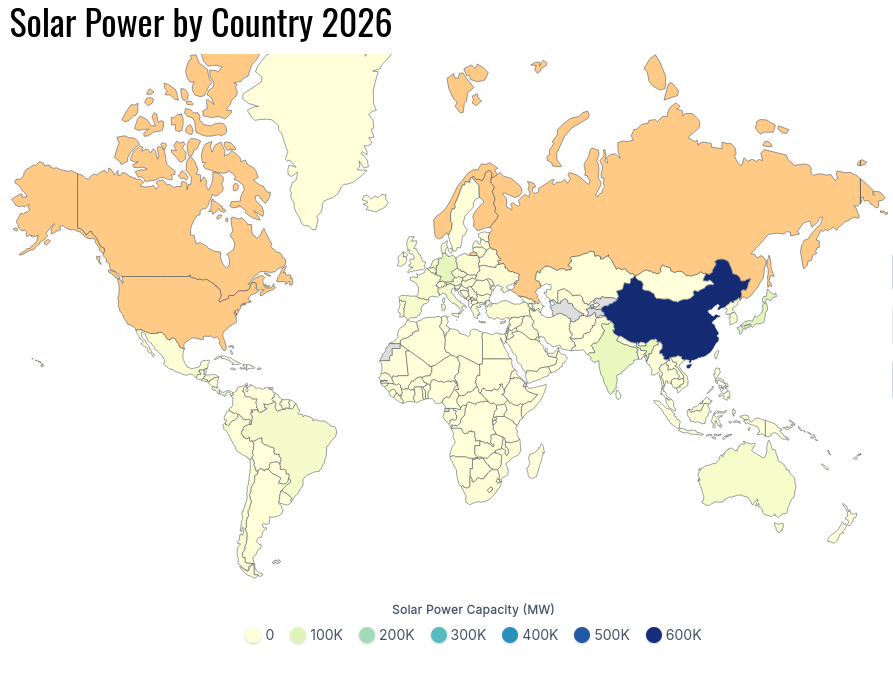
That’s pretty useless, it would be great if it was per capita.
And the colours for North America and Russia are not even in the scale.
what is orange?
China has more options than you let on. They are in no way dependent on Iranian oil. Global inflation and a global recession will certainly effect them but that will effect everyone. If it gets to that then the world may well turn on Israel for starting this.
They are dependant on middle eastern oil.
We should turn on isreal for starting it.
Venezuela is “allowed” to sell oil to China, now. Russia, China, US, Canada, Venezuela, Brazil do relatively well in global collapse. Though US/Israel loses ally loyalty due to being directly responsible for it.
China is best positioned of all due to alternative energy dominance, huge reserves, and priority for imports due to geopolitical power of destroying US/Israel ships/bases. Their economy will crash far less than rest of world, solar/EV exports will surge significantly, and all countries need stronger alliance with China after this fiasco.
US collapse despite oil export capabilities will be extremely visible as inevitable. Dedollarization and definancialization of its markets led by higher GCC country priorities, including diversification of alliances with their best customer, anti-US sentiment by colonies including NATO, absurd supplementary War replenishment funding bill, facing a stagflation environment. Japan and other US ally collapsing debt levels means further definancialization of US bubble. Skynet all in market strategy requires helium from GCC, Asian allies, and government financing credibility.
Even if China electrified their transport systems, they haven’t, but if they had, they still need fossil fuels for fertilizers. The US will not go down quietly. A single carrier squadron could blockade china from middle eastern oil.
That said I hope no such conflict ever happens. The US and China do not have to be enemies.
A single carrier squadron could blockade china from middle eastern oil.
Declaring war would be a weak move, and a nuclear missile power can sink a carrier group easily if it deserves to be. China also has real friends to help with anything it truly needs.
The US will not go down quietly.
The last gasps of this is flailing against Iran. A permanent war state prevents GCC from switching mid stream. GCC alliance to US/Israel was always based on CIA/Mossad colour revolution coups threats, but if the war ever stops, they will align with their customers and those who assist in reconstruction. There’s not much the US can do about its decline spiral causing allies to leave it.
China doesn’t have allies, only business partners.
Nuking a carrier group would probably doom humanity.
I hope that the war in Iran is the last gasp of American empire, but gravity of international relations remains centered in North America, the only country with the wealth, navy, and air force to project power worldwide.
If drones advance to change that, so any country can war on any other from anywhere on the globe, then we will see a global siesmic shift, and carriers will be as useless as battleships. But until then? The US remains the center of global power.
Europe will move for negotiating power, so their militilaries are not dependant on the US, but the food production, fossil fuels, and navy will keep the money in North america for the rest of my life.
China doesn’t have allies, only business partners.
A better way to go through life, that also makes the business partners friendlier to your continued business.
Nuking a carrier group would probably doom humanity.
Sinking ships is permitted response to war declared upon you. MAD is only about ICBMs headed towards homeland to fire back before they land.
Russia’s patience is only about enduring a proxy war that makes it stronger, with better political capital unity for rulership. Direct war fails containment restraints.
The US would absolutely respond with a nuclear strike of our own, and with current leadership, way out of proportion.
Cooler heads could prevail, but I’m not hopeful in that scenario.
Of course, we should not be blockading them in the first place unless they try to take Taiwan.
They’ve been nailing their covers recently
sun tzu
Heh…